Introduction
A candle lamp warmer melts candle wax with heat from an electric lamp instead of a flame. In a U.S. home, you place a jar candle under the warmer, turn it on, and let the lamp heat the wax from above. As the wax melts, fragrance oils mix into the liquid wax and release scent into the room.
Unlike a traditional candle, a candle lamp warmer does not burn the wick. This means there is no open flame, smoke, or soot from combustion. However, the warmer still creates heat, so it needs safe placement, supervision, and use according to the product and candle maker’s instructions.

What Is a Candle Lamp Warmer?
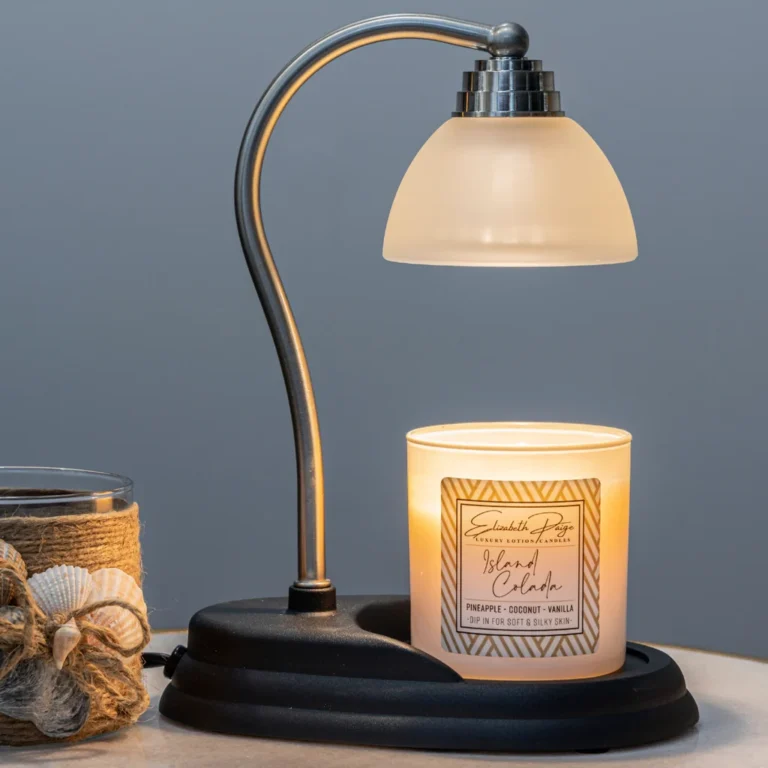
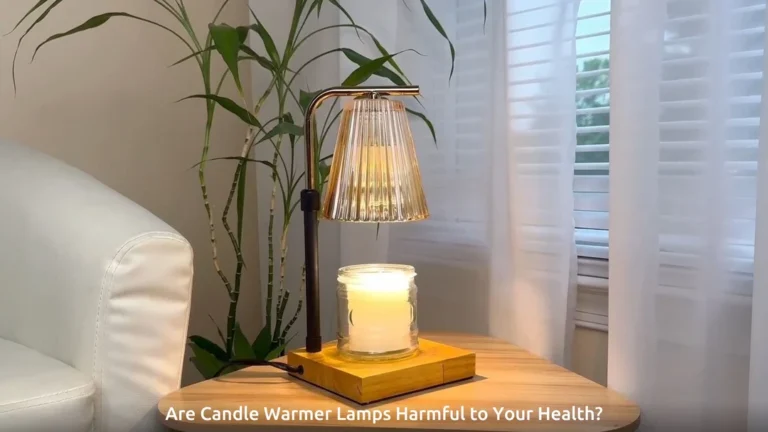
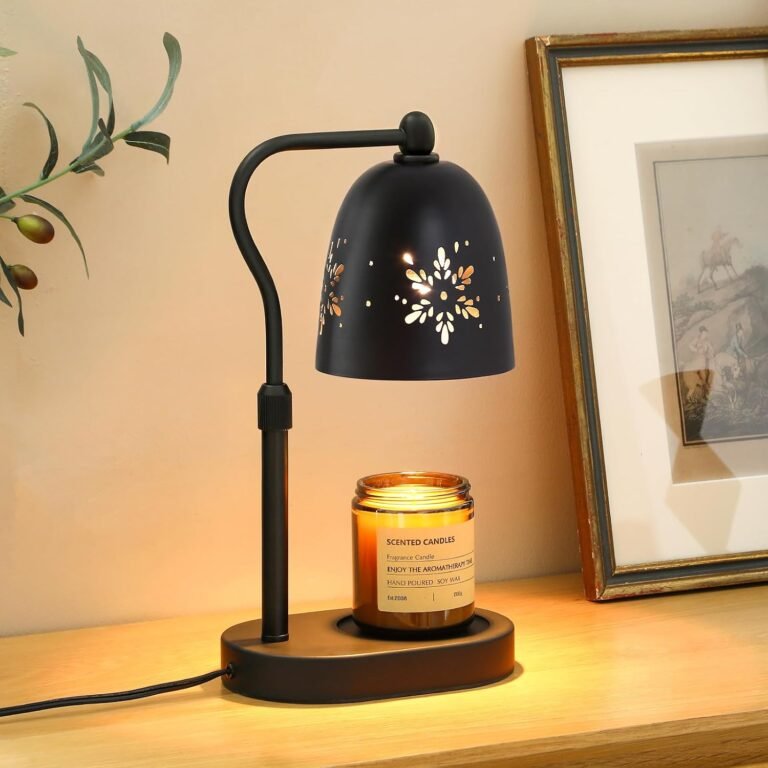
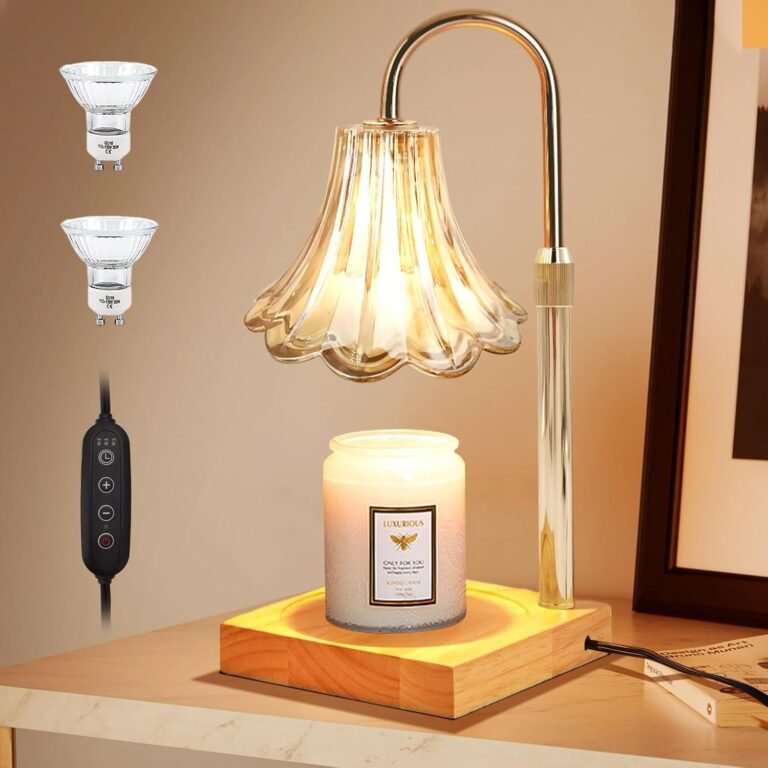
A candle lamp warmer is an electric device that uses a heated bulb to melt scented candle wax. Most models look like a small desk lamp or lantern. They have a base or platform for the candle, an adjustable shade, and a halogen or other heating bulb above the candle jar.
The lamp warms the top layer of wax first. The melted wax then spreads downward as more heat reaches the candle. Once enough wax becomes liquid, the fragrance oils can evaporate into the surrounding air.
A candle lamp warmer is different from a candle warmer plate. A lamp warmer heats the candle from the top. A warming plate heats the jar from the bottom.
Main parts of a candle lamp warmer
Most candle lamp warmers include:
- Heating bulb: Produces infrared and radiant heat.
- Shade: Directs heat toward the candle.
- Adjustable height: Lets you change the distance between the bulb and the candle.
- Timer: Turns the warmer off after a set period.
- Dimmer or brightness control: Changes the heat output on some models.
- Candle platform: Holds the jar beneath the lamp.
- Power cord and switch: Connects the unit to a household outlet.
Some products use a halogen bulb because it produces strong heat in a small area. Others use a purpose-made warming bulb. A standard LED bulb usually produces too little heat to melt candle wax.

How Does a Candle Lamp Warmer Work?
A candle lamp warmer works through radiant heat. The bulb sends heat downward to the wax surface. The wax absorbs that heat, changes from solid to liquid, and releases fragrance as the warmed oils move into the air.
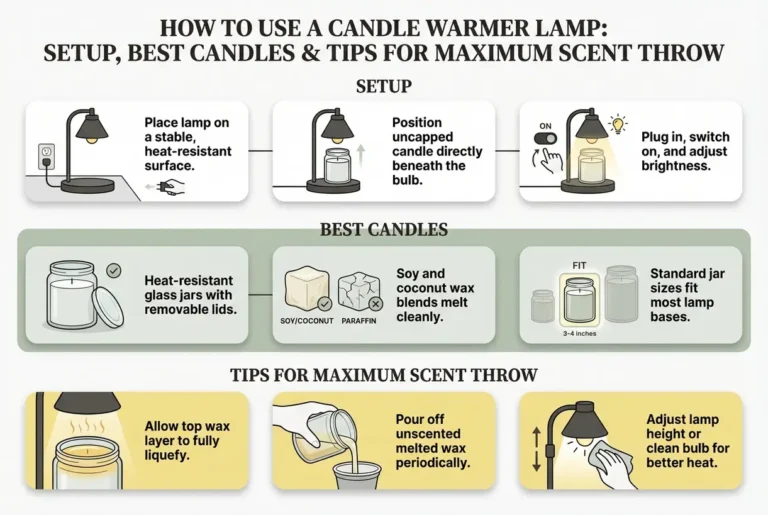
Here is the process step by step:
-
The bulb heats up.
When you switch on the warmer, the heating bulb produces radiant heat. -
Heat reaches the wax surface.
The shade focuses much of the heat toward the top of the candle jar. -
The wax begins to melt.
The top layer changes from solid wax into liquid wax. -
The melt pool grows.
Continued heating expands the liquid area across the candle’s surface. -
Fragrance is released.
Fragrance oils in the melted wax evaporate slowly and spread through the room. -
The wax cools after shutoff.
When you turn off the warmer, the liquid wax gradually hardens again.
The warmer does not need to burn the wax to release scent. A candle flame uses combustion, which burns fuel and creates heat, light, water vapor, carbon dioxide, and combustion byproducts. A lamp warmer uses electricity to supply heat without lighting the wick.
Why the candle still smells without a flame
Candle fragrance comes from scented oils mixed into the wax. Heat helps those oils move from the wax into the air. The same basic idea explains why a candle smells stronger when it is warm than when it is cold.
A warmer may produce a gentler scent than a flame because it heats the wax without creating the intense heat of combustion. The actual scent strength depends on the candle’s fragrance load, wax type, jar size, room size, and warmer settings.
How long does a candle lamp warmer take to melt wax?
The first melt can take anywhere from about 30 minutes to several hours. The time depends on:
- The candle’s diameter and wax volume
- The bulb’s heat output
- The distance between the bulb and wax
- The warmer’s shade design
- The room temperature
- The type of wax
- Whether the candle begins at room temperature
A small candle may develop a melt pool fairly quickly. A large three-wick jar can take much longer because more wax must absorb heat.
Do not raise the heat beyond the manufacturer’s instructions simply to speed up melting. Excess heat can overheat the glass, damage the label or lid, or create a burn hazard.

Candle Lamp Warmer vs. Burning a Candle
A lamp warmer can reduce risks linked to a flame, but it is not risk-free. It changes the main hazard from combustion to electrical and surface heat.
| Feature | Candle lamp warmer | Burning candle |
|---|---|---|
| Heat source | Electric bulb | Open flame |
| Wick used | No | Yes |
| Smoke and soot | No combustion smoke or soot | May produce smoke or soot |
| Open flame | No | Yes |
| Fragrance release | From warmed wax | From warmed and burning wax |
| Main risks | Hot surfaces, electricity, overheated jar | Flame, hot wax, smoke, fire |
| Power needed | Yes | No |
| Supervision | Still needed | Always needed |
A lamp warmer may suit people who want candle fragrance but do not want an open flame. It may also help reduce soot on walls and ceilings because the wick is not burning.
However, it does not make every candle safe to leave unattended. The bulb, shade, jar, and melted wax can become hot. A cord can be pulled, and an electrical unit can fail if it is damaged or used near water.
The best choice depends on your goal. Choose a lamp warmer when you want flame-free fragrance and have a safe place to operate an electrical device. Burn a candle only when you can follow standard candle safety rules and watch the flame closely.

How to Use a Candle Lamp Warmer Safely
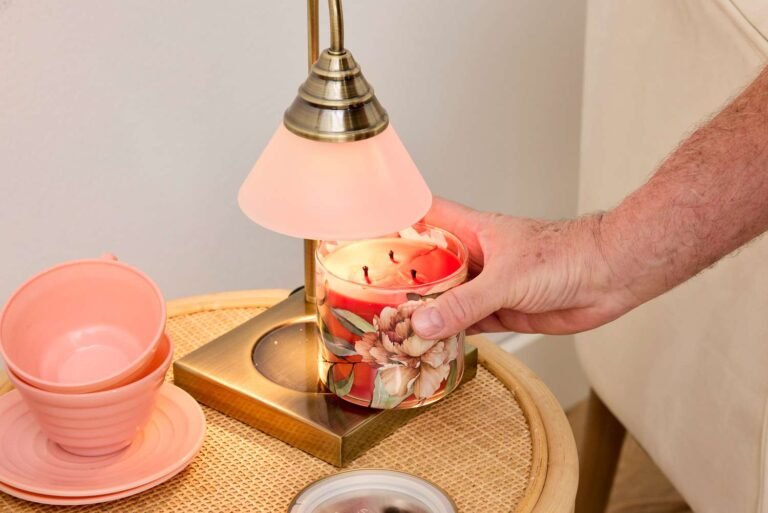
Use a candle lamp warmer on a stable, heat-resistant surface away from items that can burn. Keep curtains, paper, bedding, clothing, decorations, and other objects away from the lamp and candle.
Follow these steps:
-
Inspect the warmer.
Check the cord, plug, shade, bulb, and base. Do not use the unit if any part is cracked, loose, frayed, or damaged. -
Choose a suitable candle.
Use a candle jar that fits beneath the lamp without touching the bulb or shade. Avoid containers with cracks, chips, or visible damage. -
Remove the lid and loose items.
Take off the candle lid before heating. Do not leave decorative objects, matches, paper, or packaging near the bulb. -
Place the candle in the center.
Keep the jar upright and centered under the heat source. -
Set the lamp to a low or moderate level.
If the warmer has a dimmer or height adjustment, start with the lower setting recommended by the manufacturer. -
Set the timer.
Use the built-in timer when available. A timer helps prevent accidental long operation. -
Watch the first heating cycle.
Check whether the wax melts evenly and whether the jar, bulb, or base becomes unusually hot. -
Turn it off when finished.
Allow the candle and warmer to cool before moving them. -
Keep the wax clean.
Remove debris, wick fragments, and dust from the melted wax after the unit has cooled.
The U.S. Consumer Product Safety Commission advises consumers to keep burning candles away from things that can catch fire and never leave them unattended. Although a lamp warmer has no flame, the same care with placement and supervision is sensible because it uses concentrated heat.
Where should you place a candle lamp warmer?
Place it on a level, stable surface such as a sturdy table, shelf, or counter. Keep it away from:
- Water and sinks
- Windows with loose curtains
- Beds, sofas, and bedding
- Paper, books, and mail
- Children and pets
- Direct drafts
- Crowded power strips
- Areas where the cord can be pulled
Do not place a candle warmer inside a closed cabinet or beneath a low shelf unless the instructions specifically allow it. The unit needs space for heat to escape.
Does a Candle Warmer Use More or Less Wax?
A candle lamp warmer can make wax last longer in some situations because it does not burn the wax as fuel. A burning candle consumes wax through the wick. A warmer mainly heats the wax and releases fragrance from it.
That does not mean the wax lasts forever. Fragrance oils can gradually leave the wax during repeated heating. Over time, the candle may have less scent even though wax remains in the jar.
The useful distinction is:
- Burning: Uses wax as fuel and releases fragrance through heat and combustion.
- Warming: Keeps the wax in the jar while heat releases fragrance oils.
Scent life varies widely. It depends on the candle formula, fragrance concentration, heating temperature, room airflow, and how often you use the warmer. There is no reliable universal number of hours for every candle.
What happens when the candle stops smelling?
If the wax has little or no scent, continued heating may not restore it. The fragrance may have already evaporated from the wax. At that point, replace the candle rather than adding fragrance oil, water, or another substance to the jar.
Do not pour melted wax down a drain. Wax can cool inside plumbing and cause a blockage. Let the wax harden, then follow local household waste guidance or the candle maker’s disposal instructions.

Does a Candle Warmer Melt All Types of Candles?
Most jar candles made from common waxes can melt under a suitable candle lamp warmer. Soy, paraffin, beeswax, coconut blends, and other wax formulas have different melting behavior, so they may warm at different speeds.
The container matters as much as the wax. Glass jars made for candles are designed to handle candle heat under their stated conditions, but not every glass container is suitable for prolonged top-down heating. Thin glass, decorative glass, ceramic, or reused food containers may crack when exposed to uneven heat.
Before using a candle under a warmer, check:
- The candle maker’s care instructions
- The jar for cracks or chips
- The candle’s diameter and height
- The space between the bulb and jar
- Whether the warmer supports that container size
- Whether the candle contains objects that could become unsafe when heated
Avoid warming candles with dried flowers, crystals, wood pieces, plastic decorations, or other materials embedded in the wax unless the manufacturer confirms that the design is suitable for warming. These objects can become hot, shift in the wax, or interfere with even heating.
Never use a candle warmer with an aerosol can, fragrance diffuser refill, oil bottle, or container not designed for heat.

Common Candle Lamp Warmer Problems
Most problems come from poor positioning, low heat, unsuitable candles, or damaged equipment. Check the safest and simplest causes first.
The wax is not melting
Possible causes include:
- The bulb is not a heating bulb.
- The bulb is burned out or loose.
- The candle is too far below the lamp.
- The warmer is set to a low heat level.
- The candle jar is too large.
- The room is very cold.
- The power connection is faulty.
Turn off and unplug the warmer before checking the bulb or cord. Replace a bulb only with the type and rating listed in the product instructions. Do not install a higher-wattage bulb to force faster melting.
The wax melts unevenly
Uneven melting can happen when the candle is not centered or when the lamp’s heat pattern does not cover the full jar. A very wide candle may also need a warmer designed for a larger diameter.
Turn off the unit, let the wax cool, and reposition the candle if the instructions permit it. Do not move a jar while the wax is liquid unless you can hold it safely without touching hot surfaces.
The scent is weak
A weak scent may result from:
- A low-fragrance candle formula
- A room that is too large or well ventilated
- Fragrance that has already evaporated
- Insufficient heat
- A candle with a narrow or deep jar
- A scent designed to be subtle
Increase ventilation only if you want a lighter scent. Do not raise the heat beyond the product’s safe range. More heat does not always improve fragrance and may increase stress on the jar.
The glass becomes very hot
Turn off the warmer if the jar becomes too hot to approach safely, shows discoloration, develops a crack, or makes popping or snapping sounds. Let everything cool fully before inspection.
Do not use a damaged jar again. Contact the warmer or candle manufacturer if the product becomes excessively hot during normal use. Keep a safe distance while the unit cools.
The warmer smells like burning plastic or has electrical noise
Switch it off and unplug it if you notice a burning odor, smoke, sparking, melting plastic, repeated flickering, or unusual buzzing. Do not keep using the unit to see whether the problem stops.
For persistent electrical faults, replace the warmer or have it assessed by a qualified professional. Do not repair a household electrical product unless you have the skills and the manufacturer permits the repair.

How to Choose a Candle Lamp Warmer
Choose a warmer based on the candle size, heat control, safety features, and placement in your home—not only its appearance.
Compare these features
| Feature | Why it matters |
|---|---|
| Adjustable height | Helps fit candles of different sizes |
| Dimmer control | Lets you reduce heat and fragrance strength |
| Timer | Limits unattended operating time |
| Stable base | Reduces tipping risk |
| Enclosed bulb area | Helps protect the hot bulb |
| Replaceable bulb | Makes maintenance easier |
| Clear instructions | Shows approved candle sizes and bulb types |
| Appropriate U.S. plug | Helps ensure correct household use |
| Safety certification mark | May indicate evaluation by a recognized testing organization; verify the mark and product details |
A timer is especially useful if you often forget to turn off small appliances. Adjustable height can help, but it does not replace the manufacturer’s minimum and maximum distance instructions.
Look for a product label with the manufacturer’s name, model information, electrical rating, and replacement bulb details. Avoid products with unclear instructions or missing safety information.
Lamp warmer or warming plate?
A lamp warmer is usually better when you want to heat the wax from above and see the candle as part of the room’s decor. A warming plate may work better for a candle that is too tall for a lamp or for a user who prefers bottom heat.
A plate can heat the base of the jar and may warm the wax more slowly or unevenly, depending on the design. A lamp can heat the top surface directly but may make the upper part of the jar hotter than the lower part.
Neither type should be treated as heat-free. Follow the instructions for the specific warmer and candle.

Candle Lamp Warmer Safety Limits
A candle lamp warmer removes the flame, but it does not remove every hazard. The main limits are heat, electricity, glass, and melted wax.
Keep these rules in mind:
- Do not operate the warmer near water.
- Do not cover the lamp or block its ventilation.
- Do not use a damaged cord or plug.
- Do not touch the bulb while it is on or still hot.
- Do not move the candle while the wax is liquid.
- Do not leave the unit running for unusually long periods.
- Do not use a candle jar that is cracked, chipped, or unstable.
- Do not place the warmer where children or pets can reach it.
- Do not use a replacement bulb with a higher rating than specified.
- Do not assume a timer makes the unit safe to leave unattended.
- Do not connect it to an overloaded outlet or unsafe extension setup.
- Do not add water, essential oils, or extra fragrance to heated wax.
If a fire starts, do not pour water onto hot wax or an electrical appliance. Leave the area and call 911 when appropriate. For routine electrical concerns, unplug the unit only if you can do so without approaching danger.

Frequently Asked Questions
Can you leave a candle warmer on overnight?
It is safer to turn it off before sleeping or leaving home. A timer can reduce the chance of extended operation, but it does not remove the risks from heat, electrical failure, or a damaged jar.
Can you use a candle warmer with the wick still in the candle?
Yes, the wick can usually remain in the jar because the warmer does not light it. Keep the wick centered and remove loose wick pieces from the wax. Never light the wick while the candle is beneath or near an operating warmer.
Does a candle warmer make a room smell stronger?
It can release fragrance without a flame, but scent strength varies by candle, room size, airflow, wax formula, and heat level. A larger melt pool does not guarantee a stronger or better scent.
Can a candle warmer prevent tunneling?
It may melt wax across the top more evenly than a short burn, but results depend on the lamp’s heat pattern and the candle’s shape. It cannot repair cracked glass, poor wick placement, or a candle that has already lost much of its fragrance.
Is a candle warmer safer than a candle?
It removes the open flame and combustion from normal use, which can lower some fire and air-quality risks. It still produces hot surfaces and uses electricity, so safe placement, supervision, and proper maintenance remain necessary.
The Bottom Line
A candle lamp warmer works by directing electric heat from a bulb onto the top of a candle. The heat melts the wax and releases fragrance oils without burning the wick. This can provide flame-free scent and reduce smoke and soot, but the candle jar, wax, bulb, and surrounding surfaces can still become hot.
Use a compatible candle, place the warmer on a stable heat-resistant surface, follow the manufacturer’s distance and bulb instructions, and turn it off before leaving home or going to sleep. If the jar cracks, the cord smells hot, or the unit sparks or smokes, stop using it and unplug it when safe.