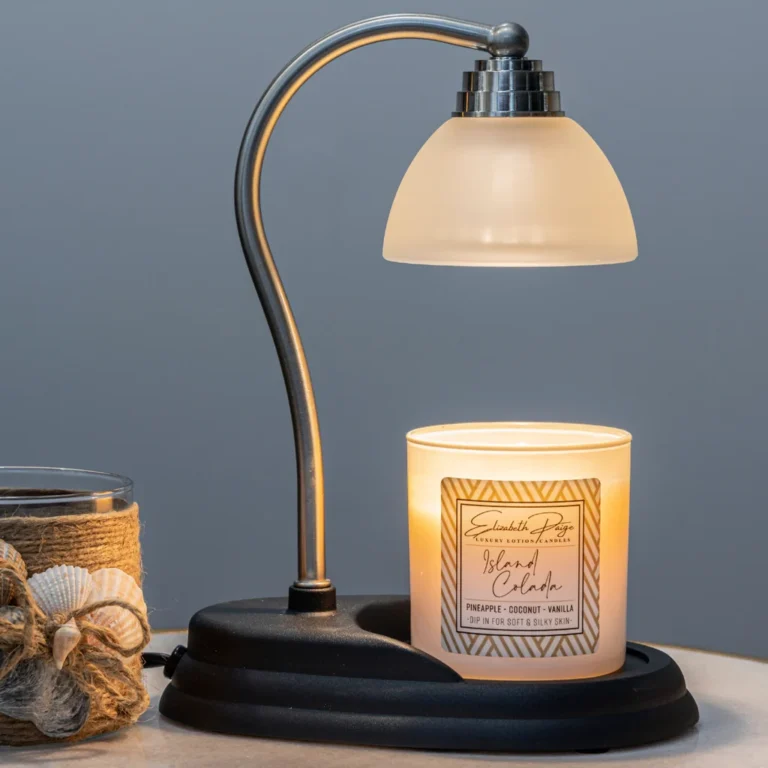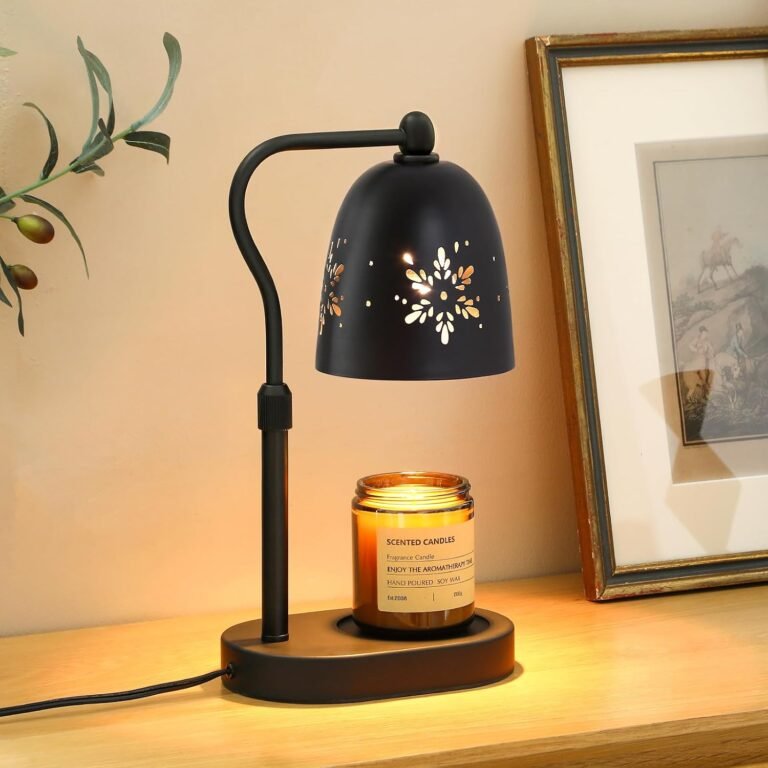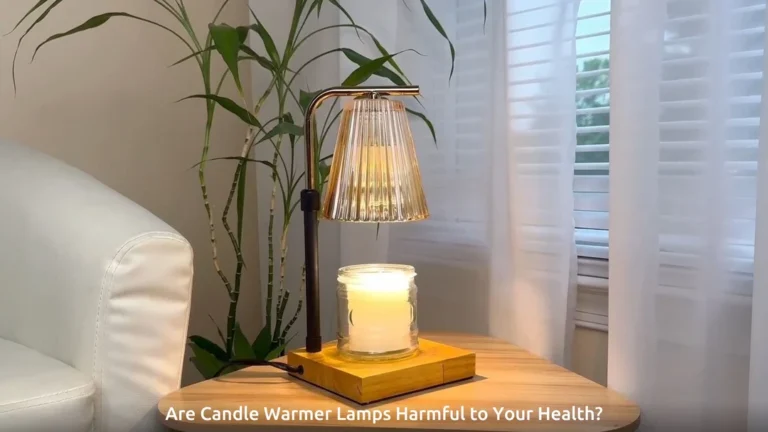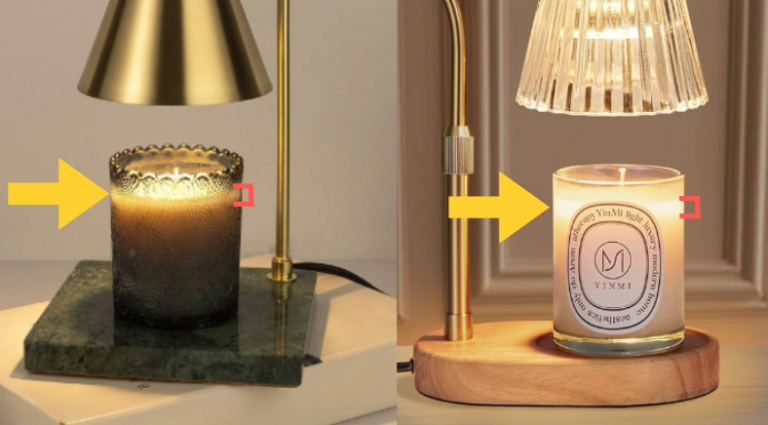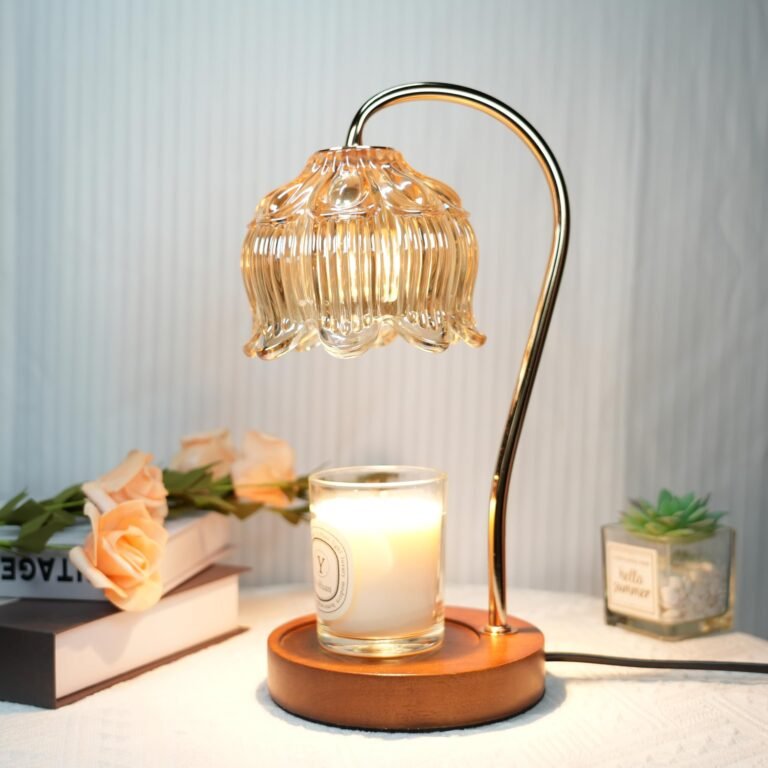
A candle warmer lamp melts candle wax with a bulb instead of an open flame. In a U.S. home, the safest way to use one is to place a suitable jar candle under the lamp, set the correct height, use the timer, and keep the unit on a stable, clear surface while it works.
A candle warmer lamp can reduce soot and remove the risk of a candle flame. However, it still uses electricity and creates heat. The lamp, candle jar, melted wax, cord, and nearby items all need proper care.

What Is a Candle Warmer Lamp?
A candle warmer lamp is an electric device that heats a candle from above. Its bulb warms the top layer of wax until the wax melts and releases fragrance into the room.
Unlike a traditional candle, the wick does not burn. This means there is no open flame, smoke from combustion, or direct soot from a burning wick. The candle may also last longer because the wax evaporates more slowly than it does during normal burning.
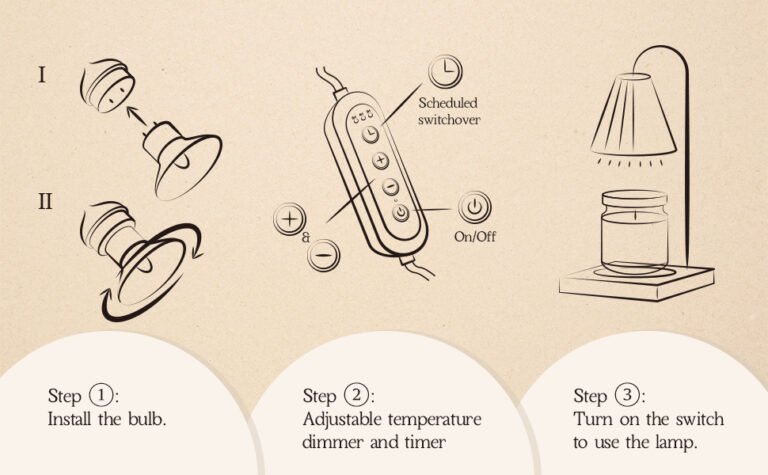
Most candle warmer lamps include:
- A heating bulb, often halogen or LED-based
- An adjustable arm or shade
- A base for the candle jar
- A power cord
- A switch, dimmer, or timer
- A height adjustment on some models
A warmer lamp is not the same as a candle warmer plate. A lamp heats the candle from the top. A plate heats it from the bottom. These two designs may have different safety rules, so use the instructions for the exact model you own.
How to Use a Candle Warmer Lamp Step by Step
Follow these steps each time you use a candle warmer lamp.
1. Read the lamp and candle instructions
Start with the user manual. Check the approved bulb type, maximum wattage, timer settings, and candle size.
Also check the candle label. Some candles are made only for normal burning. Others may have a container or wax blend that does not perform well under a warmer lamp.
Do not assume that every candle jar is safe to heat. The glass must be free of chips, cracks, deep scratches, and other damage.
2. Choose a suitable candle
Use a candle in a heat-safe container that fits fully on the lamp base.
The best choice is usually a container candle in a sturdy glass jar. Before use, confirm that:
- The jar sits flat and does not wobble.
- The jar is not cracked or chipped.
- The candle is not too tall for the lamp.
- The candle does not touch the bulb or shade.
- The container fits within the lamp’s stated size range.
- The label does not prohibit external heating.
Avoid using the lamp with:
- Taper candles
- Pillar candles without a container
- Loose wax in an open bowl
- Plastic containers
- Thin decorative glass
- Damaged jars
- Candles with metal, paper, or fabric parts near the top
A candle warmer lamp is usually designed for jar candles, not exposed wax.
3. Place the lamp on a safe surface
Set the lamp on a solid, level surface that will not tip easily. A table, shelf, or countertop may work if it can support the lamp and candle.
Keep the lamp away from:
- curtains and blinds
- Books and paper
- Bedding and clothing
- Aerosol cans
- Cleaning products
- Children’s toys
- Pet bedding
- Heat-sensitive furniture
- Water and damp areas
Leave space around the lamp for air flow. Do not place it inside a closed cabinet or directly under a shelf unless the manufacturer allows it.
4. Inspect the cord and plug
Before plugging in the lamp, check the cord for cuts, exposed wires, crushed areas, or loose connections.
Do not use the lamp if:
- The plug is cracked.
- The cord becomes hot.
- The cord smells like burning plastic.
- The lamp flickers unexpectedly.
- The switch feels loose.
- The plug fits poorly in the outlet.
Plug the warmer directly into a suitable wall outlet when possible. Avoid overloading a power strip or extension cord. If you must use an extension cord, follow the lamp manual and use one rated for the device.
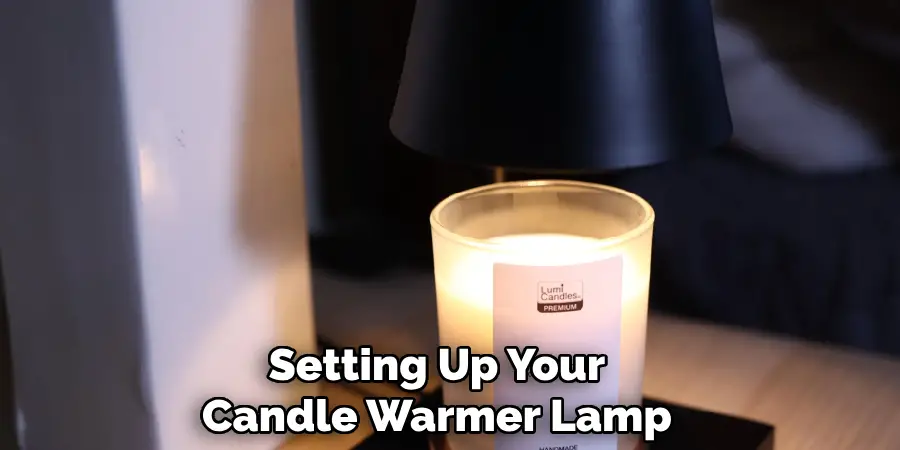
5. Center the candle under the bulb
Place the candle in the middle of the base. The bulb should heat the wax evenly from above.
If the lamp has an adjustable arm, set the height according to the instructions. The bulb should not touch the jar, wax, lid, or any decorative item.
Do not place a lid on the candle while the warmer lamp is running. A lid can trap heat and may become hot enough to damage the candle or container.
6. Turn on the lamp and use the timer
Turn the lamp on at a low setting if it has a dimmer. A lower setting may take longer to melt the wax, but it gives you more control.
If the lamp has a timer, use it. A timer reduces the chance that the unit will run for many hours by mistake.
For the first use, stay nearby and watch the candle as the top layer melts. Look for uneven heating, wax overflow, unusual odors, flickering, or excess heat around the jar.
Do not leave the lamp running while you are away from home or asleep. A timer is a useful control, but it is not a replacement for supervision.
7. Let the wax melt gradually
The candle does not need to become completely liquid to release fragrance. The melted wax near the top is usually enough.
Stop using the lamp if:
- The wax reaches the rim.
- The glass becomes unusually hot.
- The jar starts to crack.
- The candle shifts or becomes unstable.
- The lamp emits smoke or a burning smell.
- The bulb touches the candle.
- The wax spills onto the lamp or table.
Never move the candle while the wax is liquid. Turn off and unplug the lamp first. Let the jar cool until the wax is firm and the glass is safe to handle.

How Long Should You Run a Candle Warmer Lamp?
Use the timer and the candle manufacturer’s instructions as your main guide. There is no single safe run time for every lamp and candle combination.
Run time depends on:
- Bulb type
- Bulb wattage
- Distance from the candle
- Candle diameter
- Glass thickness
- Wax type
- Room temperature
- Lamp design
- Timer settings
A wide candle may need more time to melt across the surface than a narrow candle. A high-wattage bulb may heat the wax faster than a low-wattage bulb.
For a new setup, use a short session while you observe the lamp. Check the jar, melted wax, and surrounding surface during the session. If the manufacturer provides a maximum operating time, do not exceed it.
A candle warmer lamp should not run continuously simply because it has no flame. Electrical parts can fail, and hot materials can damage nearby items.
What Should the Melted Wax Look Like?
A normal melt pool is a shallow layer of liquid wax across part or all of the candle’s top surface. The fragrance should become noticeable without a sharp electrical smell, smoke, or visible damage to the jar.
The wax may not melt evenly at first. This can happen when:
- The bulb is not centered.
- The lamp is too high.
- The candle is very wide.
- The wax blend melts slowly.
- The jar has a thick wall.
- The lamp has a low-power bulb.
If only one side melts, turn off the lamp and allow the candle to cool. Then check its position and the lamp height. Do not tilt the candle or place objects under it to change the angle.
Do not add water, oil, or extra fragrance to the candle. These materials can change how the wax heats and may create splashes or damage.
How to Keep the Candle Fragrant
A candle warmer lamp releases fragrance from the wax without burning the wick. Over time, the most volatile fragrance compounds may leave the wax while the wax itself remains in the jar.
If the candle smells weaker after repeated use, possible reasons include:
- The fragrance has already been released.
- The room is large or well ventilated.
- The scent is naturally mild.
- The melted layer has been heated many times.
- The lamp is too far from the candle.
- The candle is near an open window, fan, or air vent.
Keep the candle in a room with normal air movement, but do not place it directly in front of a fan. Strong air flow can spread the scent unevenly and may cool the wax.
When most of the fragrance has faded, follow the candle maker’s disposal guidance. Do not pour liquid wax into a sink or toilet. Wax can cool inside plumbing and cause a blockage. Let small amounts harden and discard them according to local household waste rules, unless the manufacturer provides a reuse or recycling option.

Candle Warmer Lamp Safety Rules
A candle warmer lamp removes the flame, but it does not remove all fire and electrical risks. The following rules help reduce those risks.
Keep the lamp away from children and pets
A child or pet can pull the cord, tip the lamp, or touch the hot jar. Place the unit where the cord cannot be reached and the base cannot be knocked over.
Do not allow anyone to handle the candle while the wax is liquid. Melted wax can cause burns.
Use the correct bulb
Use only the bulb type, size, and wattage listed in the manual. A stronger bulb may produce more heat than the lamp or candle jar can safely handle.
Do not replace a specified bulb with a random LED bulb. Some LED bulbs produce little heat and may not melt the wax. Other lamp designs rely on a specific halogen bulb for both heat and light.
Unplug the lamp before changing the bulb. Wait until the bulb has cooled.
Do not use a damaged candle jar
Heat can worsen existing damage in glass. A small chip or crack may become a break as the jar warms.
Replace any candle with damaged glass. Do not try to repair the jar with tape, glue, or a sleeve.
Do not cover the lamp
Never cover the shade, bulb, or ventilation openings. Do not place fabric over the lamp to soften the light.
Blocked air flow can raise the temperature of the lamp and nearby surfaces.
Do not use it near water
Keep the lamp away from sinks, bathtubs, humidifiers, wet countertops, and spilled drinks. Unplug it before cleaning.
If liquid reaches the lamp, stop using it until it has been inspected or the manufacturer confirms that it is safe.
Use a recognized safety mark when buying
When shopping in the United States, look for a product tested by a recognized testing laboratory, such as a UL or ETL mark, when available. A safety mark does not guarantee that a product will never fail, but it can show that the product was evaluated against applicable electrical safety requirements.
Also check for:
- Clear manufacturer instructions
- A complete model number
- Replacement bulb information
- A working timer
- A stable base
- A cord with no visible damage
- A return policy and warranty
The U.S. Consumer Product Safety Commission provides general product safety information, but it does not approve every candle warmer lamp sold online. Treat vague listings and products with missing instructions with caution.

Candle Warmer Lamp Troubleshooting
Use the symptom first, then check the safest and simplest cause.
| Problem | Likely causes | Safe checks |
|---|---|---|
| Wax does not melt | Wrong bulb, lamp too high, low power, wide jar | Check the manual, bulb type, height, and candle position |
| Only one side melts | Candle is off-center or lamp is not level | Center the jar and place the lamp on a flat surface |
| Wax melts too fast | Bulb is too strong or too close | Turn off the lamp and verify the bulb and height |
| Burning smell | Damaged cord, overheated part, debris, or bulb problem | Unplug it and stop using it until the cause is clear |
| Lamp flickers | Loose bulb, damaged switch, poor connection, or electrical fault | Unplug it; do not continue testing a damaged unit |
| Jar becomes very hot | Excess heat, wrong bulb, poor fit, or damaged glass | Turn it off, unplug it, and let it cool |
| Fragrance is weak | Fragrance has faded, room is large, or air flow is high | Try a smaller room or replace the depleted candle |
| Wax spills | Jar was moved while liquid or wax level was too high | Let it cool, then clean according to the manual |
If the lamp trips a circuit breaker, produces smoke, sparks, or repeated burning odors, unplug it if you can do so safely. Do not open the housing or attempt electrical repairs unless you are qualified to do so.
Contact the manufacturer for model-specific support. Replace the unit if the fault cannot be identified or if the warranty requires replacement.
Candle Warmer Lamp vs. Burning a Candle
A warmer lamp and a burning candle offer different benefits.
| Feature | Candle warmer lamp | Traditional candle |
|---|---|---|
| Open flame | No | Yes |
| Smoke from burning | Usually no | Possible |
| Electrical power | Required | Not required |
| Wick use | Wick remains unused | Wick burns |
| Main heat source | Bulb | Flame |
| Main risks | Electrical fault and hot surfaces | Flame, hot wax, soot, and glass |
| Scent release | From heated wax | From heated and burned wax |
| Supervision | Still needed | Always needed |
A warmer lamp may suit a desk, bedroom, or living room where the user wants fragrance without a flame. A traditional candle may be preferred for light and atmosphere, but it requires strict flame safety.
Neither option should be treated as risk-free. The safest choice depends on the device, the candle, the room, and how closely the user can supervise it.
Common Mistakes to Avoid
Avoid these frequent errors when using a candle warmer lamp:
-
Using a higher-wattage bulb for faster results
This can overheat the lamp or candle jar. -
Leaving the lamp on all day
Long operation increases heat exposure and electrical risk. -
Moving the candle while the wax is liquid
Liquid wax can spill and cause burns. -
Using a cracked or thin container
Heat can worsen damage in the glass. -
Placing the lamp under a shelf
The shelf can trap heat or become discolored. -
Covering the candle with its lid while heating
A lid can trap heat and interfere with safe operation. -
Pouring melted wax down a drain
Wax can harden inside the pipe. -
Ignoring a burning smell
Turn off and unplug the lamp. A burning smell can point to an electrical or bulb problem. -
Using the lamp with loose decorative items
Ribbons, dried flowers, labels, and other materials can become hot. -
Assuming a timer makes supervision unnecessary
A timer can fail or be set incorrectly. Stay nearby during use.
Frequently Asked Questions
Can you use any candle with a candle warmer lamp?
No. Use a candle in a sturdy, heat-safe container that fits the lamp and follows the manufacturer’s instructions. Avoid damaged jars, exposed wax, plastic containers, and candles with decorations near the top.
Does a candle warmer lamp use the wick?
No. The lamp warms the wax without lighting the wick. Do not light the wick while the candle is under the lamp unless the manufacturer clearly states that the product supports that use.
Can a candle warmer lamp cause a fire?
It can create a fire or burn hazard if it is damaged, misused, covered, placed near flammable items, or fitted with the wrong bulb. It is generally designed to avoid an open flame, but it still produces heat and uses electricity.
How do you clean a candle warmer lamp?
Turn it off, unplug it, and let it cool fully. Wipe the base and shade with a dry or slightly damp cloth if the manual allows it. Do not pour water into the lamp or clean a hot bulb. Remove wax only after it has cooled and according to the manufacturer’s instructions.
Can you sleep with a candle warmer lamp on?
It is best not to. Turn it off and unplug it before sleeping. Use the timer as an added safeguard, not as permission to leave the unit unattended for long periods.
Why does my candle warmer lamp smell like plastic?
A mild odor may occur when a new device heats for the first time, but a strong or persistent plastic smell can signal overheating or a defective part. Turn it off, unplug it, and contact the manufacturer if the odor continues.
Final Checklist for Safe Use
Before turning on a candle warmer lamp, confirm that:
- The candle jar is sturdy and undamaged.
- The candle fits the lamp.
- The correct bulb is installed.
- The lamp sits on a level, heat-safe surface.
- Flammable items are several inches away or farther, as directed by the manual.
- The cord and plug are undamaged.
- The candle is centered under the bulb.
- The timer is set.
- Children and pets cannot reach the lamp.
- You will remain nearby while it operates.
The next time you use the lamp, start with a short supervised session. Check the wax, jar, bulb, cord, and surrounding surface before deciding whether the setup is working normally.