
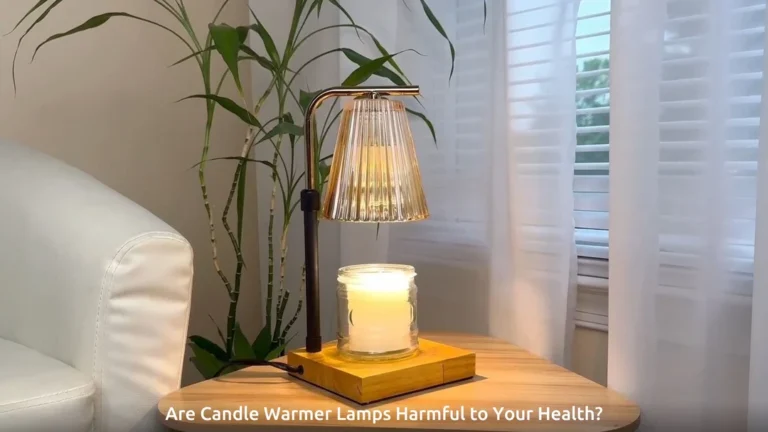
A candle warmer lamp melts candle wax from above with heat from an electric bulb. The melted wax releases fragrance into the room without a flame, smoke, or a burning wick. In a typical U.S. home, this makes the lamp a convenient option for people who enjoy scented candles but want to avoid an open flame.
Most candle warmer lamps use a halogen or heating bulb. The bulb sends heat downward into the candle jar. As the wax warms, it changes from solid to liquid, and fragrance oils slowly evaporate into the air. The candle still needs heat, but it does not need to be lit.

What Is a Candle Warmer Lamp?
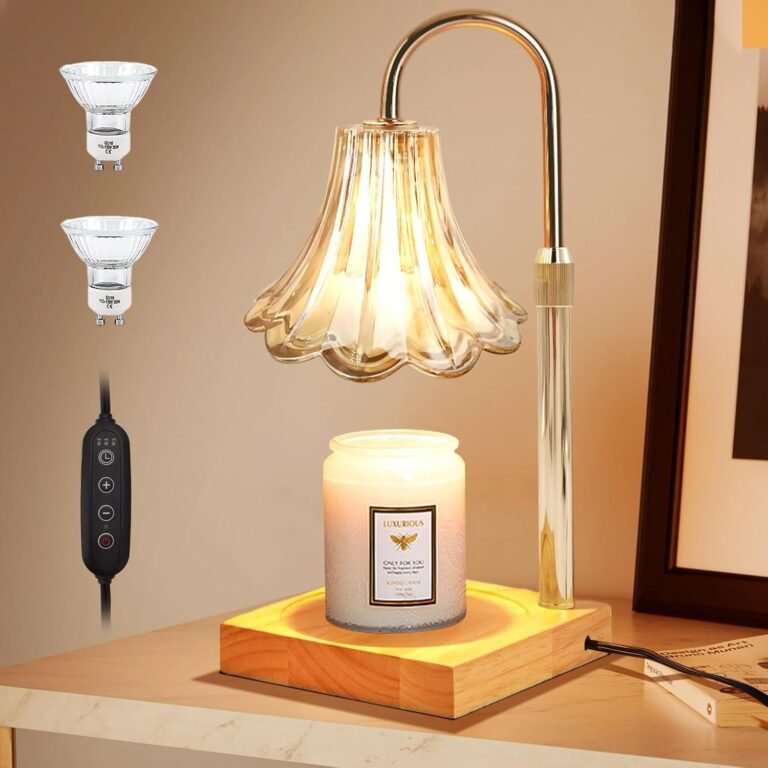
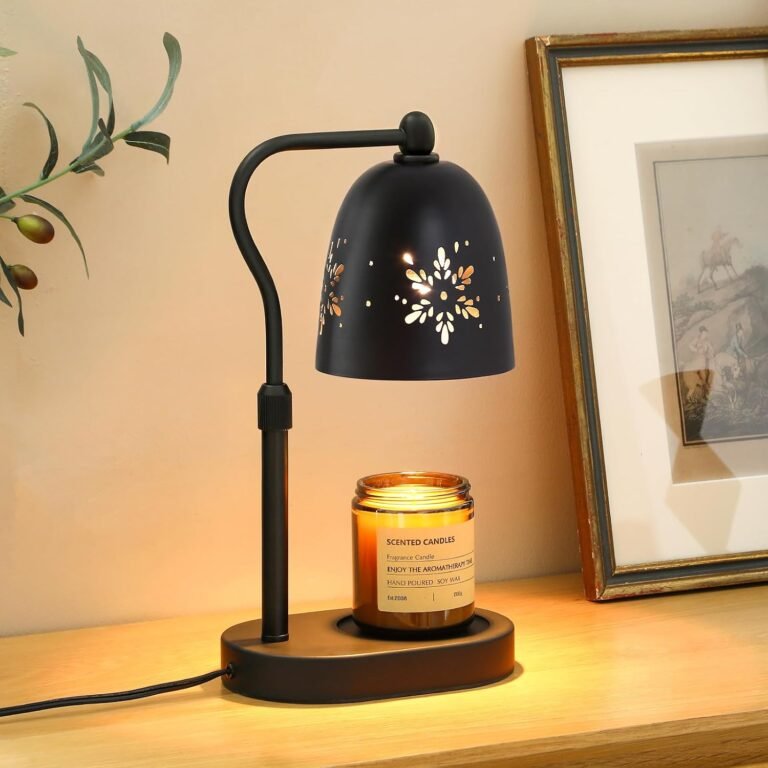
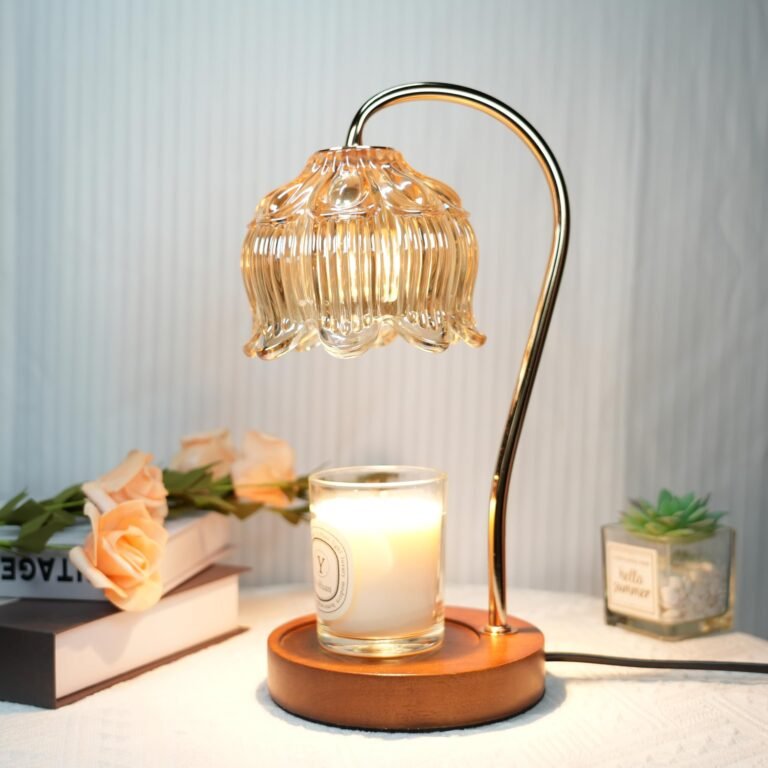
A candle warmer lamp is an electric device that heats a candle from above. It usually has a base for the candle, a vertical stand, a lamp shade, and a bulb that produces heat.
Unlike a candle warmer plate, which heats a jar from the bottom, a lamp warms the wax from the top down. This design often melts the upper layer first and lets the fragrance spread without burning the wick.
A warmer lamp can work with many jar candles, but the jar must fit safely under the lamp. The lamp must also provide enough heat to melt the wax without touching or damaging the container.
Candle warmer lamp vs. candle warmer plate
| Feature | Candle warmer lamp | Candle warmer plate |
|---|---|---|
| Heat source | Bulb above the candle | Heated surface below the candle |
| Wax melting pattern | Top down | Bottom up |
| Main adjustment | Lamp height or bulb strength | Plate temperature |
| Candle visibility | Usually visible | May be partly hidden |
| Common benefit | Combines warming with light | Simple, compact design |
| Main concern | Bulb distance and jar height | Hot base and surface contact |
A lamp may be more useful when you want a small light as well as fragrance. A plate may take up less vertical space. Neither method burns the wax in the same way as a lit candle.

How Does a Candle Warmer Lamp Melt Wax?
A candle warmer lamp works through radiant heat. The bulb emits infrared energy, which travels downward and warms the top of the candle.
The heat first reaches the surface of the wax. Once the wax becomes warm enough, it melts into a liquid pool. Fragrance compounds in the wax then move into the surrounding air through evaporation.
The process has four basic stages:
- The bulb produces heat.
- Radiant heat reaches the candle surface.
- The wax melts from the top downward.
- Fragrance oils evaporate and scent the room.
The lamp does not consume the wax through combustion. A lit candle uses heat to melt wax, draws liquid wax up the wick, and burns the wax vapor. A warmer lamp mainly uses heat to release the fragrance while leaving the wick unused.
Why the candle still smells without a flame
Candle fragrance comes from volatile compounds mixed into the wax. When these compounds become warm, some change into vapor and spread through the room.
A flame is not required for this release. Heat alone can make the fragrance move into the air. However, a warmer lamp may produce a different scent experience from a burning candle because there is no flame, smoke, or hot wick.
The scent can also change as the candle sits under heat. Some fragrance notes evaporate faster than others. The first warming session may smell stronger than later sessions, depending on the wax blend, fragrance load, room size, and lamp design.
Does a candle warmer lamp burn the candle?
No. A candle warmer lamp does not burn the wax in the usual sense. It melts and warms the wax but does not create the flame needed for combustion.
This means the wick remains unused. It also means the wax may remain in the jar after much of the fragrance has left it. The candle may look intact while its scent becomes weaker over time.

What Parts Does a Candle Warmer Lamp Have?
A candle warmer lamp has several parts that work together to control heat and support the candle jar.
Heating bulb
The bulb is the main heat source. Some models use halogen bulbs, while others use bulbs made for warming wax. A standard decorative LED bulb may produce light but not enough heat to melt most candle wax.
Always use the bulb type and wattage listed by the manufacturer. A bulb with too much power can overheat the jar, shade, or lamp socket.
Height adjustment
Many lamps let you raise or lower the heating head. A shorter distance usually creates more heat at the candle surface. A greater distance reduces the heat.
Height adjustment helps the lamp fit different jar sizes. It also lets you control how quickly the wax melts.
Timer
A timer turns the lamp off after a set period. This can reduce the chance of leaving the warmer on for many hours.
A timer is a useful backup, not a replacement for safe use. A candle warmer lamp is still an electrical heating device, and the jar may remain hot after the lamp turns off.
Dimmer or heat control
Some models include a dimmer or heat control. On certain lamps, lowering the light also lowers the heat. On others, the control changes brightness but does not provide precise temperature control.
Do not assume that a dimmer gives exact heat settings. Follow the instructions for the specific model.
Base and support
The base supports the candle jar and helps keep it centered. The support arm holds the bulb above the candle.
Place the lamp on a firm, level surface. A narrow, unstable table can make the lamp easier to tip.

How to Use a Candle Warmer Lamp
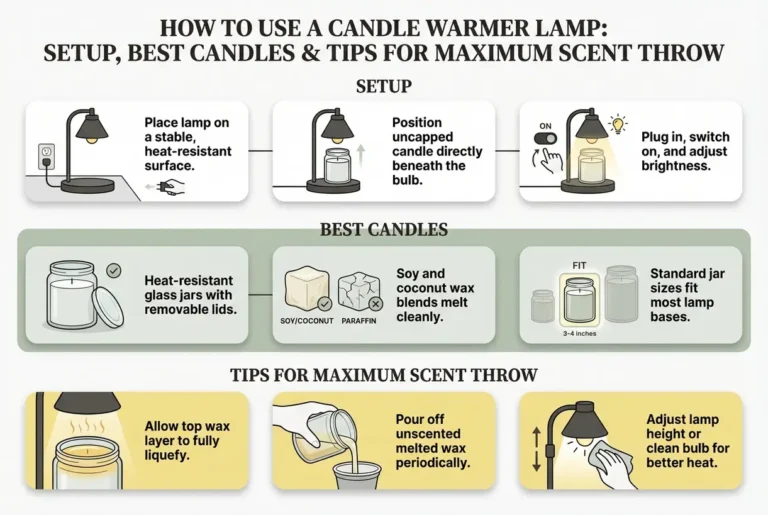
Using a candle warmer lamp is simple, but setup affects both performance and safety.
Before you start
Check these items first:
- The lamp is made for the voltage used in your U.S. home.
- The bulb matches the lamp’s required type and wattage.
- The candle jar is stable and fits below the heating head.
- The glass is free from cracks, chips, and deep scratches.
- The cord and plug show no damage.
- The lamp sits on a flat, heat-resistant surface.
- Curtains, paper, bedding, and other items are away from the lamp.
Step-by-step instructions
-
Remove the candle lid.
Do not operate the lamp with a lid covering the jar unless the manufacturer specifically allows it. -
Center the candle under the bulb.
Keep the jar upright and place it on the lamp base. -
Set the lamp height.
Use the recommended clearance in the product instructions. If the instructions do not give a distance, start with the heating head farther away rather than placing it close to the jar. -
Turn on the lamp.
Begin with a short session. Watch the wax and jar during the first use. -
Check the melt pool.
The wax should soften and melt gradually. Stop use if the jar becomes unusually hot, the glass changes color, or the lamp smells like melting plastic or burning wiring. -
Use the timer if available.
Set a period that fits the manufacturer’s instructions. Do not treat the timer as a guarantee that every setup is safe. -
Turn off the lamp before moving the candle.
Let the jar cool before handling it.
Signs that it is working
A working lamp usually produces these signs:
- The top of the wax becomes glossy.
- A liquid wax pool forms around the center or across the surface.
- The fragrance becomes noticeable after the wax warms.
- The bulb stays firmly in its socket.
- The jar remains stable and shows no damage.
A candle warmer lamp may need time to melt a full jar. The exact time depends on the bulb, lamp height, jar width, wax type, room temperature, and amount of wax.

What Affects Candle Warmer Lamp Performance?
The lamp, candle, and room all affect how well the system works. A stronger bulb is not always better because excessive heat can stress the jar or lamp.
Bulb type and wattage
Bulb wattage affects heat output. A higher-wattage bulb may melt wax faster, but it can also raise the temperature of the glass and nearby parts.
Use only the bulb listed by the manufacturer. Never exceed the socket rating. If a replacement bulb is difficult to find, check the product manual or contact the manufacturer instead of guessing.
Distance from the candle
The distance between the bulb and the wax strongly affects heating. Moving the bulb closer usually increases heat at the candle surface. Moving it farther away usually slows melting.
Keep the bulb far enough away to avoid contact with the jar. The candle should not press against the shade, bulb, or lamp housing.
Candle size and shape
A wide jar may need more time to melt evenly than a narrow jar. A tall jar may not fit beneath the heating head. A candle with a small top opening may also receive less heat.
Check the complete jar, including its lid and rim, before choosing a lamp. The stated candle size alone does not confirm that the candle fits safely.
Wax type
Soy, paraffin, beeswax, coconut, and blended waxes can soften at different temperatures. Fragrance concentration also varies by candle.
Because of these differences, one candle may melt quickly while another takes much longer under the same lamp. Avoid changing the bulb to force a faster result.
Room conditions
Cold rooms slow melting. Drafts can cool the jar and spread fragrance unevenly. A larger room may also make the scent seem weaker because the fragrance is spread through more air.
Place the lamp away from open windows, fans, and air-conditioning vents when possible.

Is a Candle Warmer Lamp Safer Than a Lit Candle?
A candle warmer lamp removes the open flame, so it avoids many flame-related hazards. It does not remove every risk.
The National Fire Protection Association identifies candles as a source of home fires and recommends keeping candles away from items that can burn and never leaving burning candles unattended. A warmer lamp does not create a flame, but it still produces heat and uses electricity.
The U.S. Consumer Product Safety Commission also advises consumers to pay attention to candle-related fire hazards. Those recommendations apply most directly to lit candles, but the broader safety lesson remains useful: keep heat-producing products away from combustible materials and use them as directed.
Main risks to consider
- Overheating a candle jar
- Using the wrong bulb
- Placing the lamp near curtains or paper
- Using a damaged cord or plug
- Tipping the lamp
- Touching hot wax or glass
- Operating a cracked or damaged jar
- Leaving the device on while away
- Blocking ventilation around the lamp
- Using an extension cord or power strip that is not suitable for the load
Basic safety rules
- Read the product manual before the first use.
- Use the specified bulb and wattage.
- Keep the lamp on a stable, heat-resistant surface.
- Keep children and pets from touching the lamp or jar.
- Do not cover the lamp.
- Do not place objects on the shade or base.
- Do not move the jar while the wax is hot.
- Stop using the lamp if you smell burning plastic or see smoke.
- Unplug the lamp before replacing the bulb.
- Inspect the cord, plug, socket, and glass before use.
A warmer lamp may reduce the risk of an open flame, but it is not automatically fireproof. If you need a device for a home, office, or dorm room, check the product’s electrical safety markings and use the device within its listed limits.

Common Problems and How to Fix Them
Most problems come from poor bulb fit, too much distance, an unsuitable jar, or normal differences between wax blends.
The wax does not melt
Possible causes:
- The bulb produces light but little heat.
- The bulb is too far from the candle.
- The bulb has the wrong wattage.
- The jar is very wide or the wax is hard.
- The room is cold.
What to do:
- Turn off and unplug the lamp.
- Confirm the bulb type and wattage.
- Check that the bulb is seated correctly.
- Confirm that the candle fits under the heating head.
- Review the manual for the recommended height.
- Try a shorter session only after confirming the setup is safe.
Do not install a stronger bulb unless the manufacturer allows it.
The fragrance seems weak
Possible causes:
- The wax has already released much of its fragrance.
- The room is large or well ventilated.
- The candle has a low fragrance concentration.
- The lamp is not warming enough wax.
- Your sense of smell has adapted to the scent.
Try moving the lamp to a smaller room with normal airflow. If the wax melts but the scent stays weak after several sessions, the fragrance may be mostly depleted.
The wax melts unevenly
Uneven melting can happen when the bulb is not centered or when the jar is too wide for the heating pattern.
Turn off the lamp and reposition the jar only after it cools. Do not stir hot wax with a metal tool, add water, or move the jar while liquid wax may spill.
The jar becomes very hot
Turn off the lamp and unplug it if the glass feels excessively hot, changes color, cracks, or gives off an unusual odor.
Check the bulb wattage and lamp height. Do not use a damaged jar or continue operating the lamp if the manufacturer’s instructions do not explain the condition.
The lamp shuts off
A timer may have ended the session. Some models may also include heat protection or an automatic shutoff feature.
Let the lamp cool, then check the timer, bulb, plug, and outlet. If the lamp shuts off repeatedly or trips a circuit breaker, stop using it until the cause is identified.

How Long Does a Candle Warmer Lamp Last?
The lamp itself can last for years if the bulb, socket, cord, and controls remain in good condition. The bulb is usually the part that needs replacement first.
The candle can also last through many warming sessions because the wax is not burned. However, the fragrance does not last forever. Once enough fragrance has evaporated, the remaining wax may have little scent even though it still fills the jar.
The useful life of a candle depends on:
- The amount and type of fragrance
- The wax blend
- How long each session lasts
- How much wax is exposed to heat
- The bulb’s heat output
- The room’s airflow
A warmer lamp may extend the candle’s usable life compared with burning the wick, but it does not preserve every fragrance compound indefinitely.

Candle Warmer Lamp Buying Checklist
Choose a candle warmer lamp based on fit, heat control, and electrical safety rather than appearance alone.
Look for:
- A bulb type and wattage clearly listed
- Adjustable height
- A stable base
- A timer or automatic shutoff
- A properly enclosed socket
- A cord long enough for safe placement
- Clear instructions for candle size and jar shape
- Replacement bulb availability
- Appropriate electrical certification for the U.S. market, such as a recognized testing mark when provided
- A return or warranty policy that explains defects and replacement parts
Avoid a lamp if the listing does not explain the bulb, wattage, candle clearance, or operating instructions. Vague specifications make safe setup harder.
Which candle works best?
A stable glass jar with a flat base and a top opening that fits under the lamp is usually the easiest option. Avoid jars with cracks, thin decorative parts, loose labels near the heat, or materials not intended for warming.
A candle that fits neatly under the lamp is safer than one that barely fits. Never force a large jar beneath a low heating head.

Key Takeaways
- A candle warmer lamp melts wax with heat from an electric bulb above the jar.
- The warm wax releases fragrance without burning the wick.
- The lamp removes the open flame but still creates heat and electrical risks.
- Bulb type, wattage, lamp height, wax blend, jar size, and room airflow affect performance.
- Use the correct bulb, keep the lamp stable, and stop using it if the jar or cord shows damage.
- A candle can lose its fragrance even when plenty of wax remains.
Frequently Asked Questions
Can you use any candle with a candle warmer lamp?
No. The candle must fit safely beneath the heating head, and the jar must be intact and stable. Check the lamp’s instructions for size and material limits before use.
Does a candle warmer lamp use less wax than a burning candle?
It does not burn the wax, so it may preserve the physical wax longer. However, fragrance still evaporates during warming. The candle can eventually smell weak even when much of the wax remains.
Can a candle warmer lamp cause a fire?
It can create a fire or electrical hazard if it is damaged, overheated, placed near combustible items, or used with the wrong bulb. No open flame does not mean no risk.
Can you leave a candle warmer lamp on overnight?
It is safer to follow the manufacturer’s operating limits and avoid leaving a heat-producing electrical device running while you sleep or leave home. A timer helps, but it does not replace proper supervision.
Does a candle warmer lamp make a room smell as strong as a lit candle?
The result varies. A warmer lamp may produce a steady scent without smoke, while a lit candle creates heat and airflow from the flame that can change how fragrance spreads. Wax type, room size, and ventilation also matter.
Can you use a candle warmer lamp with wax melts?
Only if the lamp is designed for them and the container can safely hold melted wax. Do not place loose wax directly on the lamp unless the manufacturer specifically provides a suitable melting dish.
Conclusion
A candle warmer lamp works by sending heat from an electric bulb into the top of a candle. That heat melts the wax and releases fragrance without a flame or burning wick.
For the best results, match the jar to the lamp, use the correct bulb, allow enough clearance, and monitor the first few sessions. Treat the device like any other electrical heater: keep it stable, keep flammable items away, and stop using it if the jar, cord, plug, or lamp shows signs of damage.
One Comment