Introduction
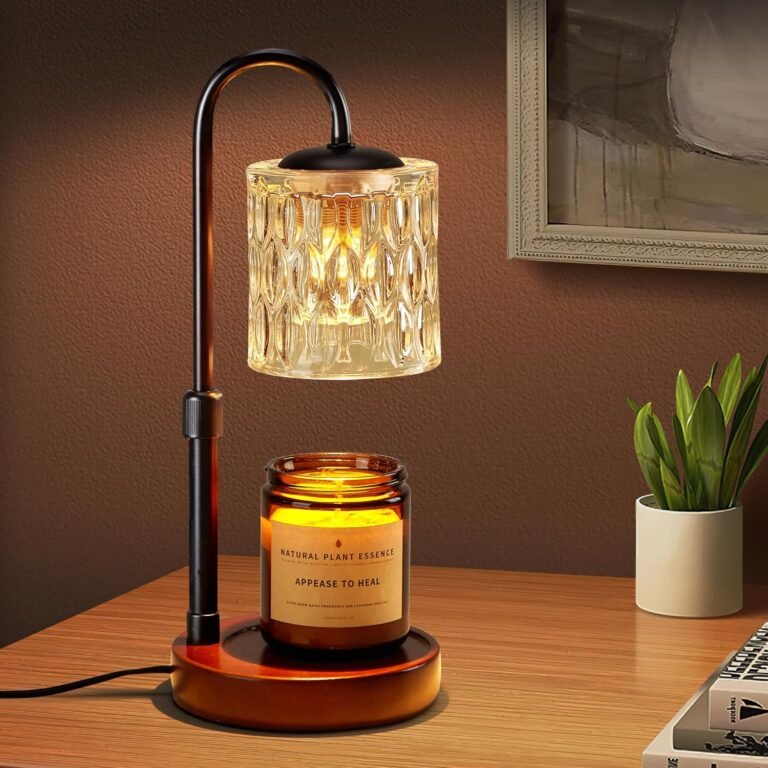
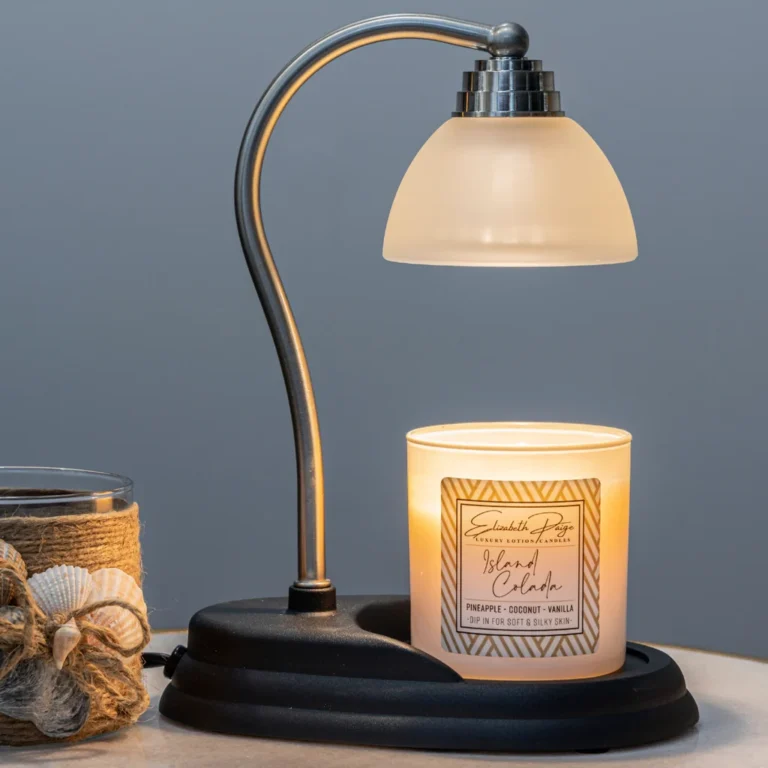
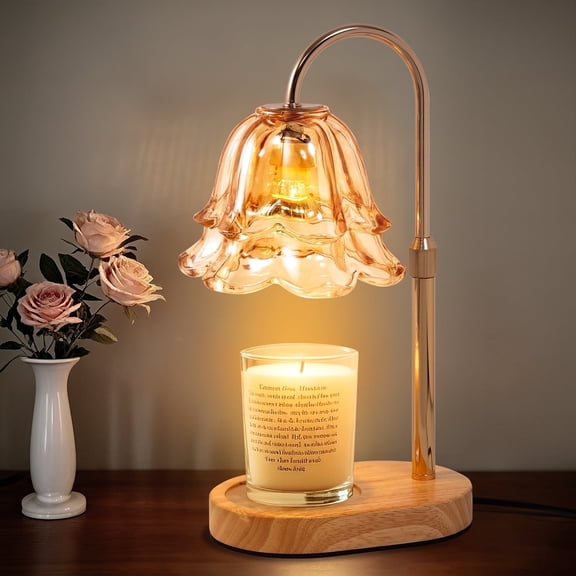
In U.S. homes, a candle warming lamp heats a jar candle from above instead of burning its wick. The lamp uses a bulb or heating element to melt the wax at the top of the candle. As the wax warms, its fragrance oils evaporate into the room.
Because the wick is not lit, a candle warmer does not create an open flame, smoke, or soot during normal use. It still produces heat, though, so the lamp and candle need safe placement and regular checks.
Quick Answer: How Does a Candle Warming Lamp Work?
A candle warming lamp works by directing heat downward onto the surface of a candle. The heat melts the wax and releases fragrance without burning the wick.
Most models use one of these heat sources:
- A halogen bulb, which gives off strong heat and often melts wax quickly.
- A low-wattage heating bulb, made to warm the candle from above.
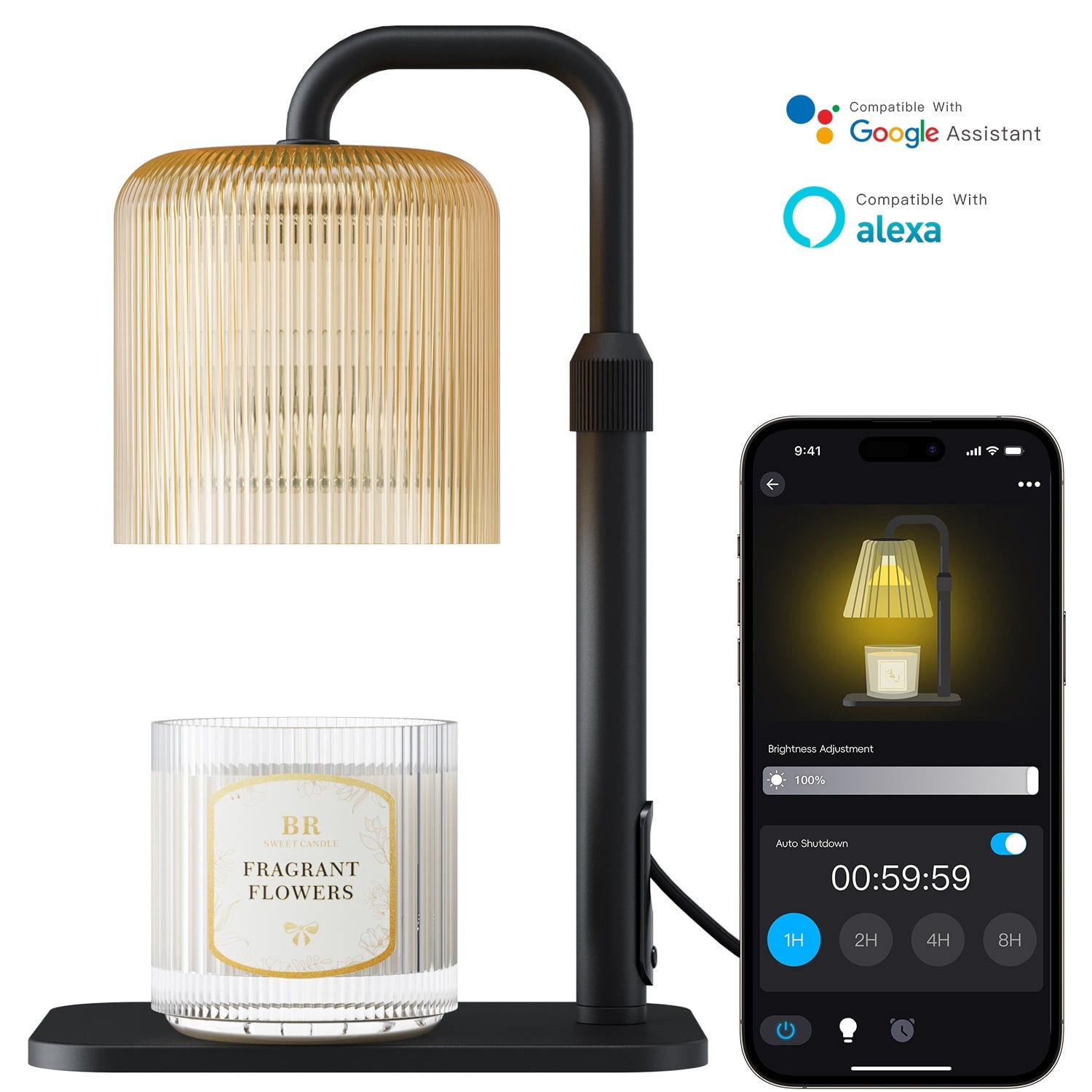
- An LED-based design, which may provide light and limited heat but must be made for candle warming.
- A built-in heating element, found in some electric candle warmers.
The lamp does not make the candle burn. Instead, it changes solid wax into liquid wax. The warmed fragrance oils then move into the air, much like they do when a candle burns.
What Is a Candle Warming Lamp?
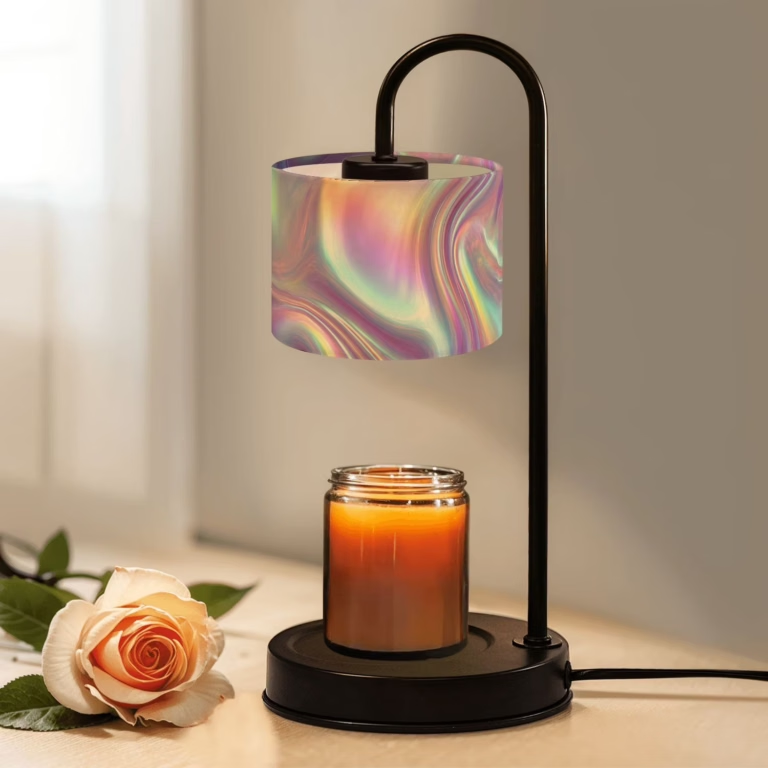
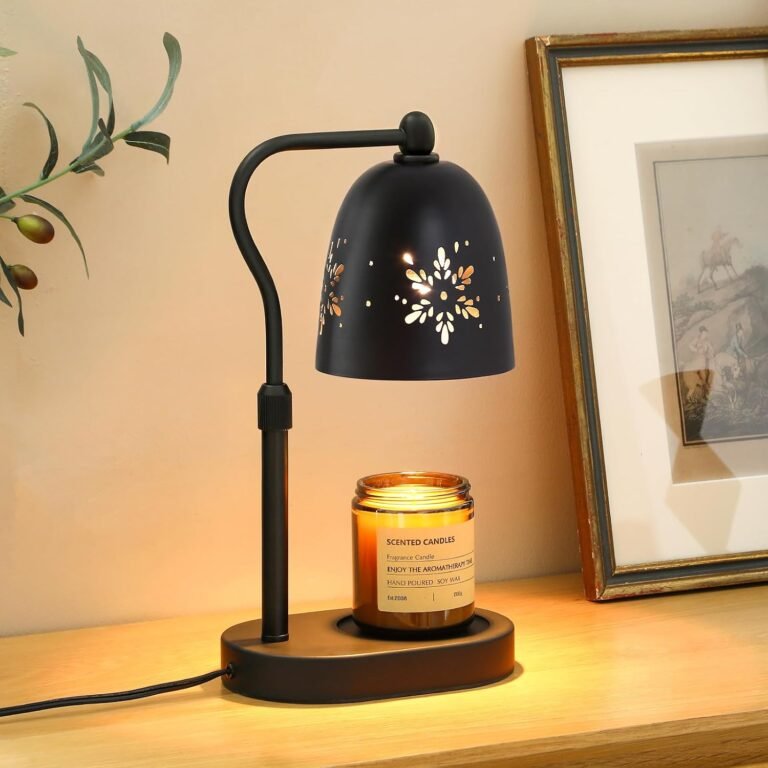
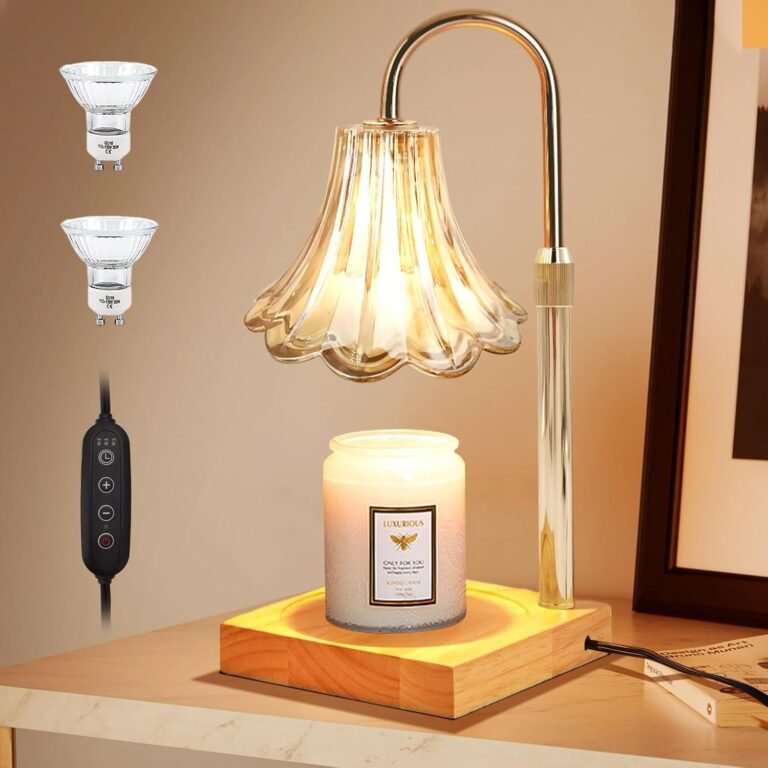
A candle warming lamp is an electric device that melts scented candle wax without using the candle’s wick. It usually includes a lamp shade, bulb, candle platform, power cord, and controls such as a timer or dimmer.
The lamp sits above the candle. Its shade focuses heat toward the top of the candle jar. As the wax melts, the fragrance spreads through the room.
A candle warming lamp is different from a candle warmer plate:
- Top-down candle warming lamp: Heats the candle from above.
- Candle warmer plate: Heats the candle jar from below.
- Wax melt warmer: Heats separate wax melts in a dish.
- Traditional burning candle: Uses a flame to heat wax and release scent.
The main benefit of a lamp is that it can warm a candle without burning the wick. This may reduce soot and eliminate the open flame, but it does not remove every safety risk.
The Science Behind Candle Warming Lamps
The process has four basic stages:
- The lamp produces radiant heat.
- The heat reaches the candle’s surface.
- Solid wax melts into a liquid pool.
- Fragrance compounds evaporate and spread through the room.
1. Radiant heat travels from the lamp to the wax
The bulb sends heat downward. This heat can travel through the air and warm the top of the candle jar.
The distance between the bulb and candle affects performance. A lamp placed too far away may warm the wax slowly. A lamp placed too close may make the glass, wax, or lamp shade too hot.
2. The wax changes from solid to liquid
Candle wax is solid at room temperature. When enough heat reaches the surface, it begins to melt.
The exact melting point depends on the wax blend. Soy wax, paraffin wax, beeswax, coconut wax, and mixed waxes can melt at different temperatures. The container, wax volume, bulb type, room temperature, and lamp height also affect melting speed.
You do not need the wax to boil. A shallow liquid layer is usually enough to release fragrance.
3. Fragrance oils move into the air
Scented candles contain fragrance oils mixed into the wax. When the wax warms, some of those fragrance compounds escape into the air.
This is why a candle often smells stronger after a melt pool forms. The lamp warms the wax without burning the fragrance through a flame.
A warmer can release scent more gently than a burning candle, but the strength still depends on:
- Candle size
- Fragrance concentration
- Wax type
- Room size
- Air movement
- Lamp temperature
- Age and storage of the candle
4. The scent spreads through the room
Once fragrance enters the air, normal air movement carries it through the room. A ceiling fan, HVAC system, or open doorway may spread the scent faster. Strong airflow can also make the fragrance seem weaker because it dilutes the scent.

How a Candle Warming Lamp Differs From Burning a Candle
A warming lamp and a burning candle both heat wax, but they use different sources of heat.
| Feature | Candle warming lamp | Burning candle |
|---|---|---|
| Heat source | Electric bulb or element | Open flame |
| Wick used | No | Yes |
| Open flame | No | Yes |
| Smoke and soot | Usually lower during normal use | Can occur |
| Fragrance release | From warmed wax | From warmed and burning wax |
| Light | Electric lamp light | Flame light |
| Fire risk | Still present | Higher because of the flame |
| Wax use | Wax may last longer | Wax and wick are consumed |
| Main concern | Hot bulb, glass, and wax | Flame, heat, soot, and nearby items |
A candle warming lamp does not make a candle fireproof. The electrical device can become hot, and the candle jar can still overheat if the lamp is used for too long or at an unsafe distance.
The lamp may also release scent differently from a flame. Burning a candle creates combustion products and consumes wax. Warming a candle mainly melts the wax and releases fragrance from the liquid surface.
How Long Does a Candle Warming Lamp Take to Melt Wax?
A candle warming lamp may begin melting the top layer within several minutes, but the full surface can take longer. There is no single time that applies to every candle.
The result depends on:
- Bulb wattage and heat output
- Distance between bulb and candle
- Candle diameter
- Wax type
- Amount of wax left
- Room temperature
- Glass thickness
- Lamp design
A small candle under a strong halogen bulb may melt faster than a large candle under a low-heat bulb.
Do not use melting speed as the only measure of safety. A faster melt does not always mean better performance. If the jar becomes very hot, the wax changes color, or the lamp shade heats excessively, turn the device off and let it cool.
A simple way to judge the heat
Use the candle surface as the main visual guide:
- A thin, even liquid layer means the lamp is warming the wax.
- A partial melt may mean the lamp is too far away, too cool, or not centered.
- A deep liquid pool may mean the lamp has been running too long.
- A very hot jar may indicate excess heat or poor clearance.
Do not touch the bulb or lamp shade while the device is on. Let the unit cool before moving it.
Do Candle Warming Lamps Work With Every Candle?
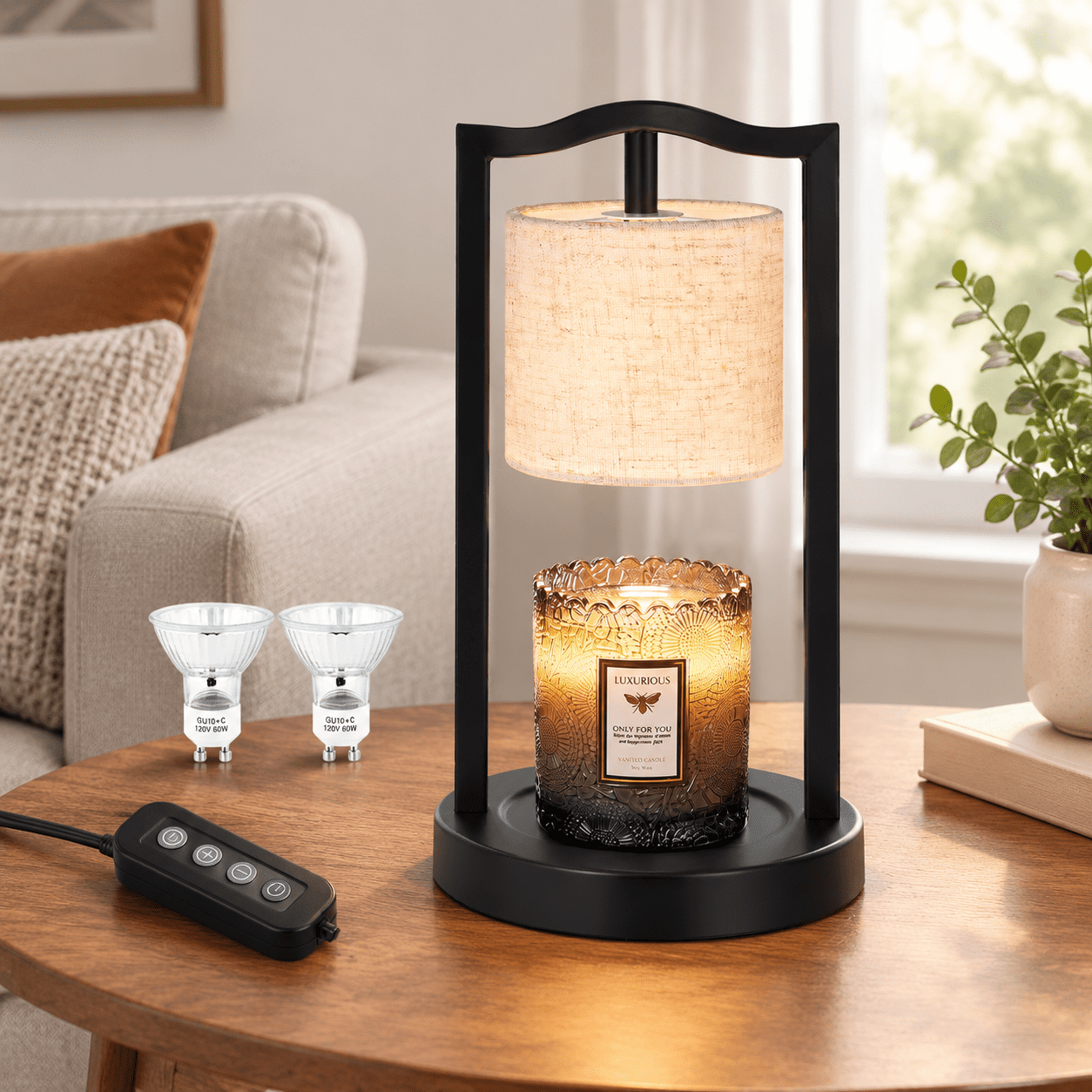
Most warming lamps work best with candles in heat-resistant glass jars. The candle should sit flat and centered below the bulb.
Check the candle and lamp before use. Do not warm a candle if the jar is:
- Cracked or chipped
- Very thin or damaged
- Unstable on the lamp base
- Too tall for the lamp
- Too wide for the lamp shade
- Made from an unknown material
- Close enough to touch the bulb or shade
Some candles have lids, labels, decorative covers, dried flowers, crystals, or other objects on top. Remove the lid before warming. Do not place loose objects on the wax.
A candle warming lamp may not work well with:
- Tin containers that become hot quickly
- Very deep candles
- Candles with a large amount of wax remaining
- Oversized three-wick candles
- Candles that do not fit below the shade
- Candles with damaged containers
Always follow the lamp maker’s instructions. The instructions for one model may not apply to another.
How to Use a Candle Warming Lamp Safely
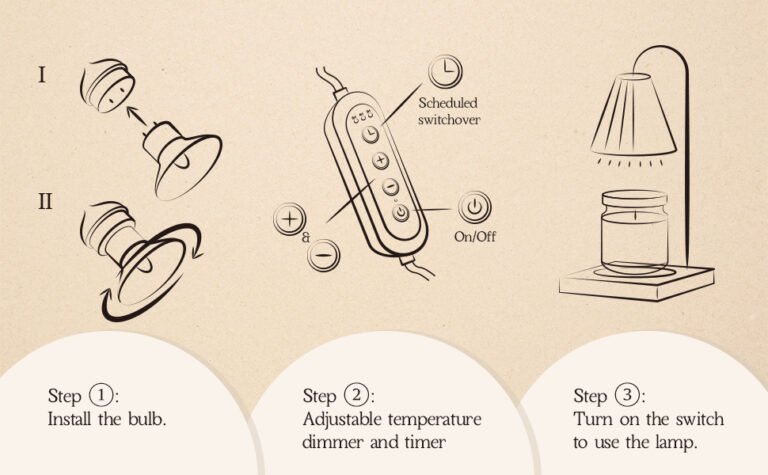
Use these steps for most top-down candle warming lamps. Your product manual takes priority if it gives different instructions.
1. Choose a stable location
Place the lamp on a flat, dry, heat-resistant surface. Keep it away from curtains, paper, bedding, furniture edges, and other items that can burn.
Do not use the lamp where a child, pet, or person could easily knock it over.
2. Inspect the candle jar
Check the jar for cracks, chips, leaks, or signs of past heat damage. Use only a sound container that fits the lamp.
3. Remove the candle lid
Take off the lid before turning on the lamp. Keep the lid away from the hot lamp and wax.
4. Center the candle
Place the candle directly below the bulb. Make sure the jar does not touch the bulb, shade, frame, or other hot parts.
5. Set the heat or timer
If the lamp has a dimmer, begin at a lower setting. If it has a timer, use the shortest useful setting at first.
The goal is to warm the wax, not overheat the container.
6. Watch the first heating cycle
Stay nearby during the first use. Look for an even melt and check whether the glass or lamp becomes unusually hot.
Do not leave the lamp running while you sleep, leave the house, or cannot monitor it.
7. Turn the lamp off and let it cool
After use, switch off the lamp and allow the candle and device to cool before moving them. The wax may remain liquid for some time.
Signs of normal operation
A candle warming lamp is likely working as intended when:
- The top of the wax slowly melts.
- The fragrance becomes noticeable.
- The jar remains stable.
- The lamp does not flicker, smoke, spark, or smell of burning plastic.
- The cord and plug remain cool or only mildly warm.
- The melt pool stays controlled rather than rising sharply.
What to do if it does not work
If the wax does not melt:
- Confirm that the lamp is switched on.
- Check that the bulb is the correct type and wattage.
- Make sure the bulb is not burned out.
- Confirm that the candle is centered.
- Check whether the candle is too far below the bulb.
- Inspect the plug, cord, and outlet.
- Stop using the lamp if the cord is damaged or the outlet becomes hot.
Do not replace a lamp bulb with a higher-wattage bulb unless the manufacturer specifically allows it. Excess heat can damage the lamp or candle jar.

Are Candle Warming Lamps Safer Than Burning Candles?
A candle warming lamp removes the open flame, which can reduce one major fire hazard. However, it is not risk-free.
The U.S. Consumer Product Safety Commission and the National Fire Protection Association advise people to keep candles away from items that can burn and to avoid leaving candles unattended. Those core precautions still matter with a warming lamp because the lamp, bulb, glass, and melted wax can become hot.
Important safety limits include:
- Do not leave the lamp unattended for long periods.
- Keep it away from children and pets.
- Do not cover the lamp or block ventilation.
- Do not use a damaged cord, plug, bulb, or socket.
- Do not place the lamp near water.
- Do not use an extension cord unless the product instructions permit it.
- Do not touch hot wax or hot glass.
- Unplug the lamp when it is not in use.
- Stop using it if you smell melting plastic, see sparks, or notice unusual flickering.
A warming lamp may lower the chance of a flame-related accident. It does not guarantee that the candle will never overheat or that the electrical device cannot fail.
Can a Candle Warming Lamp Cause a Candle Jar to Break?
A candle jar can break if it experiences too much heat or uneven heating. The risk depends on the glass, candle design, lamp temperature, and length of use.
The danger may be higher when:
- The jar has a crack or chip.
- The candle sits off-center.
- One side receives much more heat than the other.
- The bulb is too powerful.
- The lamp is designed for a smaller candle.
- The candle is nearly empty.
- The lamp runs for an unusually long time.
Never use a jar that has already cracked from heat. Do not pour cold water into hot wax or place a hot jar on a cold surface. Let the candle cool naturally.
Do Candle Warming Lamps Make Candles Last Longer?
They can reduce wick use because the wick is not burning. However, the candle still loses fragrance over time as the wax is warmed and fragrance compounds enter the air.
How long the candle lasts depends on the candle’s size, fragrance load, wax blend, temperature, and storage. A warming lamp may leave the candle with less visible wax loss than a burning candle, but that does not mean the scent will remain unchanged forever.
Repeated heating can also affect fragrance strength. If the candle smells weak after many warming cycles, the most volatile fragrance compounds may have already evaporated.
Keep unused candles covered and stored in a cool, dry place away from direct sun. Heat and sunlight can change wax color and scent before you use the candle.

Why Does a Candle Smell Weak Under a Warming Lamp?
A weak scent does not always mean the lamp is broken. Several factors can reduce fragrance strength.
The candle has a small scent throw
“Scent throw” means how strongly a candle releases fragrance. Some candles are lightly scented by design. A lamp cannot create fragrance that the wax does not contain.
The room is too large
A candle that smells strong in a small bedroom may seem faint in a large living room. Open floor plans and high ceilings also spread the fragrance across more air.
The air is moving too fast
Fans, open windows, and HVAC vents can carry fragrance away or dilute it. Try a still room while keeping the lamp safely away from curtains and vents.
The wax is not warming evenly
If only a small area melts, less fragrance reaches the air. Center the candle and check the lamp’s height. Do not alter the lamp unless its instructions allow adjustment.
The candle has been warmed many times
A candle may release more scent during its early warming cycles. Later cycles can seem weaker as fragrance leaves the wax.
The fragrance is not compatible with your expectations
Some scents are soft and close to the candle. Others have stronger room-filling notes. Fragrance performance also varies by person and room conditions.

Candle Warming Lamp vs. Candle Warmer Plate
Both devices warm wax without a flame, but they heat the candle from different directions.
| Factor | Warming lamp | Warming plate |
|---|---|---|
| Heat direction | From above | From below |
| Main heat source | Bulb or heating element | Heated plate |
| Visible light | Usually yes | Usually no |
| Candle fit | Must fit under the shade | Must sit flat on the plate |
| Main setup concern | Height and clearance | Base contact and heat transfer |
| Typical advantage | Adds lamp light and warms the top | Simple, compact design |
| Main limitation | May not fit tall or wide jars | May heat the base and lower wax first |
Neither type is automatically right for every candle. A lamp may be useful if you want a decorative light and top-down heating. A plate may suit a low, wide candle that sits securely on its surface.
Use only the container sizes and candle types allowed by the device maker.
Common Candle Warming Lamp Mistakes
Using the wrong bulb
A bulb that fits the socket may still produce the wrong amount of heat. Use the replacement type listed by the manufacturer.
Leaving the candle under heat for too long
Long heating can make the jar and wax excessively hot. Timer controls help, but they do not replace supervision.
Covering the lamp
A cover can trap heat and block ventilation. Keep the lamp’s vents and shade clear.
Moving the candle while the wax is liquid
Liquid wax can spill and cause burns. It can also damage furniture. Turn off the lamp and wait until the wax is solid.
Assuming no flame means no fire risk
Electrical faults, hot surfaces, and nearby flammable materials can still create danger.
Using damaged candles
Do not try to save a candle jar with a crack, chip, or heat mark.
Adding water or oils
Do not add water, carrier oils, or extra fragrance oil to the candle. These substances can change how the wax heats and may create splatter or other hazards.
Frequently Asked Questions
Do candle warming lamps use electricity?
Yes. Most candle warming lamps plug into a wall outlet or use a low-voltage power adapter. Some models include a timer, dimmer, or adjustable height.
Do candle warming lamps use more electricity than burning candles?
A burning candle does not use household electricity, while a warming lamp does. The lamp’s energy use depends on its wattage and operating time.
For a simple estimate:
Energy used in kilowatt-hours = watts ÷ 1,000 × hours used
For example, a hypothetical 40-watt lamp used for 3 hours would use:
40 ÷ 1,000 × 3 = 0.12 kilowatt-hours
Your electric cost depends on the rate charged by your utility.
Can I use a candle warming lamp overnight?
It is best not to leave it running overnight. Turn it off before sleeping and follow the product manual. A timer can reduce operating time, but it does not remove the need for safe placement and inspection.
Do candle warming lamps remove soot?
Because the wick is not burning, a warming lamp does not create normal wick soot. Dust or residue may still collect on the jar, lamp, or nearby surfaces.
Can I use a warming lamp with a three-wick candle?
You may be able to, but only if the candle fits safely beneath the lamp and the manufacturer allows that size. Large candles may need more even heat and may warm their jars differently from small candles.
Should I stir the wax after using a candle warming lamp?
Usually, no. Stirring hot wax can cause spills and burns. Let the candle cool unless the candle or warmer manufacturer gives specific care instructions.
What should I do with leftover wax?
Let the wax cool and solidify. Follow local waste rules for disposal. Do not pour melted wax into a sink, toilet, or drain, where it can harden and cause a blockage.
Safety References
For U.S. fire and product-safety guidance, consult:
- U.S. Consumer Product Safety Commission candle safety information
- National Fire Protection Association candle safety resources
- The specific instruction manual for your candle warming lamp
- The candle maker’s care and container guidance
These sources provide general safety information. The product manual controls the exact bulb type, clearance, operating time, and approved candle size for a particular model.
Conclusion
A candle warming lamp works by sending controlled heat from above onto candle wax. The heat melts the wax, releases fragrance, and avoids burning the wick. This can reduce soot and remove the open flame, but the lamp, glass jar, and liquid wax can still become hot.
For safe use, choose an undamaged candle that fits the lamp, use the correct bulb, keep the device on a stable heat-resistant surface, and monitor it while it runs. Turn it off before leaving the room or going to sleep.