
Candle warmer lamps work well for many people in the United States who want candle fragrance without lighting a wick. A lamp heats the wax from above, melts the candle’s scent layer, and releases fragrance into the room. It can provide a steady scent, reduce soot, and remove the open flame.
However, a candle warmer lamp does not create the full experience of a burning candle. It usually produces no flame, flicker, or burning-wick smell. Performance also depends on the lamp’s heat, the candle jar, room size, wax type, and fragrance strength.
For most users, the short answer is this: a candle warmer lamp is effective for scent, but it is not a perfect replacement for a lit candle.
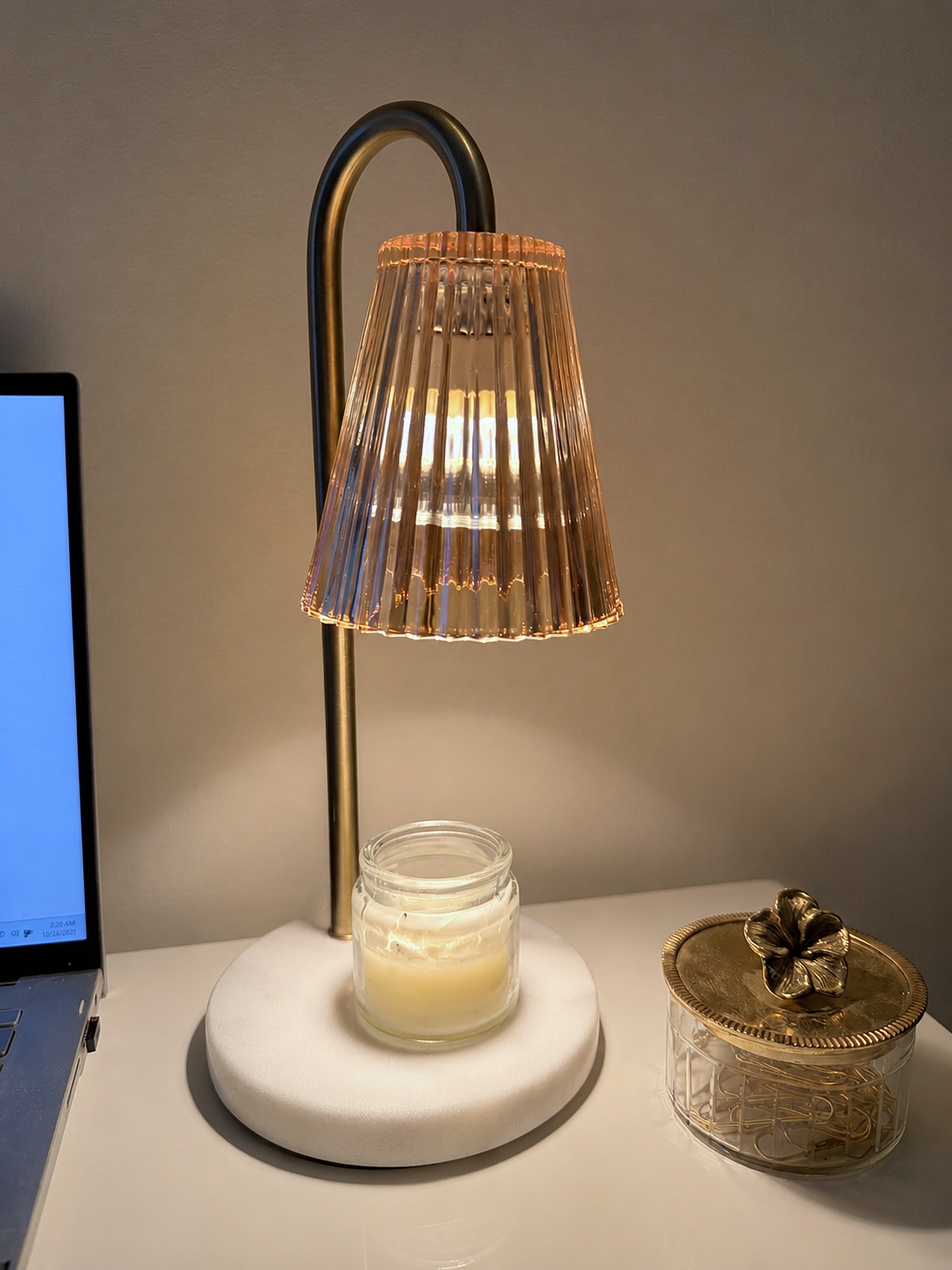
What Is a Candle Warmer Lamp?
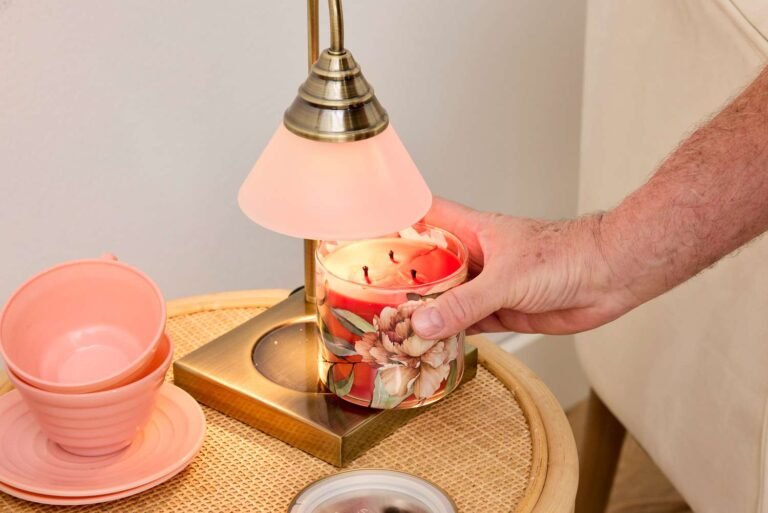
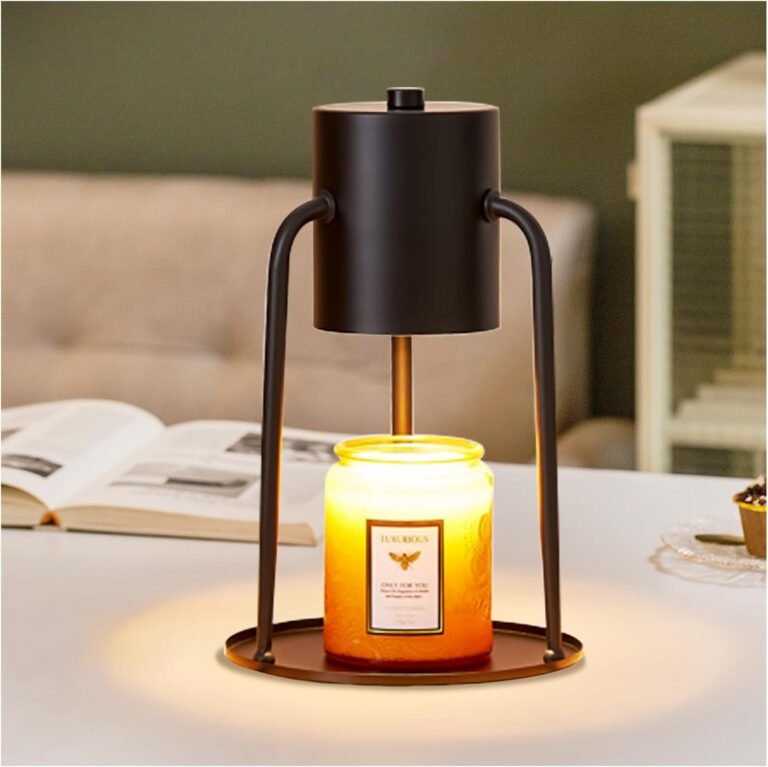
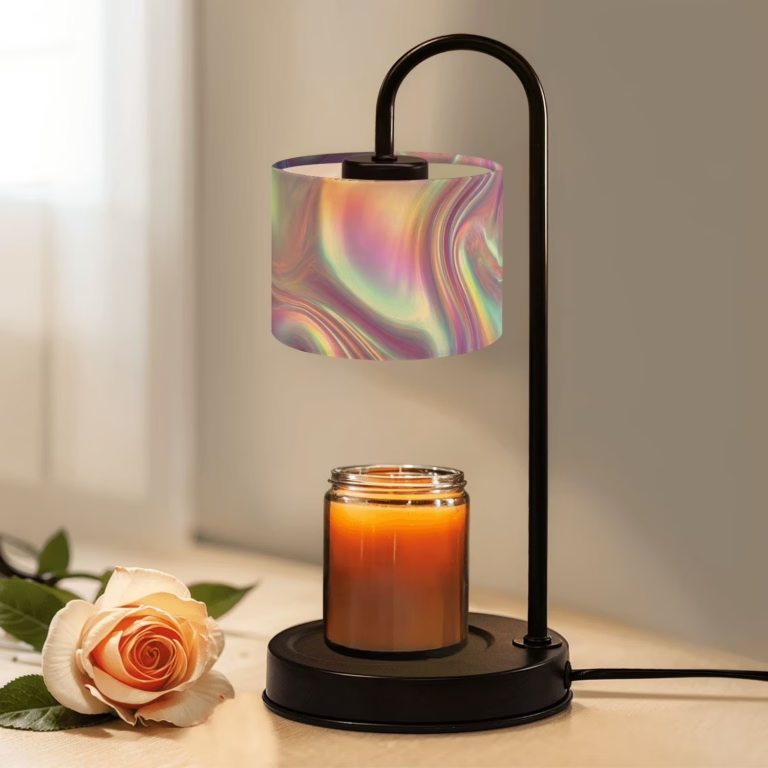
A candle warmer lamp is an electric device that heats a candle from above. It often uses a halogen bulb or a built-in heating element. The heat melts the wax and helps release fragrance without burning the wick.
Unlike a traditional candle, a warmer lamp does not consume wax through combustion. The wax melts and hardens again as the lamp turns on and off. Fragrance oils still evaporate over time, so the scent may become weaker even when much of the wax remains.
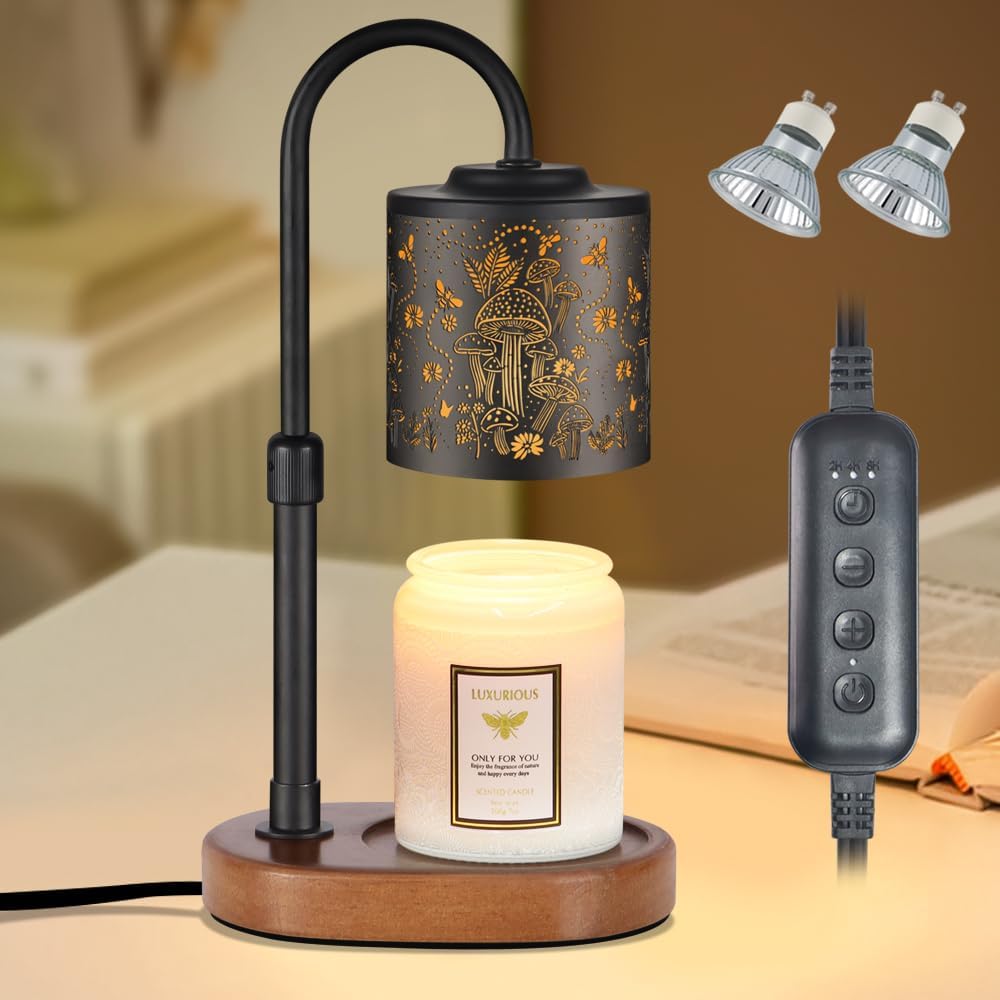
Most candle warmer lamps include:
- An adjustable height or lamp arm
- A heat-producing bulb or heating plate
- A base for the candle
- A timer
- Several heat settings
- A dimmer or brightness control on some models
A candle warmer lamp is different from an electric wax warmer. A lamp heats a candle inside its original jar. A wax warmer usually heats wax melts in a separate dish.
How the heating process works
The lamp sends heat toward the top of the candle. The upper wax layer begins to melt. As more wax melts, fragrance spreads through the room.
This process is similar to the way a candle releases scent while burning. The key difference is the heat source. A lit candle uses a flame and wick. A warmer lamp uses electricity and radiant heat.
The lamp may need time to form a complete melt pool. A small candle may release scent within 15 to 30 minutes. A large, wide candle can take longer, especially if the lamp is high above the jar or set to low power.
How Effective Are Candle Warmer Lamps?
Candle warmer lamps are generally effective when the main goal is room fragrance. They are less effective when the goal is a visible flame, a warm glow, or the scent of a burning wick.
Their performance varies by candle and room. A strong candle in a small bedroom may smell noticeable within minutes. The same candle may seem weak in a large living room with open doors, high ceilings, or strong air movement.
What they do well
Candle warmer lamps can offer several practical benefits:
- They release fragrance without a lit wick.
- They avoid direct flame and burning soot.
- They can use candles that have uneven or damaged wicks.
- They may help reduce tunneling caused by poor wick performance.
- Timers can limit operating time.
- Heat settings can help control scent strength.
- The candle remains in its original container.
The lack of a flame is the main reason many people choose a warmer. The National Fire Protection Association reports that candles are involved in thousands of U.S. home fires each year. A warmer lamp removes the flame, but it does not remove every electrical or heat-related risk.
What they do not do well
A warmer lamp may not meet your needs if you want:
- A flickering flame
- The smell of a burning wick
- A candle that burns down naturally
- Outdoor use
- Strong scent across several connected rooms
- A fast way to heat a very large candle
A lamp also cannot restore fragrance that has already faded. If most of the fragrance oil has evaporated, heating the remaining wax will not make the candle smell new again.
Candle warmer lamp versus burning a candle
| Feature | Candle warmer lamp | Traditional burning candle |
|---|---|---|
| Flame | No | Yes |
| Soot from the wick | Usually avoided | Possible |
| Open-flame risk | Removed | Present |
| Fragrance release | Often steady | Can be strong near the melt pool |
| Flicker and glow | Usually limited | Yes |
| Wax use | Wax melts but is not burned | Wax is consumed |
| Wick problems | Not relevant | Can cause tunneling or smoke |
| Electricity needed | Yes | No |
| Candle-burning smell | Usually absent | Possible |
| Timer use | Common | Less common |
The better option depends on your priority. Choose a warmer for controlled fragrance and no open flame. Choose a traditional candle when the flame and candle ritual matter most.

How Long Does a Candle Warmer Lamp Take to Work?
A candle warmer lamp often needs 15 to 45 minutes to create a noticeable scent. The exact time depends on the candle’s diameter, wax formula, heat output, lamp height, and room conditions.
Small candles usually heat faster than large, wide candles. Soy wax may also take longer to melt than some paraffin blends because its melting range can differ. This does not mean soy wax always performs poorly. It means the lamp must provide enough heat for that specific candle.
Use these times as practical estimates, not guarantees:
| Candle size | Typical time to notice fragrance |
|---|---|
| Small jar or travel candle | About 15–30 minutes |
| Medium jar candle | About 20–45 minutes |
| Large or wide candle | About 30–90 minutes |
These estimates assume the lamp is designed for jar candles and sits at the recommended height. A low-power lamp or a large gap between the bulb and candle may take much longer.
Signs that the lamp is working
A working candle warmer lamp usually shows these signs:
- The top layer of wax becomes liquid.
- The melted area grows toward the jar edges.
- The room begins to smell like the candle.
- The scent becomes stronger after the melt pool expands.
- The wax remains liquid while the lamp is on.
The whole top may not need to melt before you notice fragrance. However, a candle that only melts in a small center spot may produce less scent and may take longer to release fragrance evenly.
What to do if the candle does not melt
Check the following in order:
- Confirm the lamp is on. Check the switch, timer, bulb, and power connection.
- Check the lamp height. The candle may be too far from the heat source.
- Use a higher heat setting if the manual allows it.
- Check the candle diameter. A very wide jar may exceed the lamp’s useful heating area.
- Inspect the bulb or heating element. Replace it only with the correct type and wattage.
- Try a smaller candle. This helps show whether the problem is the lamp or the candle size.
- Stop if the jar becomes unusually hot, cracked, or damaged.
Do not place foil, paper, fabric, or other objects under the candle to increase heat. Do not use a stronger bulb than the manufacturer specifies. Excess heat can damage the lamp, candle jar, or nearby surface.
Do Candle Warmer Lamps Make Candles Last Longer?
They can make the wax last longer because the wick does not burn it. That does not mean the fragrance lasts forever.
With a traditional candle, heat from the flame melts wax, and the wick carries liquid wax upward to burn. A candle warmer lamp melts the wax but does not normally consume it through combustion. The wax can therefore remain in the jar for much longer.
Fragrance oil is different. Scent compounds can evaporate whenever the wax is warm. Over repeated uses, the candle may smell weaker even though the wax level has barely changed.
The practical result is:
- Longer wax life: Usually yes.
- Longer fragrance life: Not always.
- No need to trim a wick: Yes.
- No need to remove soot from the jar: Usually.
- Unlimited use: No.
A warmer may also help use the fragrance from a candle with a poor wick. But if the candle has already lost much of its scent, the lamp cannot replace the missing fragrance oil.

Are Candle Warmer Lamps Safer Than Burning Candles?
Candle warmer lamps are usually safer in one important way: they do not use an open flame. This lowers the risk of a curtain, paper item, decoration, or other material catching fire from a flame.
They are not risk-free. The lamp still produces heat and uses electricity. The melted wax can also become hot. A damaged cord, faulty plug, blocked ventilation, unstable base, or overheated jar may create a hazard.
The U.S. Consumer Product Safety Commission advises consumers to use electrical products according to their instructions and to stop using products with damaged cords or other signs of damage. Look for a product evaluated by a recognized testing laboratory, such as a UL or ETL listed product, and follow the exact manual for the model.
Candle warmer lamp safety rules
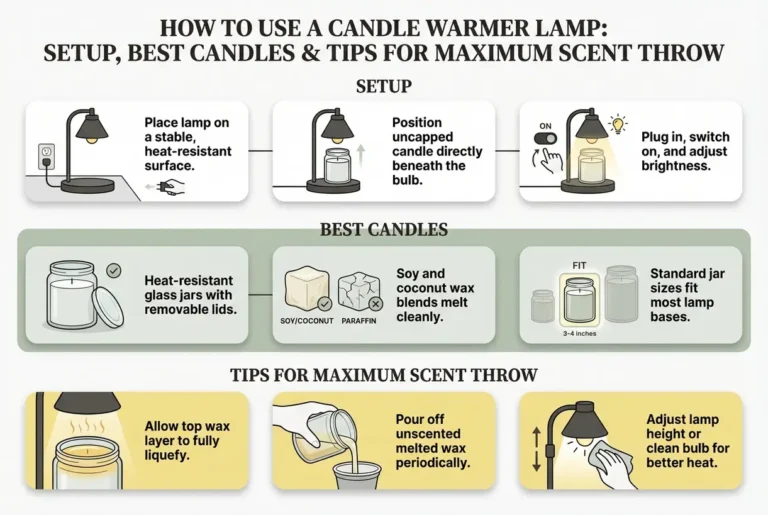
- Place the lamp on a stable, level, heat-resistant surface.
- Keep curtains, paper, bedding, and other flammable items away.
- Keep the cord away from hot surfaces and walkways.
- Do not use a cracked, chipped, or damaged candle jar.
- Do not move the candle while the wax is hot.
- Keep children and pets away from the lamp and melted wax.
- Use the correct bulb and wattage.
- Do not cover the lamp or block its vents.
- Keep the lamp dry.
- Use the timer as a control, not as proof that the device can operate without supervision.
- Turn it off when you leave home or go to sleep unless the manufacturer gives clear instructions for that use.
A warmer may be a lower-risk choice than a burning candle, but “flameless” does not mean “safe anywhere.” Treat it like a small heating appliance.
Can candle warmer lamps cause indoor air concerns?
Heating scented wax releases fragrance compounds into the air. A warmer avoids smoke and wick combustion, but it does not make every fragrance suitable for every person.
People with asthma, migraines, allergies, or fragrance sensitivity may react to scented products. Ventilation can help, but it does not guarantee that symptoms will not occur. Stop using the product if it causes breathing trouble, headache, nausea, or other concerning symptoms. Seek medical care for severe or persistent symptoms.

Do Candle Warmer Lamps Work With Every Candle?
No. They work best with candles that fit beneath the heat source and use a heat-safe jar.
Before using a candle, check:
- The jar is made for candle heat.
- The container has no cracks or chips.
- The candle fits securely on the lamp base.
- The lamp can heat the candle’s full top area.
- The candle does not contain loose decorations near the surface.
- The lamp manual does not ban that candle type.
Very tall or wide candles may not heat evenly. A narrow lamp can melt only the center of a wide candle, which may limit fragrance release.
Candle types and warmer performance
Soy candles: These can work well, but the melt time varies by formula and may be slow under low heat.
Paraffin candles: These often melt readily, but performance still depends on the candle blend and lamp output.
Beeswax candles: These may need more heat because beeswax has a higher melting point than many common candle waxes.
Wood-wick candles: The wick does not matter to a warmer, but decorative wood pieces or thick wick hardware may affect how the wax heats.
Candles with dried flowers or crystals: Use caution. Loose decorations may become hot, shift in the wax, or create a safety problem. Follow the candle maker’s instructions.
Three-wick candles: These can release a lot of fragrance, but the jar may be wider than the lamp’s effective heating area.
Wax melts: Do not place wax melts in a candle jar unless the lamp maker specifically allows it. Use the dish or tray designed for wax melts.

How to Choose a Candle Warmer Lamp
The best candle warmer lamp is not simply the hottest model. A useful lamp should match the candle sizes you plan to use and provide safe, controlled operation.
Consider these features:
Adjustable height
Height control helps match the lamp to short and tall jars. It also lets you change the heat delivered to the candle. Use the maker’s recommended distance rather than lowering the lamp until the jar becomes very hot.
Heat or brightness control
A dimmer or heat setting can help manage fragrance strength. Lower heat may suit a small bedroom. Higher heat may work better for a large candle, but it can also increase surface temperature.
Timer
A timer can prevent long, forgotten run times. Common timer settings vary by model. A timer does not replace safe placement or regular inspection.
Candle size range
Check the maximum candle height and diameter. A lamp made for small jars may not heat a wide three-wick candle evenly.
Replacement parts
If the lamp uses a replaceable bulb, confirm that the correct bulb is available in the United States. Never exceed the stated wattage.
Stability and cord quality
A wide, stable base helps prevent tipping. The cord should be long enough to reach a safe outlet without tension or an extension setup that the manufacturer prohibits.
Electrical certification
Look for a recognized testing mark and read the electrical information on the product. A certification mark does not prove the lamp will produce the strongest scent, but it provides useful information about product evaluation.
Common Problems With Candle Warmer Lamps
The scent is weak
Possible causes include:
- The candle has low fragrance concentration.
- The fragrance has faded from age or storage.
- The room is too large.
- Air conditioning or a fan moves the scent away.
- The lamp does not heat enough wax.
- The candle has a narrow or poorly designed fragrance profile.
Try a smaller room, close nearby doors, allow more warm-up time, or use a candle with a stronger scent. Do not assume a hotter setting will always solve the problem.
The candle only melts in the center
The lamp may sit too high, use low heat, or be too narrow for the candle. A wide jar may need a lamp designed for larger candles.
Do not scrape out the unmelted wax while the candle is hot. Let it cool first, then follow the candle or lamp maker’s cleaning instructions.
The jar gets very hot
Turn the lamp off and allow the jar to cool. Check the manual, lamp height, bulb wattage, and candle condition. Stop using the setup if the jar is cracked, discolored, or damaged.
The lamp smells hot or electrical
Turn it off and unplug it if safe to do so. Inspect the cord, plug, bulb, and housing after the unit cools. Do not keep using a lamp with a burning smell, sparking, melted plastic, or a damaged cord.
Candle Warmer Lamp Pros and Cons
Advantages
- No open flame
- Less risk of wick smoke and soot
- Longer-lasting wax
- Convenient timer options
- Useful for candles with poor wicks
- Adjustable fragrance strength on some models
- Easy to use indoors
Limitations
- Requires electricity
- Does not provide a real flame
- May heat large candles unevenly
- Can take time to build a melt pool
- Fragrance still fades with repeated heating
- Can overheat a jar or nearby surface if misused
- May not scent a large or open-plan home well
The main trade-off is simple: you gain control and remove the flame, but you lose the traditional candle-burning experience.
Frequently Asked Questions
Do candle warmer lamps use less candle wax?
Yes, they usually use less wax than burning a candle because the wick does not consume the wax. The fragrance can still fade as the candle is heated.
Can you leave a candle warmer lamp on overnight?
It is safer to turn it off before sleeping or leaving home. Use the timer only as an added control, and follow the instructions for your exact model.
Do candle warmer lamps remove soot?
They avoid soot produced by a burning wick. They cannot remove soot already stuck to a candle jar.
Are candle warmer lamps better than wax warmers?
Neither is best for every user. A candle warmer lamp lets you use a candle in its original jar. A wax warmer is designed for wax melts and may offer a different heat pattern and scent experience.
How do you make a candle warmer lamp smell stronger?
Use a candle with a strong fragrance, allow enough time for the wax to melt, reduce drafts, and choose a lamp that matches the candle’s size. Avoid unsafe changes such as using a higher-wattage bulb.
Bottom Line: Are Candle Warmer Lamps Worth It?
Candle warmer lamps work well when you want steady fragrance without an open flame. They can extend the usable life of the wax, avoid wick smoke, and provide convenient heat and timer controls.
They work less well when you want a flickering flame, fast results from a very large candle, or strong fragrance across a large home. Before buying one, check candle size limits, lamp height, heat control, timer settings, replacement parts, and electrical safety information.
The next practical step is to measure the candles you already own. Choose a lamp that can safely heat their height and diameter, then test it in a small room for 30 to 60 minutes while monitoring the jar and surrounding surface.
One Comment