The best floor lamp for a U.S. home should fit the room, provide the right amount of light, use a safe and suitable bulb, and match how you plan to use the space. Start by choosing the lamp’s job—reading, general room light, task work, or style—then check its height, base, shade, bulb details, cord placement, and safety marks.
Introduction
A floor lamp can fill a dark corner, create a warm reading spot, or replace a harsh overhead light. But the right choice depends on more than color and shape. A lamp that looks great in a store may be too tall for a low sofa, too dim for reading, or hard to place near a U.S. wall outlet.
This guide explains how to choose a floor lamp for living rooms, bedrooms, home offices, apartments, and other American homes. It covers lamp types, brightness, color temperature, size, controls, energy use, safety, and common buying mistakes.

1. Decide What the Floor Lamp Must Do
Choose the lamp’s purpose before choosing its style. The main purpose determines the lamp type, bulb brightness, shade shape, and best location.
Ambient lighting
Ambient lighting gives a room soft, general light. It works well when you want to reduce the need for ceiling lights or brighten a dark corner.
Choose:
- An up-light, also called a torchiere, for light that bounces off the ceiling.
- A lamp with a wide fabric shade for softer light.
- A dimmable model if the room serves more than one purpose.
Ambient lamps work well in living rooms, bedrooms, and open areas. They may not provide enough direct light for reading or detailed work.
Task lighting
Task lighting aims light at a specific area. It suits reading, sewing, crafting, puzzles, computer work, and other close tasks.
Choose:
- An adjustable reading lamp.
- A swing-arm lamp.
- A pharmacy-style lamp with a movable shade.
- A lamp with a focused beam and a stable base.
Place the lamp slightly behind and to the side of your usual reading hand. This can help reduce shadows on the page. If you are left-handed, place it on your right side when possible. Reverse that position if you are right-handed.
Accent lighting
Accent lighting highlights art, plants, shelves, or architectural details. It usually uses less light than a reading lamp.
Choose:
- A slim lamp with a narrow shade.
- A directional lamp.
- A model with adjustable brightness.
- A bulb with good color rendering if it will illuminate artwork or plants.
Accent lighting is often about mood and emphasis rather than full-room brightness.
Combination lighting
Some lamps combine an upward light with a smaller reading light. These models can be useful in a living room where one person reads while another watches television.
Their main trade-off is complexity. More parts mean more switches, more possible failure points, and a larger footprint. Check that each light can be controlled separately.
2. Measure the Room and the Lamp Location
Measure the space before shopping. A few minutes with a tape measure can prevent a lamp from blocking a walkway or sitting too close to furniture.
Record these measurements:
- available floor width: Measure the space where the base will sit.
- Available depth: Check how far the lamp can extend into the room.
- Outlet distance: Measure from the lamp location to the nearest wall outlet.
- Furniture height: Measure the sofa arm, side table, bed, or desk near the lamp.
- Ceiling height: A tall lamp may look crowded in a room with a low ceiling.
- Walking clearance: Leave a clear path around the lamp.
How tall should a floor lamp be?
For a floor lamp beside a sofa or chair, the bottom of the shade often looks best near eye level when you are seated. The exact height depends on the chair, shade shape, and whether the bulb is exposed.
Use this simple check:
- Sit in the chair.
- Ask someone to hold a ruler or lamp at different heights.
- Keep the bulb out of your direct line of sight.
- Make sure the shade does not block a television or window.
A common living-room floor lamp is about 58 to 68 inches tall, but this is a design range, not a rule. Shorter lamps can suit low seating. Taller lamps can work beside high-back chairs or in rooms with high ceilings.
How wide should the base be?
The base should be wide and heavy enough for the lamp’s height and shade. A very tall lamp with a small, light base may tip more easily if bumped.
For a narrow apartment or walkway, look for:
- A compact round base.
- A slim vertical body.
- A weighted base.
- A design that does not have legs extending into the path.
For a large room, a wider base may look more balanced and feel more stable.
A simple sizing example
Suppose a reading corner has:
- 24 inches of open floor width.
- A sofa arm that is 25 inches high.
- An outlet 5 feet from the planned lamp position.
- A 9-foot ceiling.
A lamp with a base under 18 inches wide, a shade near seated eye level, and a cord at least 6 feet long may fit the space. Confirm the manufacturer’s dimensions before buying. Product dimensions can include or exclude the shade, finial, or base depending on the listing.

3. Choose the Right Floor Lamp Style
The lamp style should support the room, but function comes first. A beautiful lamp that creates glare or takes up too much space will become a daily annoyance.
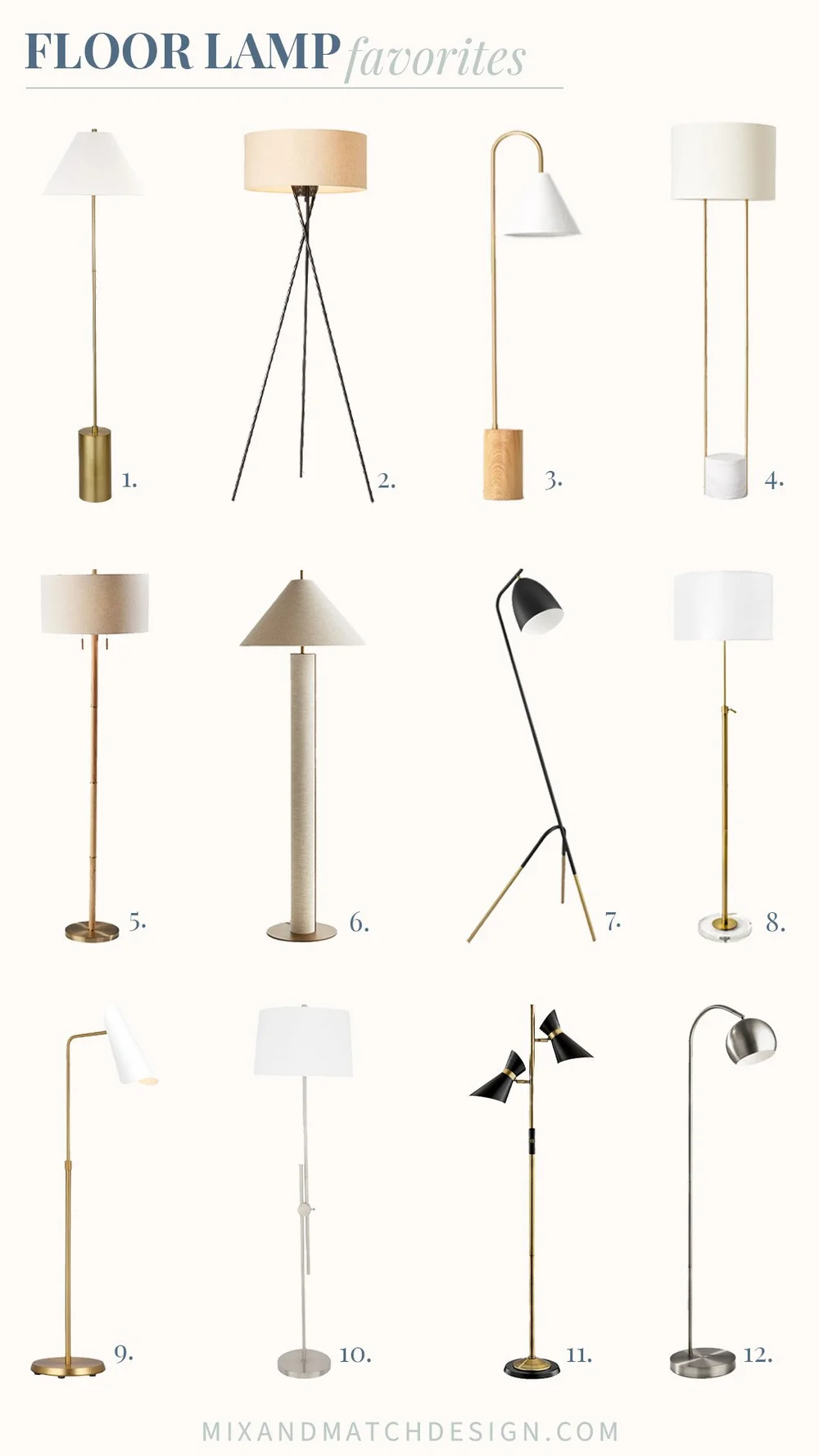
| Floor lamp type | Best for | Main benefit | Main limitation |
|---|---|---|---|
| Torchiere | General room light | Sends light upward and spreads it through the room | Often weak for reading |
| Reading lamp | Chairs and sofas | Direct light for books and close work | Lights a smaller area |
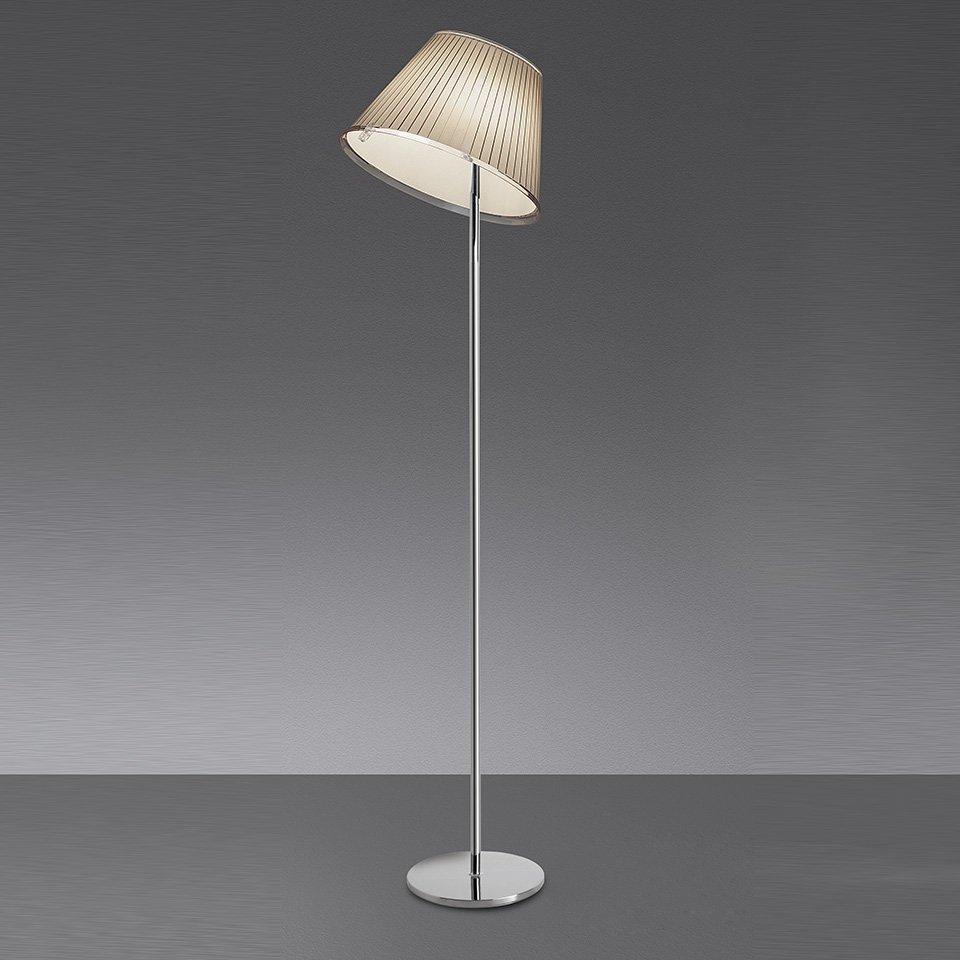
| Arc lamp | Sofas, tables, and beds | Extends light over furniture | Large base and long arm need space |
| Tripod lamp | Living rooms and bedrooms | Strong visual style and broad shade options | Legs may extend into walkways |
| Swing-arm lamp | Reading and home offices | Adjustable reach and angle | Joints may loosen over time |
| Pharmacy lamp | Focused reading | Precise height and shade adjustment | Narrow beam and less ambient light |
| Tree lamp | Shared spaces | Several adjustable lights | More parts and more visual clutter |
| Column lamp | Traditional or formal rooms | Stable, substantial appearance | Can feel bulky in small rooms |
Torchiere lamps
A torchiere directs light toward the ceiling. The ceiling then reflects some of that light back into the room. This creates a softer effect than a bare bulb pointed at eye level.
Use a torchiere when you need broad light and do not want a large shade. Avoid placing one where the upward light will expose stains, cracks, or uneven paint on the ceiling.
Arc lamps
An arc lamp reaches over a sofa, table, or bed. It can reduce the need for a side table, but the curved arm needs room.
Check:
- The base does not sit where people walk.
- The arm does not hit a head when someone stands.
- The shade does not block a television or window.
- The base remains stable when the arm is extended.
Tripod lamps
Tripod lamps can add visual interest, but their three legs need more floor space than a single central base. Measure the full footprint, not just the width of the central body.
Tree lamps
Tree lamps have multiple arms or shades. They can light several seats at once, but they may create different brightness levels across the room. Choose one with separate controls if people will use different parts of the room at the same time.
4. Select Brightness by Lumens, Not Watts
Look at lumens to judge brightness. Lumens measure the amount of visible light produced by a bulb or fixture. Watts measure energy use, not brightness.
An LED bulb may produce more light while using fewer watts than an older incandescent bulb. The U.S. Department of Energy recommends using lumens when comparing bulb brightness. DOE lighting guidance
General brightness ranges
These are practical starting points, not strict rules:
| Use | Suggested total brightness |
|---|---|
| Soft accent light | 150–500 lumens |
| Bedroom or corner light | 450–1,000 lumens |
| Living-room ambient lamp | 800–1,500 lumens |
| Reading lamp | 450–1,000 lumens directed at the task |
| Detailed craft or work light | 800–1,500 lumens, with low glare |
The needed brightness changes with shade color, room size, wall color, eyesight, and the amount of existing light.
A dark or opaque shade may reduce the light that reaches the room. A white or light-colored shade usually spreads more light. A clear bulb may appear bright but create glare if the bulb is visible.
Check the lamp’s maximum rating
Never install a bulb that exceeds the fixture’s stated maximum wattage. For LED bulbs, also check the lamp’s instructions for:
- Maximum wattage.
- Dimmability.
- Enclosed-fixture use.
- Bulb shape and size.
- Base type, such as E26 or E12.
- Indoor or outdoor rating.
An LED bulb labeled “60-watt equivalent” does not use 60 watts. It often uses much less energy, but the fixture’s label still controls what may be used.

5. Choose the Right Light Color
Light color is measured in Kelvin (K). Lower numbers look warmer and higher numbers look cooler.
| Color temperature | Appearance | Good uses |
|---|---|---|
| 2,200–2,700K | Warm, amber, candle-like | Bedrooms, living rooms, evening use |
| 3,000K | Warm white | General living areas and reading |
| 3,500–4,100K | Neutral white | Home offices, kitchens, detailed tasks |
| 5,000K and above | Cool or daylight-like | Focused work, garages, utility areas |
For most living rooms and bedrooms, 2,700K to 3,000K creates a comfortable glow. A home office may work better with a neutral white bulb, especially during daytime work.
Avoid mixing very different bulb colors in the same small area unless you want a deliberate contrast. A warm floor lamp beside a cool ceiling fixture can make the room look uneven.
What does CRI mean?
Color Rendering Index (CRI) describes how naturally a light source shows colors compared with a reference light. A higher CRI can help with clothing, art, food, and craft work.
A CRI of 80 or higher is common for general home use. A higher CRI may be useful when accurate color matters. CRI is not the same as brightness or color temperature:
- Lumens tell you how much light you get.
- Kelvin tells you whether the light looks warm or cool.
- CRI tells you how colors appear under that light.
6. Pick the Best Shade and Diffuser
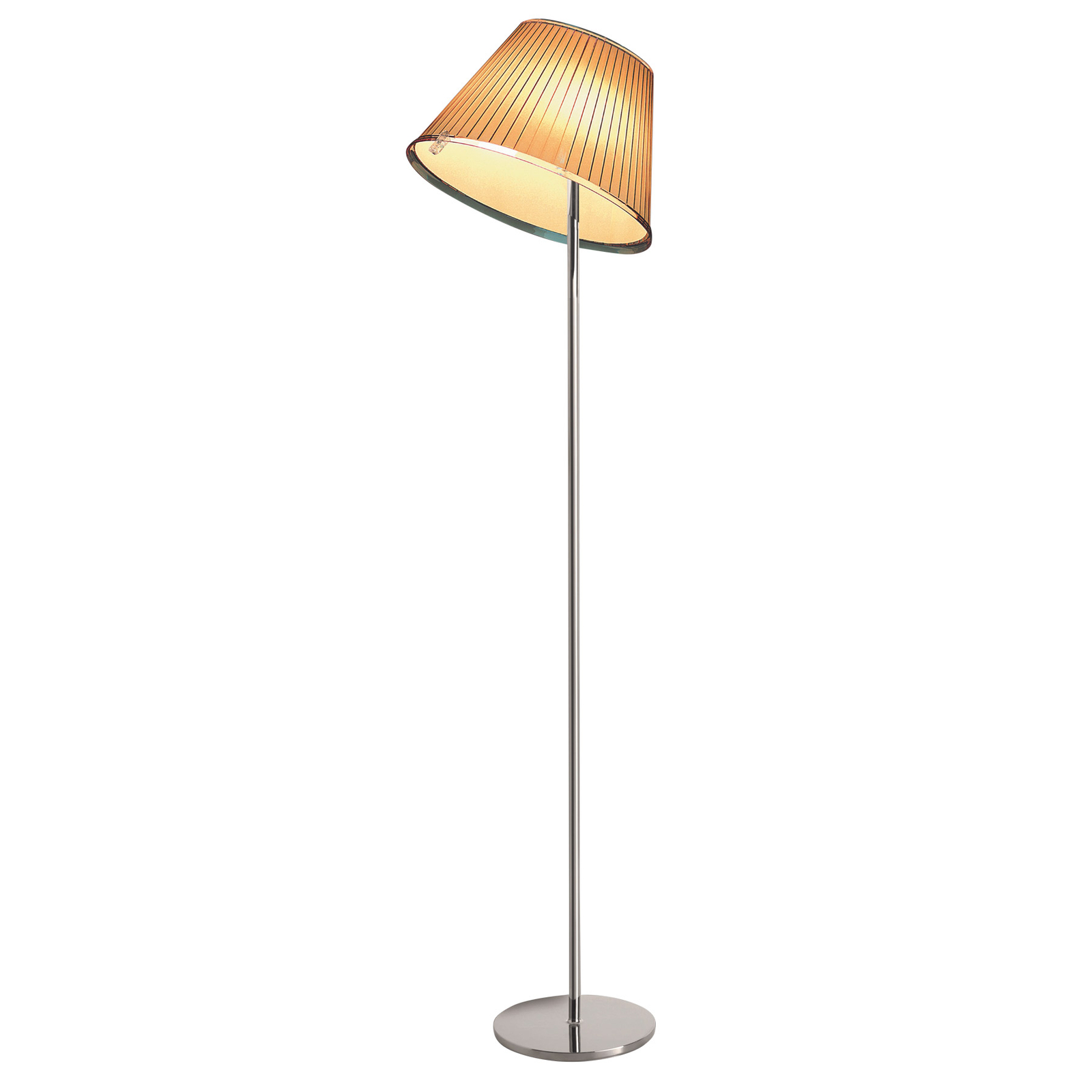
The shade controls glare, direction, and visual weight. It can matter as much as the lamp body.
Shade materials
- Fabric: Softens light and suits many living rooms and bedrooms.
- Paper: Gives a light, calm look but may be more delicate.
- Glass: Can spread light well, but exposed glass may create glare.
- Metal: Directs light and suits industrial or modern designs.
- Plastic or acrylic: Light and durable, but quality varies.
Shade shape
A drum shade spreads light in a broad pattern. A tapered shade can direct more light down or up, depending on its design. A narrow shade may suit a small corner but provide less room light.
Look at the lamp from normal seated positions. If you can see the bare bulb, ask whether the brightness feels comfortable. A diffuser or lower shade can reduce direct glare.
Shade color
Light shades usually allow more light to pass through. Dark shades absorb more light and create a more focused, moody effect. If the lamp is the main source of light, a light or translucent shade may be more practical.

7. Check Controls, Dimming, and Smart Features
The control should match how you use the lamp.
Common control types
- Rotary switch: Simple and easy to use.
- Pull chain: Useful when the switch is near the shade.
- Foot switch: Convenient when your hands are full.
- Three-way switch: Offers three brightness levels when paired with a compatible three-way bulb.
- Touch control: Convenient, but electronic parts can fail.
- Remote or app control: Useful for hard-to-reach lamps, but may require batteries, a hub, Wi-Fi, or Bluetooth.
Do not assume a lamp is dimmable because the bulb is LED. The bulb, lamp, and dimmer must be compatible. A non-compatible dimmer may cause flicker, buzzing, limited dimming, or failure.
When buying a smart bulb, check whether it fits the lamp’s socket and whether the lamp’s built-in switch must remain on. If someone turns off the physical switch, the smart bulb may lose power and stop responding.

8. Compare Energy Use and Long-Term Cost
LED bulbs usually use less electricity than incandescent bulbs for similar light output. The actual cost depends on wattage, daily use, and your electricity rate.
Hypothetical operating-cost example
Assume:
- LED bulb: 10 watts.
- Incandescent bulb: 60 watts.
- Use: 4 hours per day.
- Electricity price: $0.17 per kilowatt-hour.
LED energy use:
- 10 watts × 4 hours = 40 watt-hours per day.
- 40 watt-hours = 0.04 kilowatt-hours.
- 0.04 × $0.17 = about $0.007 per day.
Incandescent energy use:
- 60 watts × 4 hours = 240 watt-hours per day.
- 240 watt-hours = 0.24 kilowatt-hours.
- 0.24 × $0.17 = about $0.041 per day.
The difference is about 3.4 cents per day in this example. Your local rate and actual use may differ. Use the electricity rate on your utility bill for a more accurate estimate.
Check the bulb package for expected life, but treat life ratings as test-based estimates. Heat, frequent switching, enclosed fixtures, and poor ventilation can affect LED performance.
9. Prioritize Safety and Build Quality
A floor lamp should stand firmly, keep heat away from unsafe materials, and use electrical parts suitable for the U.S. market.
Look for a recognized safety mark
A mark from a recognized testing organization, such as UL or Intertek ETL, indicates that the product was evaluated under the applicable certification program. The mark is not proof that every lamp will perform well, but it is a useful safety check.
The mark should appear on the product, label, or packaging. Be cautious if a listing uses vague phrases such as “tested for safety” without naming a recognized certification mark or providing clear product information.
You can learn more about certification marks through:
Inspect the cord and plug
Before using the lamp:
- Check the cord for cuts, crushed areas, or exposed wires.
- Keep the cord away from rugs, heaters, and sharp furniture edges.
- Do not run the cord where it creates a trip hazard.
- Do not use a damaged plug.
- Use the voltage and plug type intended for the U.S. market.
Most household outlets in the United States supply about 120 volts, but the lamp’s label remains the controlling source for its electrical requirements.
Keep heat and fabric apart
Use only the bulb type and wattage listed by the lamp maker. Do not cover the shade or place fabric, paper, bedding, or curtains against a hot bulb.
LED bulbs generally produce less heat than incandescent bulbs for similar light output, but they still need suitable ventilation. Follow the bulb and lamp instructions for enclosed fixtures.
Secure the lamp in busy areas
Use extra care in homes with young children, pets, or active walkways. Place the base on a level surface and keep it where people are less likely to bump it.
If the lamp rocks, leans, or has a loose joint, stop using it until you correct the problem or replace it. For electrical repairs, use a qualified electrician rather than modifying the wiring yourself.
The U.S. Consumer Product Safety Commission provides consumer safety information and recall notices at CPSC.gov.
10. Match the Lamp to Each Room
Living room
A living room often benefits from two layers of light:
- One lamp for broad ambient light.
- One reading or task lamp near a chair.
A torchiere can brighten the whole room. An arc lamp can reach over a sofa. A shaded lamp beside a chair can provide a softer reading zone.
Bedroom
Choose warm light, a quiet switch, and a stable base. A slim lamp can fit beside a dresser or reading chair. If the lamp is beside the bed, make sure the switch is easy to reach without stretching across furniture.
Home office
Prioritize adjustability, low glare, and a neutral or warm-white bulb. Place the lamp so it does not reflect off a monitor. If you write by hand, position the light opposite your writing hand when possible.
Small apartment
Choose a narrow base, vertical design, or wall-adjacent placement. An arc lamp can save table space, but only if its base does not interfere with a walkway.
Nursery or child’s room
Use a stable lamp with protected controls and a cord kept well away from a crib or play area. Avoid placing a floor lamp where a child can pull it down. A plug-in night-light may be safer for low-level nighttime light, depending on the room layout and product instructions.

11. Use This Floor Lamp Buying Checklist
Before you buy, confirm each point:
- I know whether I need ambient, task, accent, or mixed lighting.
- I measured the floor space and full lamp footprint.
- The lamp height suits nearby furniture.
- The shade will not create glare in my normal seat.
- The bulb base and size match the socket.
- The bulb provides enough lumens for the task.
- The color temperature suits the room.
- The bulb is compatible with the lamp’s dimmer or switch.
- The cord can reach a safe outlet without crossing a walkway.
- The lamp has a stable base.
- The product uses a clear U.S.-compatible plug and rating.
- I found a recognized safety certification mark.
- Replacement bulbs are easy to find.
- The return policy covers damage or poor fit.
If a product listing does not state the lamp dimensions, socket type, bulb limit, or electrical rating, treat that missing information as a reason to pause.

Common Floor Lamp Buying Mistakes
Choosing by appearance alone
A lamp can match your furniture and still fail at its main job. Decide where the light should land before choosing the finish.
Ignoring the base footprint
A narrow product photo can hide a wide tripod or heavy base. Check the complete dimensions.
Using watts as the only brightness guide
Watts show energy use. Compare lumens for brightness.
Buying a bulb that is too cool
A 5,000K bulb may feel harsh in a bedroom or relaxed living room. Match the color temperature to the room’s purpose.
Assuming every LED bulb can be dimmed
Dimmability depends on the bulb, fixture, and control. Confirm compatibility.
Placing an arc lamp in a walkway
The arm may look elegant, but the base can create a trip point. Map the full path before buying.
Hiding the cord under a loose rug
A loose cord can create a trip hazard and may be damaged by foot traffic. Route it along a wall or use a suitable cord-management method.
Overlooking the bulb’s physical size
An LED bulb may fit the socket but hit the shade or exceed the shade’s clearance. Compare the bulb’s shape and dimensions with the fixture.
Frequently Asked Questions
What is the best height for a floor lamp beside a sofa?
The shade should usually place the bulb near or slightly below seated eye level. Sit on the sofa and check that the bulb is not visible from your normal position. The best height changes with the sofa, chair, shade, and lamp purpose.
How many lumens do I need for a floor lamp?
A reading lamp often works well with about 450 to 1,000 lumens directed at the page. A general living-room lamp may need about 800 to 1,500 lumens. Use lower levels for accent light and adjust for shade opacity and existing room light.
Are LED bulbs good for floor lamps?
Yes. LED bulbs can provide high brightness with lower energy use than incandescent bulbs. Check the fixture’s wattage limit, dimmer compatibility, bulb size, color temperature, and enclosed-fixture instructions before installing one.
Should a floor lamp match the ceiling light?
It does not need to match exactly. Coordinated finishes, similar metal tones, or similar light colors can make the room feel connected. Avoid mixing very different color temperatures in a small space unless the contrast is intentional.
Is a torchiere or reading lamp better?
Choose a torchiere for broad, indirect room light. Choose a reading lamp for focused light near a chair or sofa. If one lamp must do both jobs, consider a model with separate upward and downward lights.
Where should I place a floor lamp in a living room?
Place it near a seating area, in a dark corner, or beside furniture that needs task light. Keep the base out of walkways, keep the cord close to a wall, and check that the shade does not block a screen or window.
Final Recommendation
To choose a floor lamp, start with the task, then measure the space. Select the lamp type that sends light where you need it, compare brightness in lumens, choose a comfortable color temperature, and verify bulb, dimmer, cord, and safety details.
For most U.S. living rooms, a stable lamp with a warm-white LED bulb around 2,700K to 3,000K is a useful starting point. For reading, choose adjustable task lighting with enough directed brightness. For small rooms, give more attention to the base footprint and cord path than to decorative details.
The next step is simple: measure the intended spot, note the nearby furniture height and outlet distance, and use those numbers to narrow your choices.