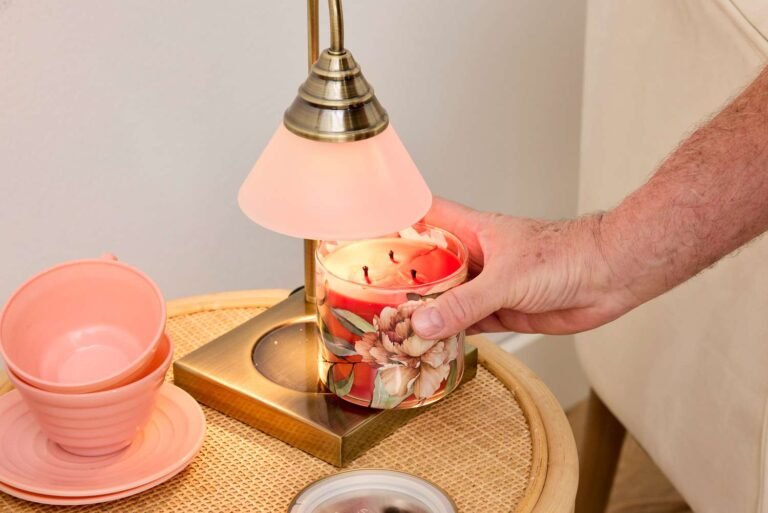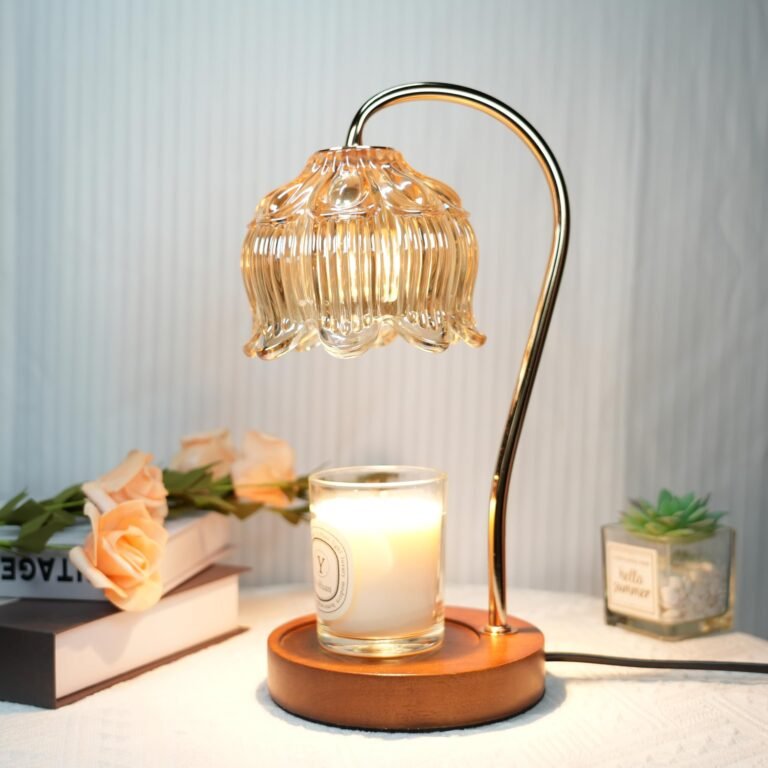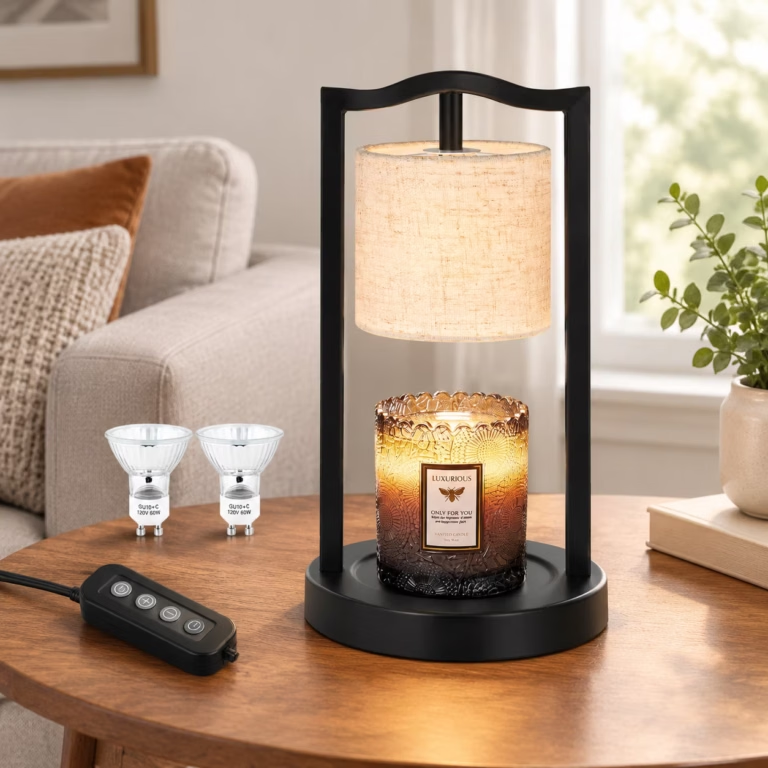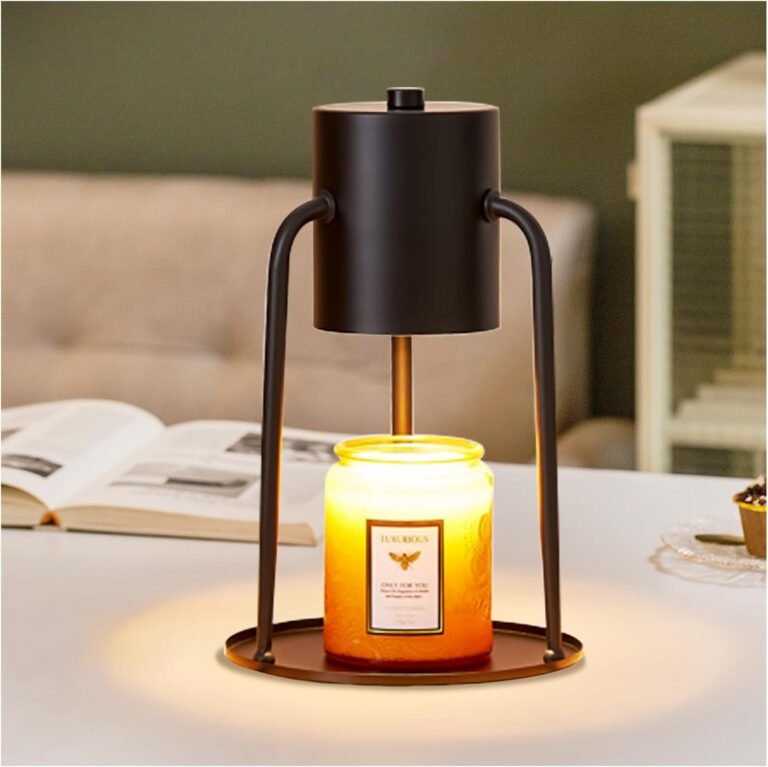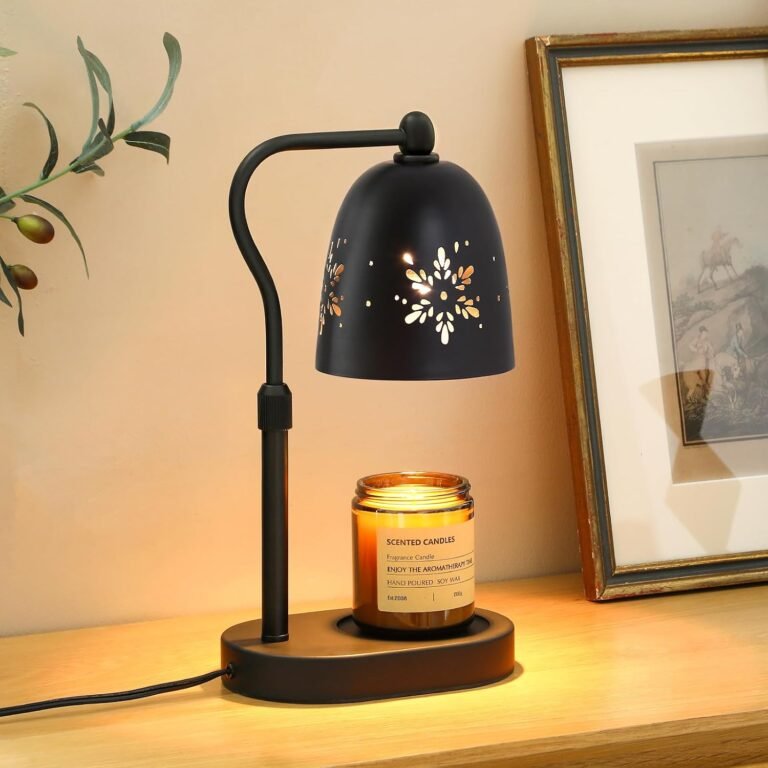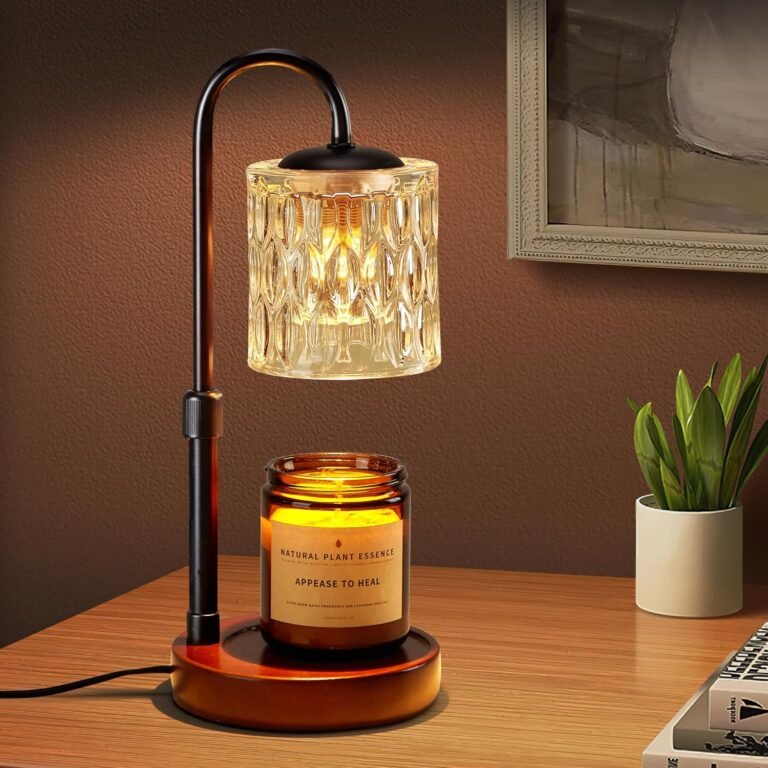
A lamp candle warmer melts scented wax with heat from a bulb instead of an open flame. In the United States, these devices are often used to scent bedrooms, living rooms, offices, and apartments where a flame may be unwanted. The lamp shines heat down onto the candle, melts the wax, and helps release its fragrance into the room.
Unlike a traditional candle, a candle warmer does not burn the wick or consume the wax through combustion. This can reduce soot and remove the flame-related fire risk, but the lamp still creates heat and needs safe use.
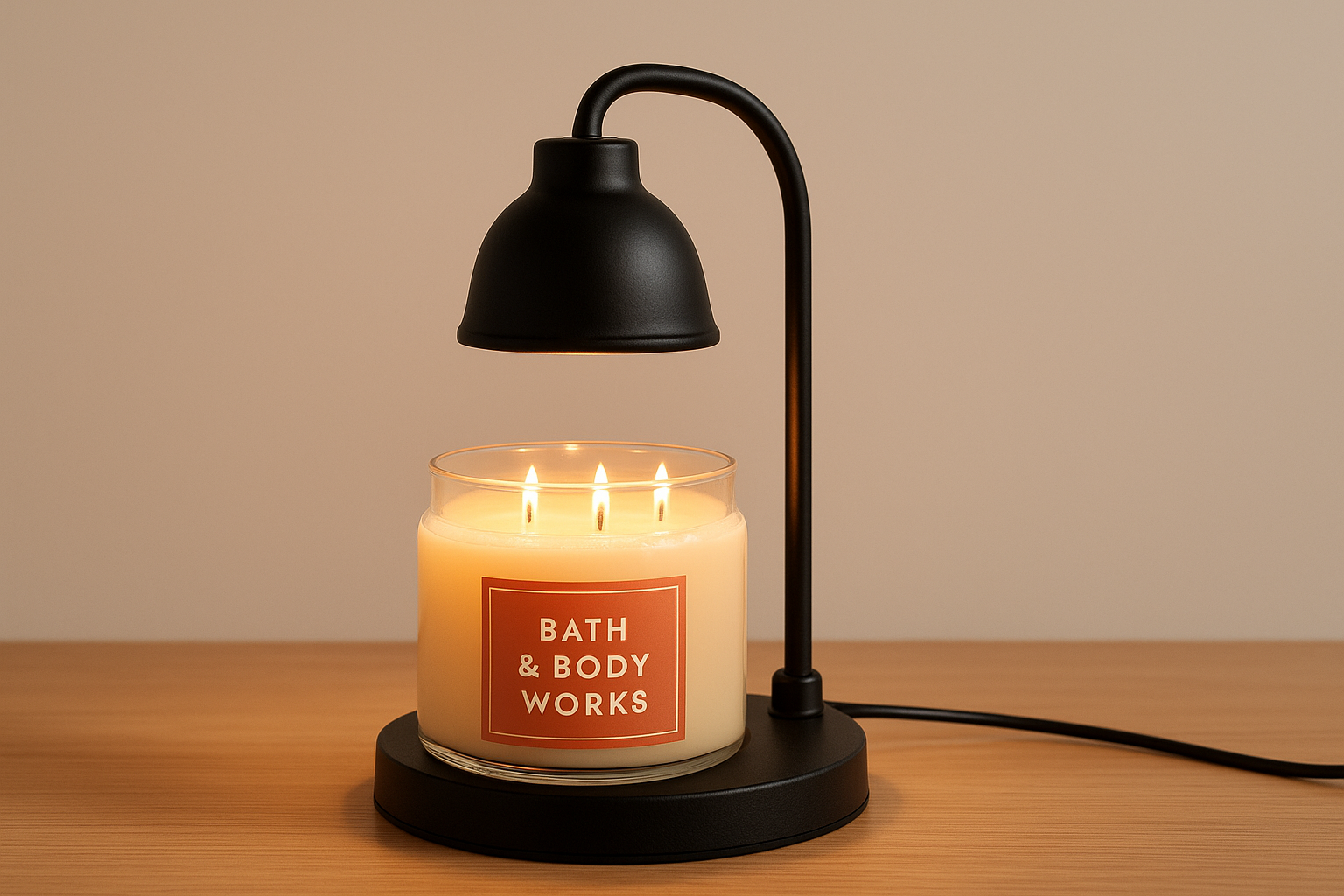
What Is a Lamp Candle Warmer?
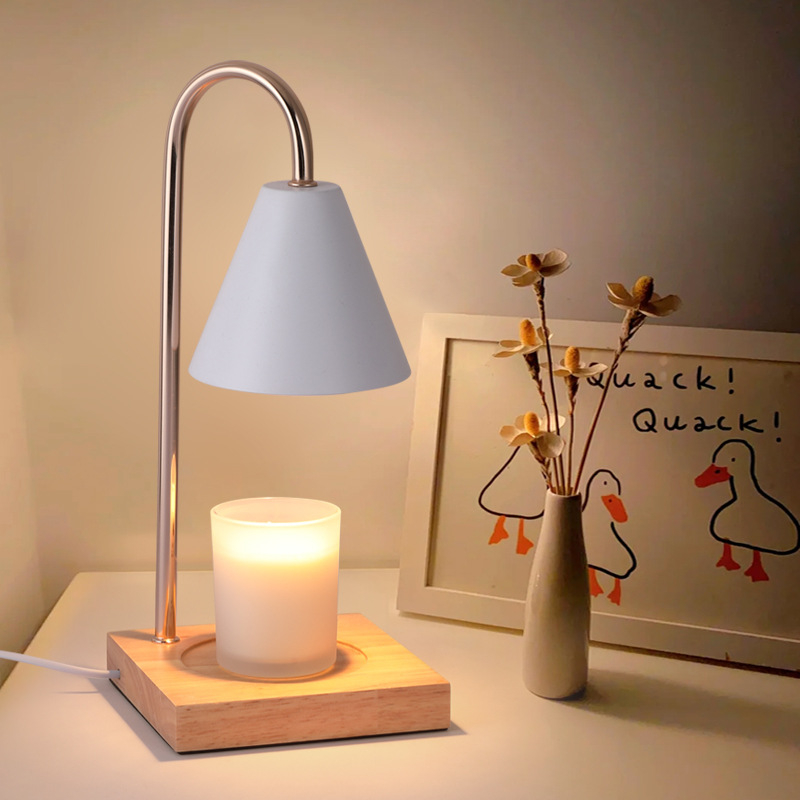
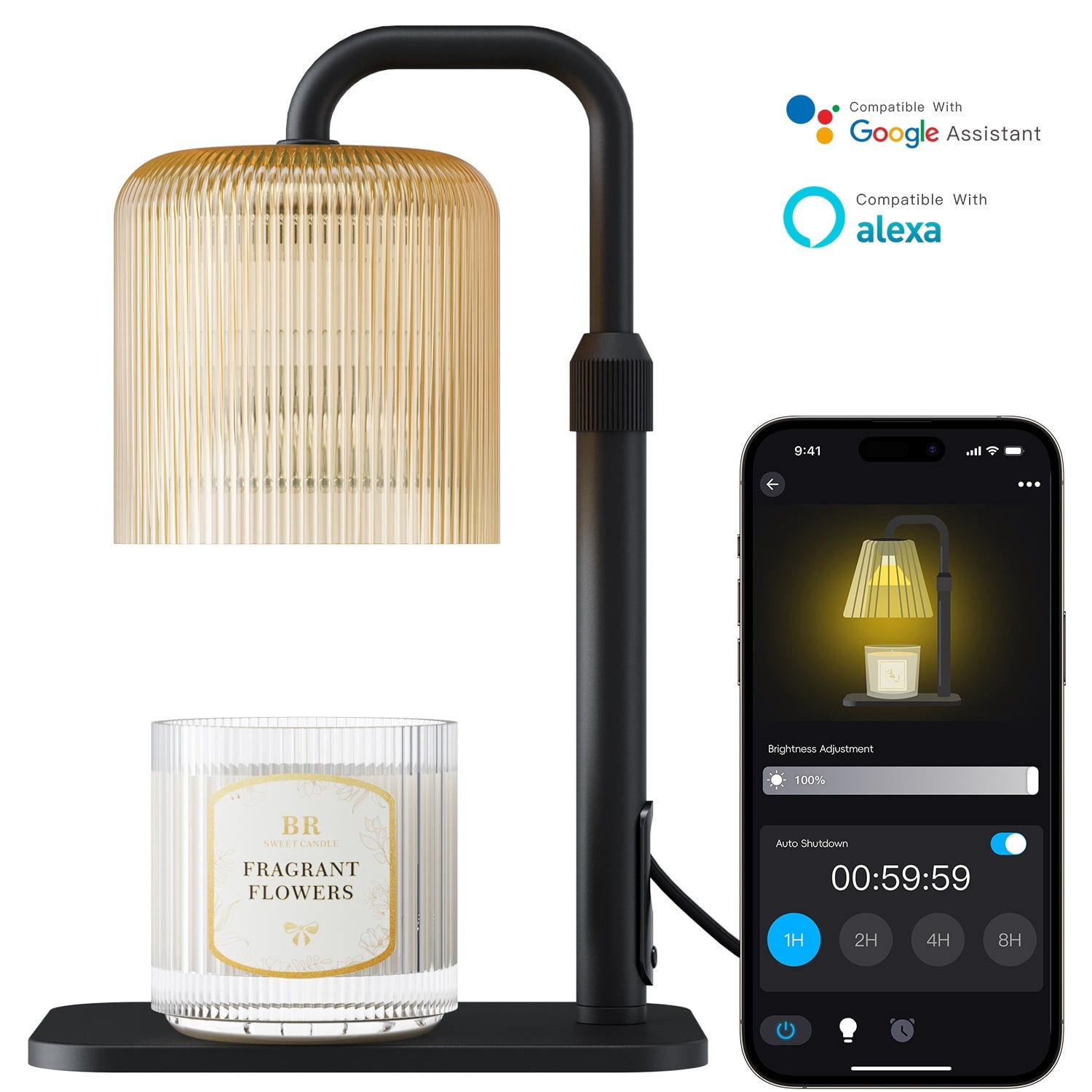
A lamp candle warmer is an electric device that uses a heated bulb to warm a candle from above. It usually has a base, an adjustable stem, a shade, and a bulb that points toward the candle jar.
Most models include some form of control, such as:
- An on/off switch
- A timer
- A dimmer
- An adjustable height
- A removable or adjustable shade
The candle sits below the lamp. The bulb sends heat toward the wax. As the wax warms, it changes from solid to liquid. The fragrance oils mixed into the wax then evaporate more easily and spread through the air.
A lamp warmer is not the same as a hot plate candle warmer. A hot plate heats the candle from the bottom. A lamp warmer heats it from the top. Both methods avoid a flame, but they transfer heat in different ways.
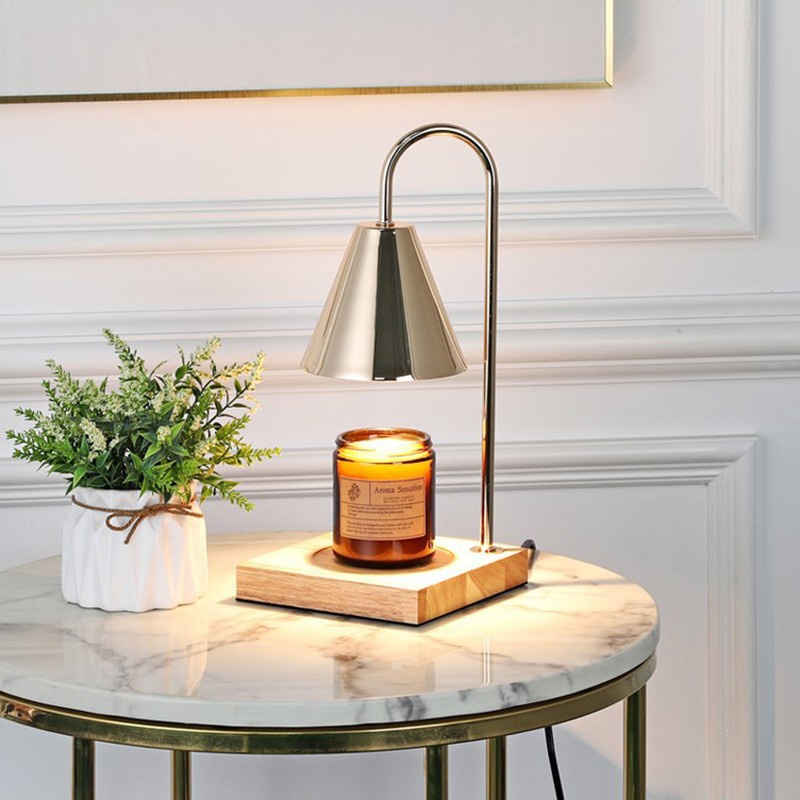
How Does a Candle Warmer Lamp Work?
A candle warmer lamp works through radiant heat, conduction, and fragrance evaporation.
1. The bulb produces heat
The bulb converts electrical energy into light and heat. Many candle warmer lamps use halogen bulbs because they become hot enough to melt candle wax. Some models use specially designed LED systems, but a standard cool-running LED bulb may not provide enough heat.
The bulb type matters. A lamp made for a specific bulb should use the bulb listed in its manual. Replacing a halogen bulb with an ordinary LED bulb may prevent the candle from melting. Installing a higher-wattage bulb may create excess heat and damage the lamp or candle jar.
2. Heat moves from the bulb to the wax
The bulb sends infrared energy toward the candle. The glass jar, wax surface, and surrounding air absorb that energy.
The top layer of wax warms first. Once enough heat reaches the wax, it begins to melt. The melted wax forms a liquid pool, much like the wax pool created by a burning wick.
3. The wax releases fragrance
Fragrance oils are held inside the wax. When the wax becomes warm, those oils can move into the air more easily.
The warmer does not need to burn the fragrance. It mainly increases the temperature of the wax so the scent can diffuse into the room. Air movement from heating, ventilation, or a ceiling fan may then carry the scent farther.
4. The wax stays in the jar
Because there is no flame, the wick does not burn and the wax is not consumed by combustion. The candle may still appear to “run out” of fragrance over time because fragrance oils leave the wax during warming.
A candle can therefore remain in the jar after much of its scent has faded. When that happens, warming the candle longer may not restore the original fragrance strength.

What Happens Inside the Candle Jar?
The wax usually melts from the top down when a lamp warmer shines heat onto it. The process may take longer or shorter depending on the bulb, distance, wax type, jar size, and room temperature.
A typical cycle looks like this:
- The bulb warms the top surface.
- A small liquid area forms near the center or under the strongest heat.
- The melted area expands across the surface.
- Fragrance becomes stronger as more wax warms.
- The liquid wax cools and hardens after the lamp turns off.
The wax does not have to become fully liquid for the room to smell the fragrance. Partial melting can release scent. However, a larger warm surface usually provides more fragrance than a small melted spot.
The wax may also form a “tunnel,” where only the center melts. This can happen when the bulb is weak, too far away, or not aimed at the center of the jar. Unlike a burning candle, the wax is not being pulled down through a wick, so the melted area can remain uneven.

How to Use a Lamp Candle Warmer
Use the lamp according to its manual, especially when the manual gives a required bulb type, maximum candle size, or timer setting.
Before you start
Check these points first:
- The lamp is rated for the electrical supply in your U.S. home.
- The bulb matches the lamp’s required type and wattage.
- The candle jar is stable and fits below the shade.
- The candle has no cracks, chips, or visible damage.
- The lamp sits on a firm, heat-resistant surface.
- Curtains, paper, bedding, and other items are away from the lamp.
Setup steps
-
Place the lamp on a level surface.
Keep the lamp where it cannot be bumped or pulled down. -
Set the candle below the bulb.
Center the jar under the shade or heating area. Do not place the jar directly against the bulb. -
Adjust the height if the lamp allows it.
Follow the manufacturer’s spacing guidance. If no guidance is provided, start with the bulb well above the jar and watch how the wax responds. -
Turn the lamp on.
Use the lowest effective heat setting if the lamp has a dimmer. -
Watch the first warming session.
Check for unusual odor, smoke, cracked glass, excessive heat, or wax spilling over the jar. -
Use the timer when available.
A timer can reduce the chance of leaving the lamp on while you are away or asleep. -
Turn the lamp off before moving the candle.
Liquid wax can shift and spill. Wait until the jar and wax are cool before handling them.
Signs that it is working
A properly operating warmer may show:
- A growing pool of liquid wax
- A mild or noticeable fragrance
- Warm glass near the upper part of the jar
- No smoke or flame
- No burning smell from the lamp or cord
The exact warming time varies. A small candle under a strong bulb may melt faster than a large candle under a low-heat bulb. Avoid judging performance by a fixed time alone.

Lamp Candle Warmer vs. Traditional Candle
Both methods warm scented wax, but they work in different ways.
| Feature | Lamp candle warmer | Traditional candle |
|---|---|---|
| Heat source | Electric bulb | Open flame |
| Wick used | No | Yes |
| Wax consumed by burning | No | Yes |
| Soot possible | Usually little or none from the wax | Possible |
| Open flame | No | Yes |
| Electricity needed | Yes | No |
| Fragrance output | Depends on bulb and wax temperature | Depends on flame and wax pool |
| Main safety concern | Hot bulb, hot wax, and electrical parts | Flame, hot wax, and fire spread |
A lamp warmer may suit someone who wants to avoid an open flame. It can be useful in homes with pets, children, rental restrictions, or smoke alarms that react to candle soot.
It is not risk-free. The bulb, shade, glass jar, and melted wax can become hot. The device also remains an electrical appliance that should not be used near water or with damaged cords.

Lamp Candle Warmer vs. Hot Plate Warmer
A lamp warmer heats the candle from above. A hot plate warmer heats it from below.
Lamp warmer advantages
- Leaves the bottom of the jar away from a heated plate
- Often includes a lamp, shade, and decorative design
- Can warm the top surface directly
- May work with candles of different heights when adjustable
Hot plate warmer advantages
- Uses direct contact with the jar
- May provide steady heat to the base
- Often has a simple design
- Can work well when the jar sits flat on the plate
The best option depends on the candle container and your setup. A lamp warmer needs enough vertical clearance. A hot plate needs a flat, stable base that matches the plate size.
Do not assume that a candle lamp and a hot plate use the same temperature or timing. Their heat paths differ, so follow the instructions for the specific device.
What Affects How Well a Candle Warmer Works?
Several factors control how quickly the wax melts and how strong the scent becomes.
Bulb type and wattage
A stronger bulb often creates more heat, but more heat is not always better. Excess heat can overheat the jar, soften labels and surfaces, or stress the glass.
Use only the bulb type and wattage approved by the manufacturer. Never exceed the lamp’s rating to make the candle melt faster.
Distance from the candle
A bulb placed farther away transfers less heat to the wax. A bulb placed too close may create a hot spot.
Adjustable lamps allow more control, but the lamp should still keep the bulb from touching the jar, wax, lid, or other material.
Wax formulation
Soy, paraffin, beeswax, coconut blends, and other waxes can behave differently. Their melting points and fragrance release can vary by formula and manufacturer.
A candle made for burning may not release its scent as strongly when warmed. The result depends on the fragrance load, wax blend, jar shape, and heating method.
Candle size and shape
A wide candle has more surface area to warm. A tall or narrow jar may heat unevenly. Thick glass can also slow heat transfer to the wax.
Keep the candle centered. If the heat falls only on one side, the wax may melt unevenly.
Room conditions
Cold rooms slow melting. Air conditioning, fans, and open windows can spread or dilute the scent. A small room may seem strongly scented while a large, open room may need more time or a larger candle.

Common Problems and Safe Fixes
The wax does not melt
Possible causes include:
- The bulb is too weak
- The bulb is too far from the candle
- The bulb is the wrong type
- The candle is very large
- The room is cold
- The lamp is not aimed at the wax
Check the manual and confirm the bulb specification. Do not install a higher-wattage bulb unless the manufacturer approves it. If the correct bulb is installed and the lamp still does not heat, unplug it and inspect the cord, socket, and switch for damage.
The scent is weak
A weak scent may result from a small melted area, an old candle, a low-fragrance wax formula, or a large room with strong airflow.
Try centering the candle and using the lamp’s approved heat setting. If the wax is fully liquid but the scent remains weak, the fragrance may have already dissipated.
The wax melts on one side
The bulb may be off-center, the jar may be positioned incorrectly, or the lamp may be too far away. Center the jar and adjust the lamp only within the manufacturer’s limits.
Do not tilt the jar to chase the heat. A tilted jar can spill liquid wax.
The jar becomes very hot
Turn the lamp off and let the candle cool. Then check the bulb wattage, spacing, and jar condition.
Do not use a candle jar that is cracked, chipped, or visibly stressed. Glass failure can cause hot wax to spill.
The lamp smells like burning plastic or wiring
Turn it off and unplug it at once. Do not keep using the lamp to see whether the smell stops.
A burning odor may indicate a damaged cord, loose connection, overheating socket, faulty switch, or unsuitable bulb. Replace the lamp or have it assessed by a qualified professional. Do not repair electrical parts while the device is plugged in.

Are Lamp Candle Warmers Safe?
A lamp candle warmer removes the open flame, but it does not remove every hazard. The main risks are hot surfaces, hot wax, damaged electrical parts, unstable placement, and unattended operation.
The U.S. Fire Administration identifies candles as a source of home fires and recommends keeping burning candles away from things that can catch fire. A lamp warmer does not create a flame, but the same basic caution about heat and nearby combustible items still applies.
Follow these safety rules:
- Use the correct bulb and wattage.
- Keep the lamp on a stable, heat-resistant surface.
- Do not cover the shade or bulb.
- Keep cords away from hot surfaces and walkways.
- Keep the lamp away from water.
- Do not use damaged jars, cords, plugs, or sockets.
- Do not place the lamp near curtains, bedding, paper, or clothing.
- Do not leave it running when you leave home.
- Avoid running it while sleeping unless the product is specifically designed for that use and its safety instructions allow it.
- Keep children and pets from touching the lamp or pulling its cord.
- Let the wax and jar cool before moving them.
A timer can lower the chance of accidental long-term use, but it is not a substitute for safe placement and supervision.

Can You Use Any Candle With a Warmer Lamp?
Most candle warmer lamps can warm common jar candles, but compatibility is not universal.
Before using a candle, check:
- The jar fits below the lamp.
- The candle is centered under the bulb.
- The jar has no cracks or damage.
- The candle does not contain loose objects that could interfere with warming.
- The lamp manual does not restrict candle size or material.
- The wax will not rise above the safe level when melted.
Avoid placing metal tins, plastic containers, or unusually thin vessels under a high-heat bulb unless the manufacturer specifically allows them. Glass candle jars designed for heat are generally more suitable, but “glass” alone does not guarantee safe use with every lamp.
Never leave the candle lid on while warming unless the product instructions clearly say it is safe. A lid can trap heat and interfere with the lamp’s airflow.
Does a Candle Warmer Make Wax Last Forever?
No. A warmer can prevent the wax from burning away through a flame, but the fragrance still leaves the wax over time.
The wax itself may remain in the jar after the scent becomes faint. Each warming session can release more fragrance, and the amount released depends on the wax blend, fragrance oils, heat level, and session length.
When the candle no longer produces a useful scent, stop warming it. Do not keep increasing the heat or using an unapproved bulb. Dispose of the remaining wax and container according to local guidance.

Frequently Asked Questions
Does a candle warmer lamp use less wax than a candle?
Usually, yes, because the lamp does not burn the wax through a wick. However, it still releases fragrance from the wax. The candle may last longer physically, but its scent will not last forever.
Can a candle warmer lamp start a fire?
It has no open flame, so it avoids the direct flame hazard of a burning candle. However, a faulty lamp, damaged cord, overheated bulb, hot wax, or nearby combustible material can still create a hazard. Use the correct bulb and never block the lamp’s ventilation.
Can you use an LED bulb in a candle warmer lamp?
Only if the lamp is designed for that LED bulb and the bulb produces enough heat for warming. Many ordinary LED bulbs stay too cool to melt wax. Check the lamp manual before changing bulb types.
How long should you run a candle warmer lamp?
Use the time and timer settings recommended by the manufacturer. There is no single safe time for every lamp and candle because wattage, jar size, wax type, and room conditions differ. Stop use if the jar becomes excessively hot, the wax spills, or the lamp smells unusual.
Is a candle warmer better than burning a candle?
It depends on your priority. A warmer avoids an open flame and usually creates less soot from combustion. A traditional candle does not need electricity and may produce a familiar flame and scent experience. Neither option should be treated as risk-free.
Can a candle warmer melt wax without releasing scent?
Yes. The wax may melt while releasing little fragrance. This can happen when the candle has lost much of its fragrance, the bulb does not heat the wax enough, or the formula does not perform well with warming.
Bottom Line
A lamp candle warmer uses heat from an electric bulb to melt scented wax from above. The warm wax releases fragrance without a burning wick or open flame. Its performance depends on the bulb, distance, wax, jar, and room.
For safe use, match the bulb to the lamp, keep the device stable and clear of flammable items, watch the first warming session, and turn it off if you notice excessive heat, damage, smoke, or an electrical odor.