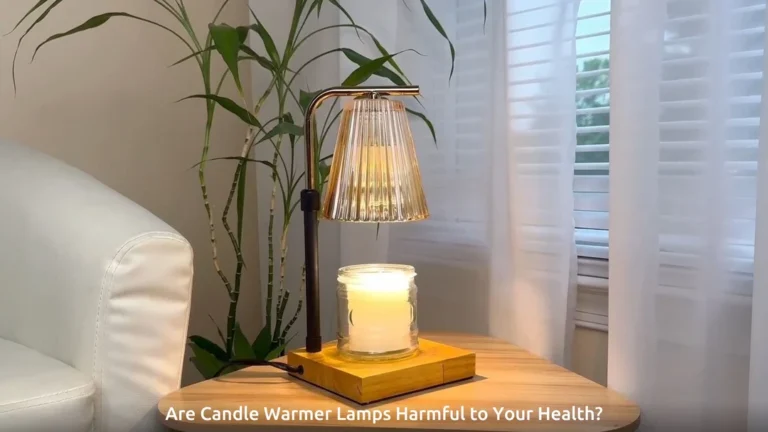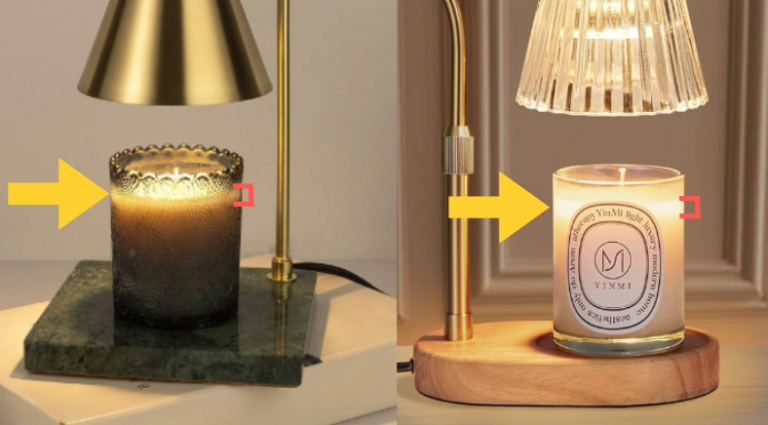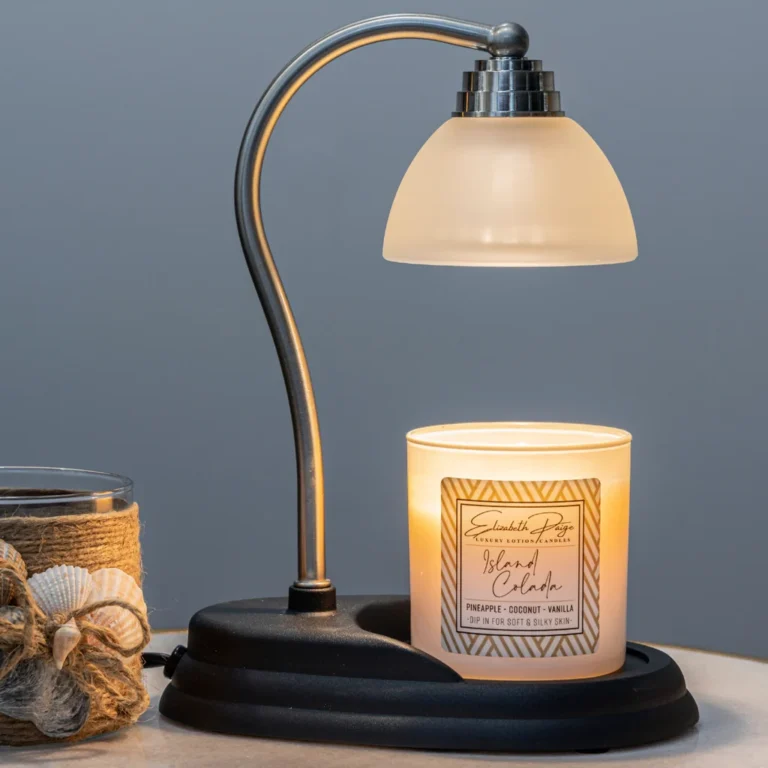
In the United States, most candle warmer lamps heat wax to roughly 120°F to 180°F (49°C to 82°C) during normal use. The exact temperature depends on the bulb, lamp height, candle size, wax type, room temperature, and how long the lamp runs.
The lamp itself can get much hotter than the wax. A halogen bulb, metal shade, or heating area may become hot enough to burn skin or damage nearby items. A candle warmer lamp is safer than an open flame in some ways, but it is not a cold device and should not be treated like a night-light.
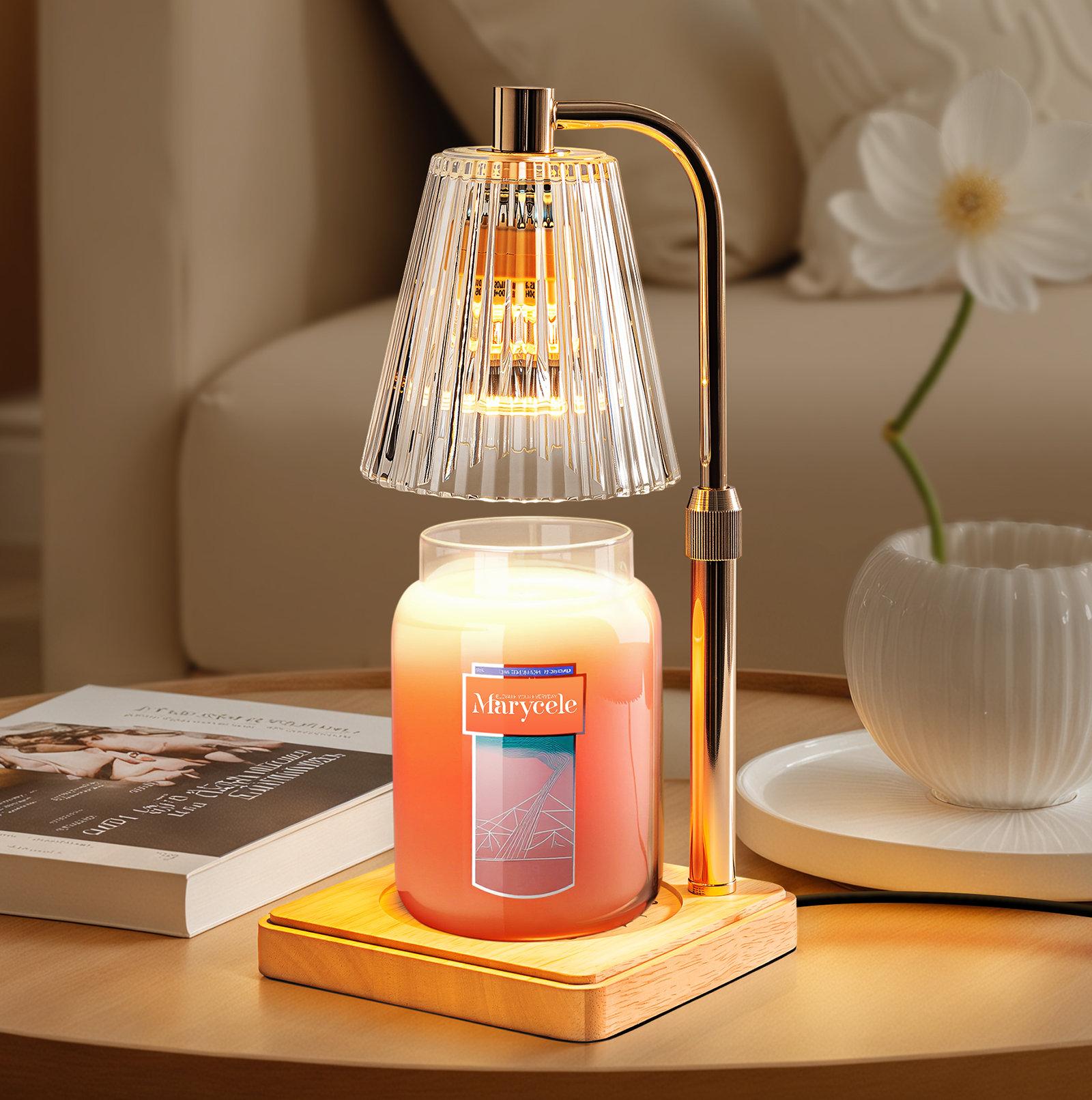
Quick answer: What temperature does a candle warmer lamp reach?
A candle warmer lamp usually creates enough heat to melt candle wax without lighting the wick. In many home settings:
- Wax pool: About 120°F to 180°F
- Glass jar: Warm to very hot, often around 100°F to 160°F
- Lamp shade or heating head: May reach 150°F to 300°F or more
- Halogen bulb surface: Can become much hotter than the wax
- Nearby furniture or fabric: Should remain cool when the lamp is set up correctly
These are practical ranges, not universal ratings. Candle warmer lamps differ widely. Some use a low-watt LED heating system. Others use a 25-watt, 35-watt, or 50-watt halogen bulb. A higher-watt bulb usually produces more heat, but wattage alone does not tell you the final temperature.
The wax temperature matters most for scent release. The lamp’s outer parts matter most for burn and fire safety.
How candle warmer lamps heat wax
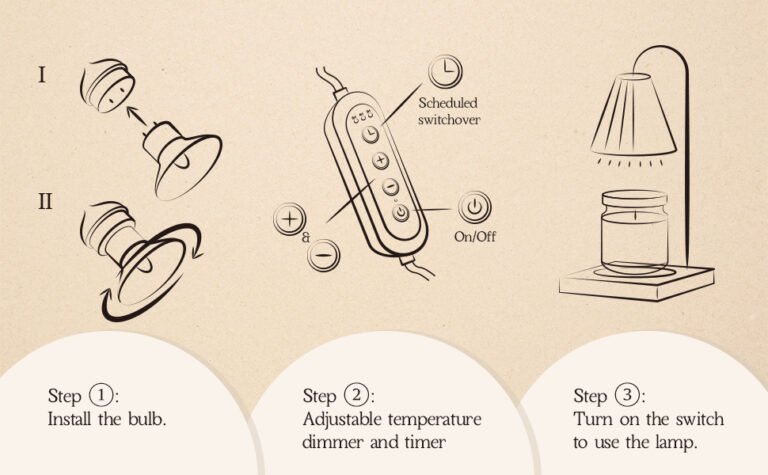
A candle warmer lamp uses radiant heat from above. The bulb warms the top layer of wax. That wax slowly melts and forms a liquid pool, which releases fragrance into the room.
This process is different from burning a candle. A lit wick uses a flame to melt wax and send fragrance into the air. A warmer lamp melts the wax without combustion, smoke, or a flame.
Most candle warmer lamps use one of these heat sources:
- Halogen bulbs: Strong heat and fast melting
- Incandescent bulbs: Heat-producing bulbs that can melt wax
- LED-based warmers: Lower power in some designs, though the heating system may still become hot
- Electric warming plates: Heat the candle from below rather than above
The distance between the bulb and candle has a major effect. A lamp placed close to the jar may melt wax faster and reach a higher temperature. Raising the lamp reduces the heat that reaches the candle.
Why the wax does not need to reach boiling temperature
Candle wax melts well below the boiling point of water. Common wax blends soften and liquefy at different temperatures:
| Wax type | Approximate melting range |
|---|---|
| Paraffin wax | About 115°F to 160°F |
| Soy wax | About 115°F to 125°F |
| Beeswax | About 文 144°F to 147°F |
| Coconut wax blends | Often about 100°F to 120°F |
| Mixed waxes | Varies by formula |
These ranges are general. A candle may contain several waxes, fragrance oil, dye, and other ingredients. The label or maker’s specification is the best source for a specific product.
A wax warmer does not need to make the wax boil. It only needs to provide enough heat to melt the wax and release its fragrance.
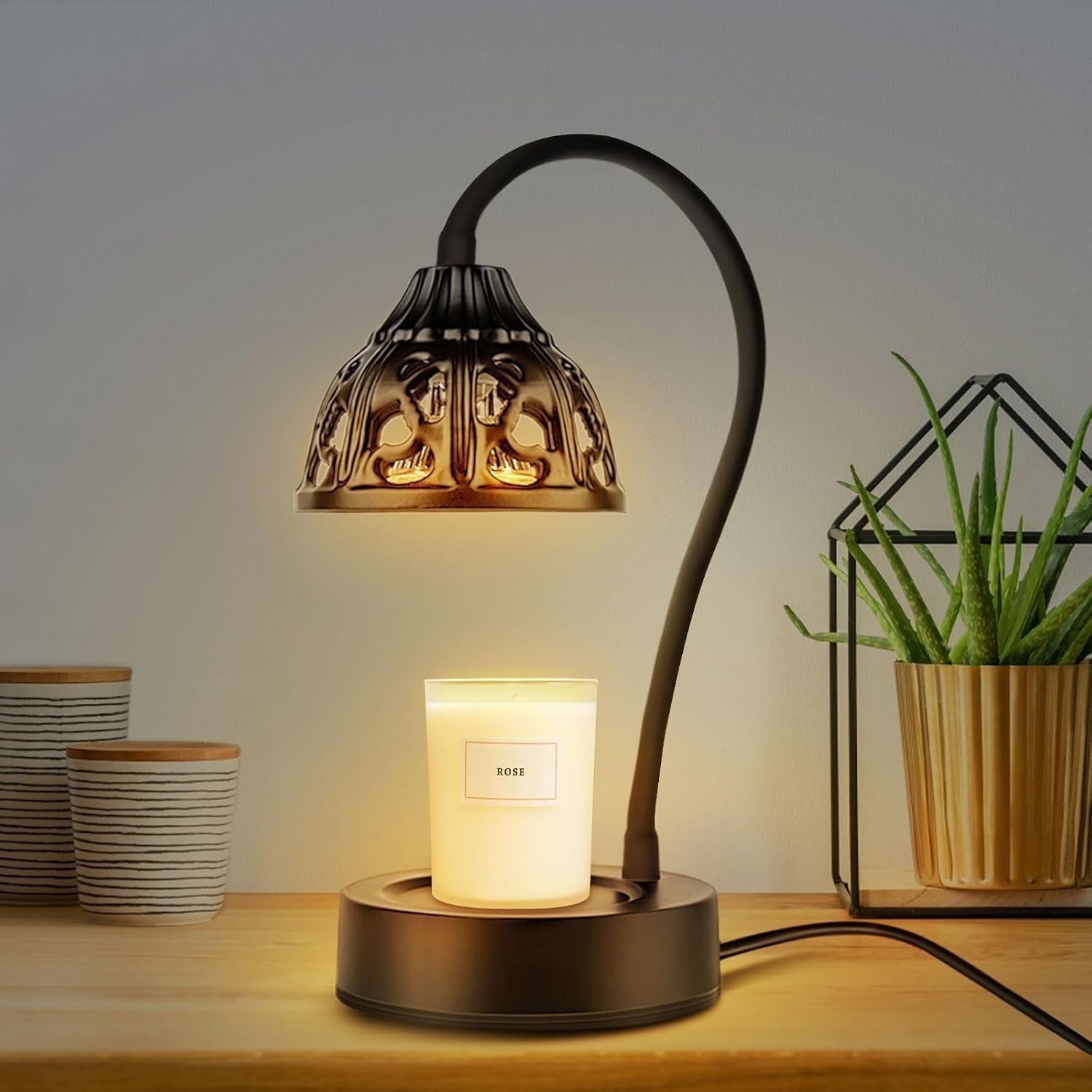
What parts of a candle warmer lamp get the hottest?
The hottest part is often the bulb or the metal area around it, not the candle wax. This difference explains why a candle may feel only warm while the lamp head can cause a burn.
The bulb
Halogen and incandescent bulbs convert much of their electrical power into heat. Their glass surface can become extremely hot during use. Do not touch the bulb while the lamp is on or immediately after turning it off.
LED bulbs usually produce less heat than halogen bulbs. However, a product marketed as an LED candle warmer may still include a separate heating element or a high-output light source. Check the manual rather than assuming that “LED” means cool to the touch.
The lamp shade
The shade can trap heat around the bulb. Metal shades often transfer heat quickly. Glass shades may also become hot and can break if exposed to sudden temperature changes.
Keep paper, curtains, bedding, clothing, and other flammable materials away from the shade.
The candle jar
The glass jar may become hot after several hours. The outside may feel safe to touch at first, then become much warmer as the wax pool grows.
A jar that is hot enough to cause discomfort should be turned off and allowed to cool. Do not move a candle while the wax is liquid unless the product instructions specifically allow it and you can handle the jar safely.
The wax
The top of the wax may be cooler than the area nearest the heat source. This can create uneven temperatures inside the jar. Stirring or moving the candle while it is warm can cause hot liquid wax to splash.
Never place your fingers into melted wax to test it.
Does a candle warmer lamp get hot enough to burn you?
Yes. A candle warmer lamp can burn skin, especially at the bulb, shade, heating head, or candle jar.
The risk depends on contact time. A quick touch may cause less harm than holding a hot part for several seconds, but you should not use touch as a temperature test.
Watch for these warning signs:
- The lamp shade is too hot to touch briefly.
- The power cord feels hot.
- The plug or outlet feels warm.
- The candle jar shows cracks, dark marks, or stress lines.
- Wax spills over the rim.
- The lamp smells like melting plastic or burning dust.
- The wood or surface below the lamp becomes warm.
- The lamp flickers, sparks, or shuts off unexpectedly.
Turn off and unplug the lamp if you notice any of these signs. Let it cool before checking the bulb, cord, plug, and candle.

How hot should the candle wax become?
The wax should become fully liquid on the surface, but it should not smoke, bubble hard, discolor, or spill from the jar.
A normal melt pool may look clear and still. Some waxes appear cloudy or slightly uneven. That alone does not mean the temperature is unsafe.
A useful rule is:
- Partly melted wax: The lamp may be too high, too weak, or not running long enough.
- Fully melted wax with no smoke: Usually normal operation.
- Bubbling or smoking wax: Turn the lamp off and inspect the setup.
- Wax flowing over the rim: Stop use. The candle may be overfilled, overheated, tilted, or not suitable for that warmer.
Fragrance oils can change the appearance of the melt pool. A strong scent does not prove that the wax is too hot. Likewise, a weak scent does not always mean the lamp is too cool. The candle’s fragrance formula, room size, ventilation, and age also matter.
How to measure wax temperature
You can use a non-contact infrared thermometer to estimate the surface temperature. For a better reading:
- Turn on the warmer and let it run under normal conditions.
- Wait until the wax has formed a stable liquid pool.
- Measure the surface from the same distance each time.
- Avoid measuring shiny glass, which can give an inaccurate reading.
- Compare the result with the candle maker’s wax information when available.
Infrared thermometers measure surface radiation, not the full temperature inside the jar. Their readings can also vary with surface color, angle, distance, and emissivity. A thermometer is useful for comparison, but it does not replace the manufacturer’s instructions.
What affects candle warmer lamp temperature?
The same lamp can produce different results in different homes. These variables have the greatest effect.
Bulb type and wattage
A 50-watt halogen bulb generally supplies more heat than a 25-watt bulb. That does not mean the wax will reach exactly twice the temperature. The lamp design, airflow, and distance also control the result.
Use only the bulb type and wattage listed by the manufacturer. A higher-watt bulb may overheat the shade, socket, cord, or candle.
Lamp height
Many candle warmer lamps have an adjustable arm. Lowering the lamp increases heat transfer. Raising it reduces heat and may slow melting.
If the candle melts too fast, raise the lamp before changing the bulb. If it barely melts, lower the lamp only within the adjustment range stated in the manual.
Candle size and jar shape
A wide candle has more surface area. It may need more total heat but can release fragrance from a larger melt pool. A narrow jar may heat more quickly in the center.
Thick glass can slow heat transfer. Dark jars may absorb more radiant energy than clear jars. Ceramic containers may respond differently from glass.
Wax formula
Soy, paraffin, beeswax, coconut wax, and blended waxes melt at different temperatures. Some waxes also hold fragrance differently.
A warmer that works well with one candle may melt another slowly or unevenly. Use the candle maker’s guidance when it is available.
Room conditions
A cold room, draft, ceiling fan, or air conditioner can slow melting. A warm room can speed it up. Air movement also changes how quickly the lamp shade cools.
Run time
The candle may become hotter after several hours because the jar, wax, and lamp reach a steady state. Do not assume that a lamp is safe simply because it felt mild during the first 20 minutes.

Are candle warmer lamps safer than burning candles?
Candle warmer lamps remove the open flame, soot, and combustion that come with a lit wick. That can reduce some risks. However, they still use electricity and produce heat.
A warmer lamp can still cause:
- Skin burns
- Hot wax injuries
- Glass breakage
- Electrical shock
- Overheated outlets or plugs
- Fire if placed near flammable material
- Damage from leaving the device unattended
- Fragrance irritation in sensitive people
“Flameless” does not mean “fireproof.” Treat the lamp as a heated electrical appliance.
For use in the United States, look for clear electrical information and a recognized safety mark, such as UL or ETL, when available. A safety mark applies to the tested product and its stated conditions. It does not make every bulb replacement or setup safe.
Basic safety rules
- Place the lamp on a stable, heat-resistant surface.
- Keep it away from curtains, books, paper, bedding, and clothing.
- Use the specified bulb and wattage.
- Do not cover the lamp.
- Keep the cord away from hot surfaces.
- Do not use a damaged cord, plug, socket, or shade.
- Keep the device away from water.
- Do not leave it running while sleeping or away from home.
- Allow the lamp and jar to cool before moving them.
- Keep children and pets from touching the hot parts.
- Follow the product manual over general advice.
If a warmer has a timer, use it. A timer reduces run time, but it does not remove the need for safe placement.
Can a candle warmer lamp overheat a candle?
Yes. Overheating is more likely when the lamp is too close, the bulb is too powerful, the candle is too small, or the candle is not designed for warming.
Stop using the setup if the wax:
- Smokes
- Bubbles continuously
- Turns unusually dark
- Spills over the rim
- Produces a sharp burnt smell
- Becomes hot enough to crack or stress the jar
Do not add water, ice, or another liquid to hot wax. Do not place a hot candle on a cold stone or wet surface. A sudden temperature change can damage glass.
If the candle does not melt after a reasonable warm-up period, do not solve the problem by installing a stronger bulb. Confirm the lamp’s approved bulb, raise or lower the lamp within its safe range, and check whether the candle is compatible.

How to choose a cooler or hotter setting
Choose the lowest setting that melts the top of the wax and releases enough fragrance for your room.
| Situation | Safer adjustment |
|---|---|
| Wax melts too fast | Raise the lamp or use the approved lower setting |
| Wax stays partly solid | Lower the lamp within the stated range |
| Jar becomes very hot | Turn off the lamp and allow it to cool |
| Wax bubbles or smokes | Stop using the setup |
| Scent feels weak | Check room size, candle age, and fragrance strength before adding heat |
| Lamp shade becomes very hot | Follow the manual; never exceed the bulb rating |
| Candle jar is cracked | Stop using that candle |
Do not judge performance only by how quickly the wax melts. Fast melting can create excess heat without improving fragrance.
A gentle, stable melt pool is usually a better target than the highest possible temperature.
How long can you leave a candle warmer lamp on?
There is no single safe time limit for every model. Use the timer and operating limit in the product manual.
If the manual gives no clear limit, use short sessions while you observe the lamp. Check the jar, shade, cord, and surface during the first few uses. Turn the warmer off before leaving the room, going to sleep, or leaving home.
Allow the candle to cool between long sessions. Repeated heating and cooling can stress some containers, especially if the jar has defects or is exposed to drafts.
For old candles, inspect the glass and wick area before use. Remove decorative objects, dried flowers, crystals, or other items that could heat up unless the candle maker states that they are safe.
What should you do if the lamp gets too hot?
Use this order because it reduces risk quickly:
- Turn off the lamp.
- Unplug it if the plug and cord are safe to handle.
- Keep people and pets away while it cools.
- Do not move the hot candle or lamp.
- Check the bulb wattage against the manual.
- Inspect the cord, plug, socket, shade, and jar.
- Check for blocked airflow or flammable items nearby.
- Replace damaged parts only with approved parts.
- Stop using the lamp if the cause is unclear.
If you see smoke, sparks, flames, or a melting plug, move away and call emergency services when needed. Do not pour water on an electrical appliance.

Key takeaways
- A candle warmer lamp commonly heats wax to about 120°F to 180°F, but the actual range varies.
- The bulb and shade can become much hotter than the wax.
- Halogen and incandescent bulbs create more heat than most ordinary LED bulbs.
- Use only the bulb type and wattage listed by the manufacturer.
- A fully liquid, still melt pool is usually normal. Smoking, bubbling, or overflow is not.
- Keep the lamp on a stable surface and away from fabrics and paper.
- Never leave a candle warmer lamp running while you sleep or leave home.
- Turn it off if the jar, cord, plug, or lamp head becomes unusually hot.
Frequently asked questions
Do candle warmer lamps use a lot of electricity?
Many models use around 25 to 50 watts, but the exact amount depends on the bulb and design. A 50-watt lamp running for 4 hours uses about 0.2 kilowatt-hours. Your local electricity rate determines the cost.
Check the bulb label or product manual for the actual wattage.
Can a candle warmer lamp melt glass?
Normal use should not melt glass. However, excessive heat, a damaged jar, uneven heating, or sudden cooling can crack glass. Do not use a candle jar with chips, cracks, or visible stress.
Can I use any candle under a candle warmer lamp?
Not always. Use candles that fit safely beneath the lamp and follow the warmer maker’s size and container guidance. Avoid jars with loose decorations, thin damaged glass, or materials that may react poorly to heat.
Is a candle warmer lamp safe to use overnight?
It is best not to use one overnight unless the manufacturer clearly provides a tested automatic shutoff system and permits that use. Even with a timer, electrical and heat risks remain. Turn the lamp off before sleeping.
Why does my candle warmer lamp smell hot?
A dusty bulb, new plastic, overheated socket, damaged cord, or melting nearby material may cause the smell. Turn the lamp off and unplug it when safe. Do not continue using it if the smell is sharp, smoky, chemical, or persistent.
Final answer
Most candle warmer lamps heat the wax to about 120°F to 180°F, while the bulb and lamp shade may become far hotter. The safest setup uses the correct bulb, the proper lamp height, a sound candle jar, and a clear space free of flammable items.
Use the lowest heat that melts the wax without smoke, bubbling, overflow, or excessive jar heat. When the lamp behaves unusually, turn it off, let it cool, and check the manual before using it again.
Sources and evidence
The temperature guidance above reflects the range of wax melting points, common lamp designs, bulb heat behavior, and standard electrical safety principles. Exact performance depends on the model and candle.
For product-specific guidance, consult:
- U.S. Consumer Product Safety Commission
- National Fire Protection Association candle safety guidance
- UL Solutions consumer product safety information
- The candle warmer lamp’s current user manual
- The candle manufacturer’s wax and container instructions
These sources provide general safety and product guidance. They do not establish one universal operating temperature for every candle warmer lamp.