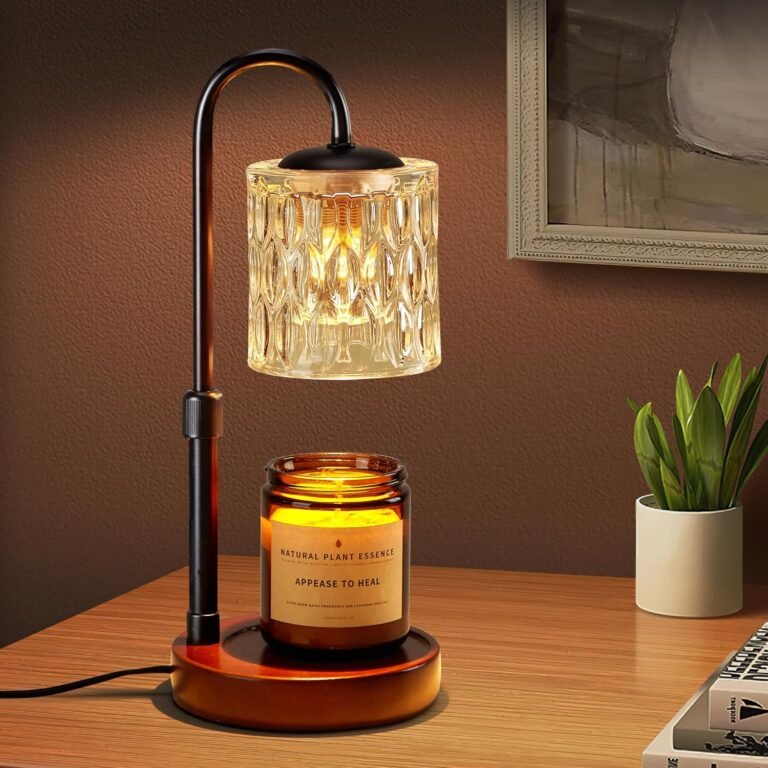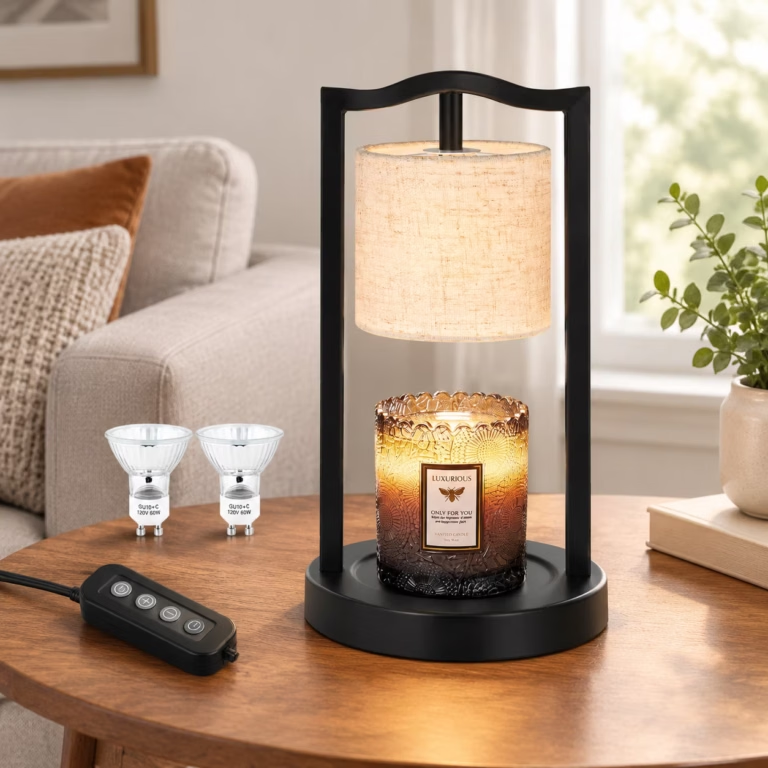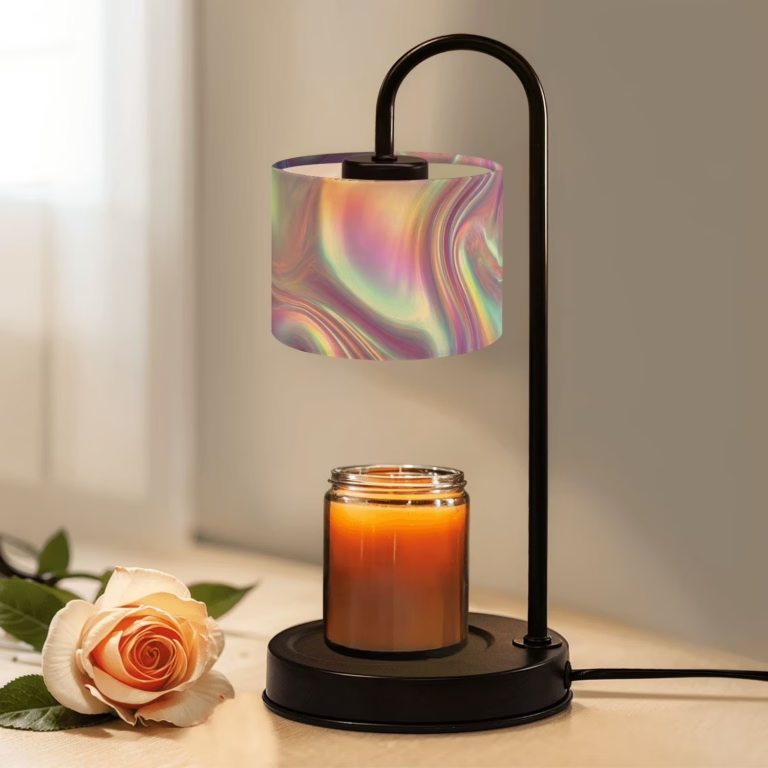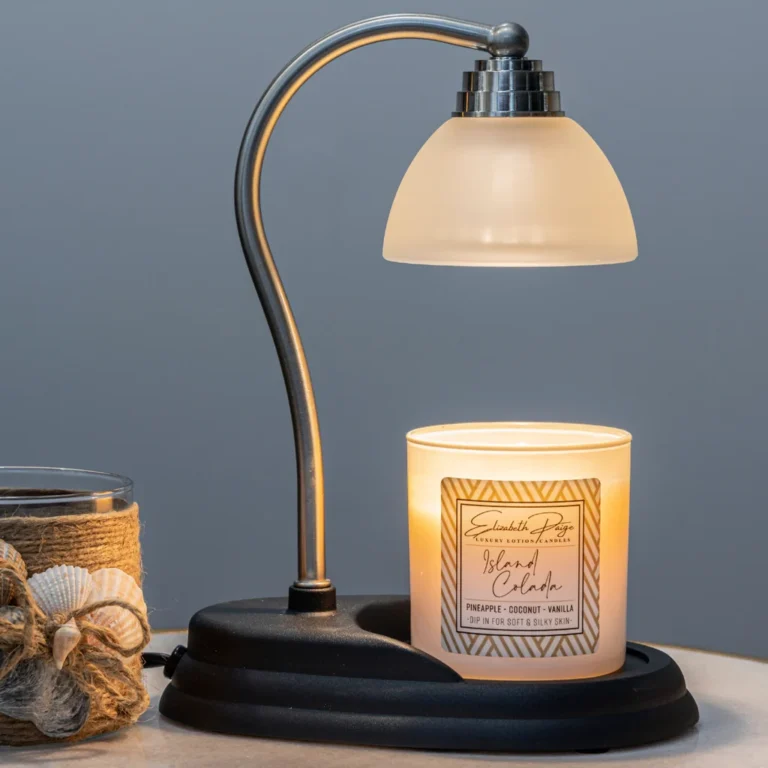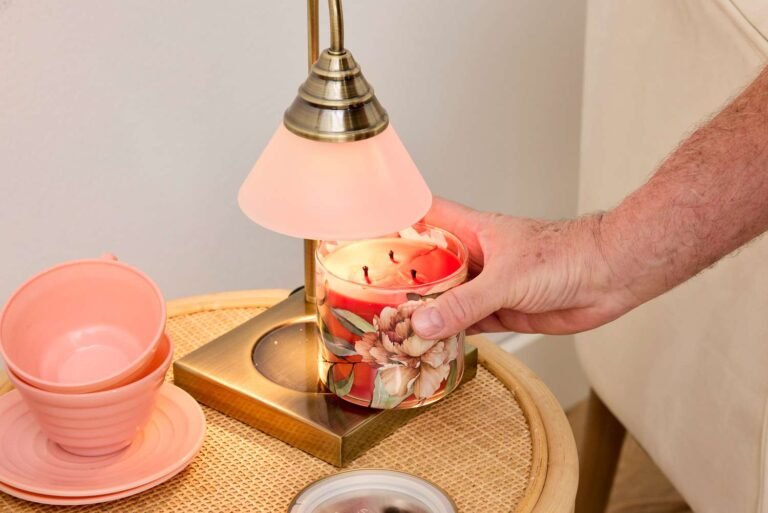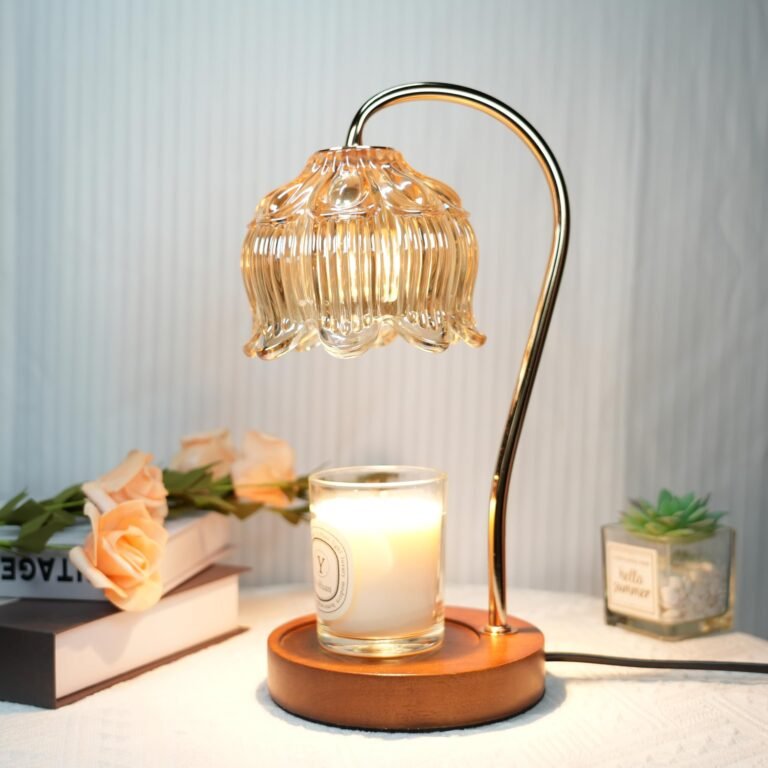
A candle warmer lamp heats a candle from above, usually with a halogen or incandescent bulb. The heat melts the wax without lighting the wick. As the wax warms, its fragrance oils evaporate into the air, so the room smells like a burning candle without an open flame.
Across homes in the United States, people use candle warmer lamps as an alternative to lighting jar candles. They can reduce soot and remove the risk of a live flame, but they still create heat. Safe use means following the lamp manual, keeping the unit stable, and never leaving it running when no one is home.

What Is a Candle Warmer Lamp?
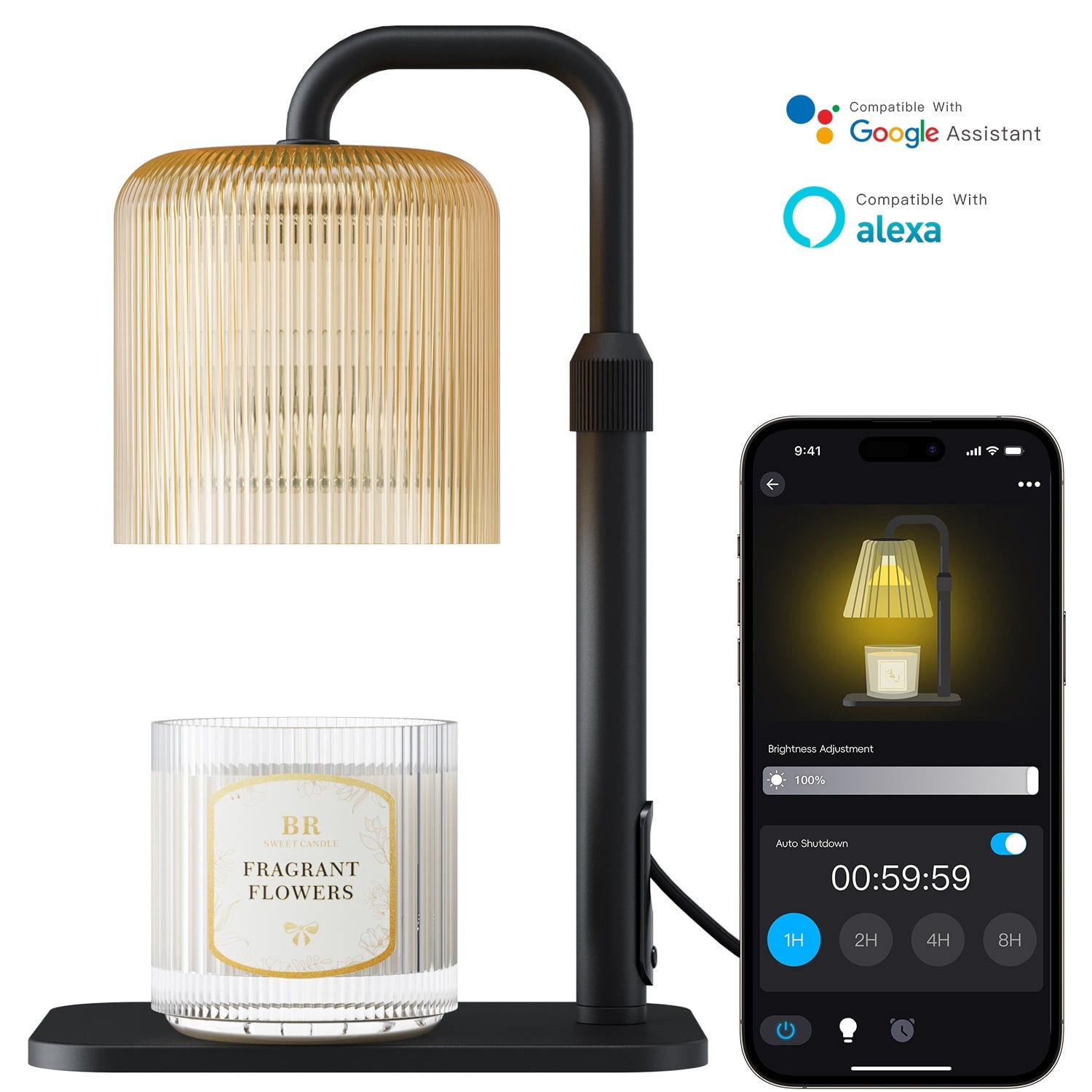
A candle warmer lamp is an electric device that warms a candle from the top. It often looks like a small desk lamp with a downward-facing bulb, a candle platform, and controls for power, brightness, heat, or time.
The lamp does not burn the candle. Instead, it melts the wax in the jar. The melted wax releases fragrance into the room as the scent compounds move from the warm wax into the air.
Most models include:
- A heating bulb or heating element
- A shade or cover that directs heat downward
- An adjustable candle platform
- A power switch
- A timer or automatic shutoff
- A dimmer or heat control on some models
- A stable base and power cord
A candle warmer lamp is different from a candle warmer plate. A lamp heats the candle from above. A plate heats the container from below. Both melt wax, but they transfer heat in different ways.
Candle warmer lamp vs. candle warmer plate
| Feature | Candle warmer lamp | Candle warmer plate |
|---|---|---|
| Heat source | Bulb or upper heating element | Heated base |
| Heat direction | From the top down | From the bottom up |
| Main control | Often light, height, or timer | Usually temperature or timer |
| Candle visibility | Often clear and easy to watch | Candle sits on the heating surface |
| Best fit | Jar candles of suitable height | Flat-bottom candles and jars |
The lamp style may warm the top layer of wax first. A plate may warm the bottom of the jar first. The best option depends on the candle shape, jar size, and the instructions for the warmer.
How Does a Candle Warmer Lamp Heat Wax?
A candle warmer lamp mainly uses radiant heat. The bulb sends heat toward the candle, and the wax absorbs that energy. The wax then softens and turns into a liquid.
The process usually follows these steps:
- You place a candle under the lamp.
- You adjust the lamp so the heat reaches the top of the candle.
- The bulb warms the wax surface.
- The top layer melts into a liquid wax pool.
- Fragrance oils in the wax evaporate.
- The scent spreads through the room.
The bulb may also warm the air around the candle. However, radiant heat is the main reason the wax melts. This is similar to how sunlight can warm a dark surface, although the lamp uses a much smaller and more controlled heat source.
Why the wax releases fragrance
Candle wax holds fragrance oil in a solid mixture. When the wax warms, the fragrance becomes more mobile and enters the air. Warm air can also carry the scent away from the candle.
The lamp does not create new fragrance. It only helps release the fragrance already present in the wax. Over time, the candle may smell weaker because some of its fragrance has evaporated.
Why the wick stays unused
A candle warmer lamp does not need the wick. The wick normally carries liquid wax upward, where a flame burns the wax vapor. A warmer skips that combustion step.
This means the candle does not produce:
- A flame
- Smoke from burning wax
- Soot from a burning wick
- Heat from combustion
It can still produce heat from the lamp and the melted wax. Therefore, “flameless” does not mean “heat-free” or “risk-free.”
What Type of Bulb Does a Candle Warmer Lamp Use?
Most candle warmer lamps use a bulb that produces both light and heat. Common examples include halogen and incandescent bulbs. Some newer designs use a dedicated heating element instead of a traditional light bulb.
A standard LED bulb usually produces too little heat to melt candle wax. A lamp that uses an LED may have a separate heater built into the unit. Do not replace a warmer bulb with a random bulb unless the manufacturer says it is compatible.
Check the lamp label or manual for:
- Bulb type
- Voltage
- Maximum wattage
- Bulb shape
- Bulb base
- Replacement instructions
- Required clearance from the candle
Using a bulb with the wrong wattage can cause poor performance, overheating, or damage. A higher-wattage bulb is not automatically better. It may heat the glass too quickly or raise the surface temperature beyond the design limit.
What controls the heat?
A candle warmer lamp may control heat in several ways:
- Dimmer control: Reduces bulb output on compatible models.
- Height adjustment: Changes the distance between the bulb and candle.
- Timer: Turns the lamp off after a set period.
- Thermostat: Limits heat on some models.
- Fixed design: Uses one bulb and one set distance.
A dimmer may change both brightness and heat, but this depends on the bulb and the electrical design. Use only the control system supplied with the lamp.

How to Use a Candle Warmer Lamp Safely
Use the lamp on a firm, level surface away from curtains, paper, bedding, and other items that can burn. Place the candle in the center of the base. The jar should sit straight and should not touch the bulb or shade.
Follow these steps:
- Read the lamp manual. Confirm the correct candle size, bulb, and operating time.
- Inspect the candle jar. Do not use a jar with cracks, chips, deep scratches, or visible damage.
- Remove the lid and decorative covers. The candle needs room for heat to escape.
- Center the candle. Keep the jar stable beneath the heating area.
- Set the lamp at the recommended height. Do not place the bulb directly against the jar.
- Start with a short session. Watch how quickly the wax melts.
- Use the timer when available. A timer can reduce the chance of extended unattended heating.
- Turn the lamp off before moving the candle. Melted wax can spill and the jar may be hot.
- Let the jar cool before handling it. Hot glass can burn skin.
- Unplug the lamp when it is not in use.
The candle should remain stable while the wax melts. Stop using the lamp if you see cracked glass, a damaged cord, flickering that is not normal for the design, a burning-plastic smell, smoke, or unusual heat around the base.
Can you leave a candle warmer lamp on?
You should not leave a candle warmer lamp running while you are away or asleep unless the manufacturer clearly permits that use and the unit has suitable safety controls. Even with a timer, a device that produces heat should be placed and monitored with care.
The U.S. Consumer Product Safety Commission and the National Fire Protection Association both advise caution with heat-producing electrical products and candles. A warmer lowers the risk linked to an open flame, but it does not remove electrical, glass, wax, or overheating hazards.

How Long Does a Candle Warmer Lamp Take to Melt a Candle?
The melting time varies by lamp and candle. A small candle may form a liquid wax pool fairly quickly. A large jar, thick glass, low-wattage lamp, or tall setup may take much longer.
The main factors include:
- Bulb type and wattage
- Distance between bulb and wax
- Candle diameter
- Wax type
- Jar thickness
- Room temperature
- Amount of wax left
- Lamp design
- Height of the candle
A candle warmer lamp usually works best when the bulb is close enough to provide heat but far enough away to avoid excessive surface temperature. Use the manufacturer’s height setting rather than guessing.
Signs that the warmer is working
Look for a smooth, liquid layer across much of the top surface. The fragrance should become easier to notice after the wax warms.
The lamp may not be working correctly if:
- The wax remains fully solid after the recommended period.
- Only a tiny spot melts under the bulb.
- The candle jar becomes very hot.
- The bulb flickers, smells strange, or shuts off.
- The fragrance remains weak after the wax has fully warmed.
If the wax does not melt, check the bulb type, wattage, power switch, timer, and lamp height. Never install a stronger bulb as a quick fix unless the manual allows it.

Does a Candle Warmer Lamp Use Less Wax?
A candle warmer lamp may use wax more slowly than a burning candle because it does not consume wax through combustion. However, the candle still loses fragrance over time.
With a burning candle, wax feeds the flame and becomes vapor and combustion products. With a warmer, heat releases fragrance while most of the wax remains in the jar. This can make the candle last longer as a physical object.
The fragrance does not last forever. Fragrance oils can evaporate during repeated warming. A candle may eventually produce little scent even though plenty of wax remains.
What should you do when the scent becomes weak?
If the wax has been warmed many times and the fragrance is weak, you can:
- Stop using the candle when the scent no longer meets your needs.
- Follow the manufacturer’s instructions for removing some wax.
- Avoid adding random oils to the candle.
- Dispose of the wax and jar according to local waste rules.
- Never pour melted wax down a drain.
Do not scrape or pour hot wax while the jar is hot. Let it cool and harden first unless the candle maker provides a specific removal method.

Are Candle Warmer Lamps Safer Than Burning Candles?
A candle warmer lamp is generally safer in one specific way: it does not use an open flame. That removes risks tied to a flame touching nearby materials or tipping over.
It does not remove every hazard. The lamp still uses electricity and heat. The jar can become hot, wax can spill, and a damaged cord can create a shock or fire risk.
| Risk | Burning candle | Candle warmer lamp |
|---|---|---|
| Open flame | Yes | No |
| Hot wax | Yes | Yes |
| Hot glass | Yes | Yes |
| Electrical risk | Usually limited to accessories | Yes |
| Soot from the wick | Possible | No wick combustion |
| Need for supervision | Yes | Yes |
The safest choice depends on use. A warmer may suit someone who wants candle fragrance but cannot safely use an open flame. It is not a reason to place a candle near children, pets, fabric, or clutter.
Safety limits to remember
Do not use a warmer lamp:
- Near water or in a damp area
- With a cracked candle jar
- Under a shelf with too little clearance
- On an unstable table
- With an extension cord that the manual does not permit
- With a damaged plug or cord
- Where children or pets can knock it over
- With a candle that touches the bulb
- While the unit is covered
Do not modify the lamp, bypass its timer, or replace its parts with items that lack the required rating.

Why Is My Candle Warmer Lamp Not Working?
Start with the safest and simplest checks. Turn the lamp off and unplug it before inspecting the bulb or cord.
| Symptom | Likely causes | Safe check |
|---|---|---|
| Wax does not melt | Wrong bulb, low heat, lamp too high, large jar | Check the manual and bulb rating |
| Only the center melts | Uneven heat or lamp misalignment | Center the jar and check lamp height |
| Lamp shuts off | Timer setting, loose bulb, overheating protection | Reset the timer and allow the unit to cool |
| Bulb does not light | Power issue or failed bulb | Test the outlet and use the specified replacement |
| Burning smell | Electrical fault, dust, or damaged part | Unplug it and stop using the lamp |
| Jar gets very hot | Excess heat or poor clearance | Turn it off and check the setup |
| Weak fragrance | Fragrance loss or low-quality wax blend | Compare scent after a full warm-up |
Do not keep testing a lamp that smokes, sparks, trips a circuit breaker, or smells like melting plastic. Replace the damaged part only when the manufacturer provides an approved replacement. For repeated electrical problems, contact the manufacturer or a qualified electrician.

Can You Use Any Candle With a Warmer Lamp?
No. A candle warmer lamp works best with a stable candle jar that fits beneath the lamp and can withstand the expected heat.
Before using a candle, check:
- The jar has no cracks or chips.
- The base is flat and stable.
- The candle fits under the shade.
- The jar does not touch the bulb.
- The candle does not block ventilation.
- The lamp manual permits that candle size and shape.
Avoid loose wax melts in a lamp designed for jar candles. Also avoid metal containers, thin decorative glass, open bowls, and containers with unknown heat limits unless the manufacturer specifically approves them.
A tall jar may place its upper edge too close to the bulb. A wide jar may extend beyond the heated area. If the candle does not fit naturally, choose another warmer or another candle.

Frequently Asked Questions
Does a candle warmer lamp need a wick?
No. The warmer melts the wax from above, so the wick is not needed. Do not cut out or remove the wick unless the candle maker gives instructions for doing so.
Does a candle warmer lamp make a room smell as strong as a burning candle?
It can, but the result depends on the wax blend, fragrance amount, candle size, heat level, room airflow, and distance. A flame changes the wax through combustion, while a warmer mainly releases fragrance through heat.
Can a candle warmer lamp cause a fire?
Any heat-producing electrical device can create a fire risk if it is damaged, misused, covered, or placed near materials that can burn. A warmer removes the open flame, but safe placement and supervision still matter.
Can I use an LED bulb in a candle warmer lamp?
Only if the lamp is designed for an LED bulb or has a separate heating element. A normal LED bulb usually does not produce enough heat to melt wax. Follow the exact bulb specification on the lamp.
How do I clean a candle warmer lamp?
Unplug the lamp and let it cool completely. Wipe the base and shade with a dry or slightly damp cloth if the manual allows it. Keep liquid away from the socket, switch, and electrical parts.
Is a candle warmer lamp better than a candle?
It depends on what you want. A warmer is a better fit if you want fragrance without an open flame or soot from wick burning. A burning candle provides light and the visual effect of a flame, but it needs stricter flame safety.
Key Takeaways
- A candle warmer lamp uses heat from above to melt candle wax.
- The warm wax releases fragrance without burning the wick.
- Halogen and incandescent bulbs are common, but some models use a separate heating element.
- A standard LED bulb usually does not create enough heat on its own.
- A warmer reduces open-flame risk but still creates heat and electrical hazards.
- Use the correct bulb, keep the candle centered, and follow the lamp manual.
- Stop using the unit if it smokes, sparks, smells unusual, or overheats.
Conclusion
A candle warmer lamp works by sending controlled heat into the top of a candle. The wax melts, fragrance oils evaporate, and the scent spreads without a flame.
For safe use, treat the lamp as a small heating appliance. Use the approved bulb, keep the candle stable, watch the jar during operation, and let everything cool before moving or cleaning it.